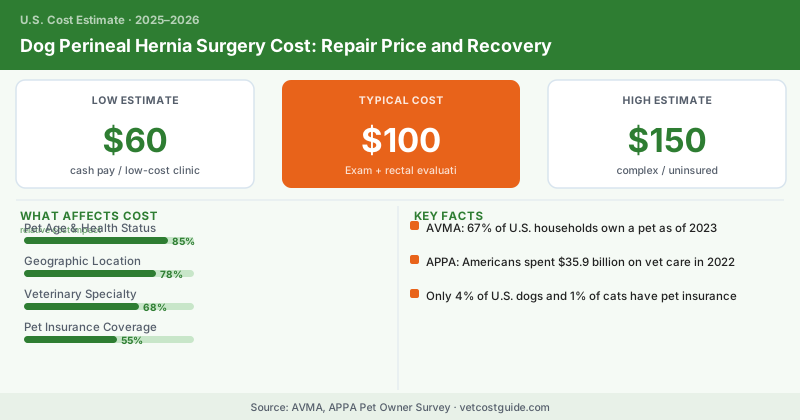
A swelling beside your dog’s anus that comes and goes, plus straining to poop — that’s the classic picture of a perineal hernia. It happens when the muscles supporting the rectum weaken and let abdominal contents push through, usually in older, unneutered male dogs. Repairing it runs $1,500 to $4,000, and the price climbs when both sides need fixing or the bladder gets involved.
It’s not the most famous canine surgery, but it’s a fairly common one, and the recovery deserves as much attention as the procedure.
- Single-side (unilateral) repair: $1,500–$2,800
- Both-sides (bilateral) repair: $2,500–$4,000+
- Emergency repair (if bladder is trapped): add $1,000–$2,000
- Neuter at the same time (usually recommended): +$200–$500
- Perineal hernias overwhelmingly affect intact (unneutered) male dogs over age six — neutering is part of both treatment and prevention
- The American College of Veterinary Surgeons reports recurrence rates that drop significantly when neutering is performed alongside the repair
- Boston Terriers, Boxers, Collies, and Pekingese are overrepresented
Perineal Hernia Repair Cost Breakdown
| Item | Low | High | Typical |
|---|---|---|---|
| Exam + rectal evaluation | $60 | $150 | $100 |
| Pre-op blood work | $80 | $200 | $130 |
| X-rays/ultrasound (assess organs) | $150 | $500 | $300 |
| Surgery (unilateral repair) | $1200 | $2500 | $1800 |
| Surgery (bilateral repair) | $2000 | $3500 | $2700 |
| Anesthesia + monitoring | $300 | $800 | $500 |
| Neuter (concurrent) | $200 | $500 | $300 |
| Hospitalization + post-op meds | $200 | $700 | $400 |
Why This Surgery Isn’t Cheap
Repairing a perineal hernia means rebuilding the muscular wall that’s supposed to hold the rectum in place. Surgeons often anchor nearby muscle to reinforce the gap, and in tricky cases they use a mesh implant. It’s detailed reconstructive work in an awkward spot with a high blood supply, which is why it’s usually done by or referred to a surgeon.
The bigger driver is whether it’s one side or both. Many dogs develop hernias on both sides, and repairing both is roughly 50% more surgical work. Some surgeons stage the repairs weeks apart to reduce strain on the area, which means two anesthesia events and two bills.
The Bladder Complication
Here’s the part that turns this into an emergency. Sometimes the bladder slips into the hernia and gets trapped, cutting off the dog’s ability to urinate. That’s a true emergency requiring immediate decompression and prompt surgery — and it pushes a routine repair into pet emergency surgery cost territory.
This is why you don’t sit on a known perineal hernia. The bulge that’s merely annoying today can trap the bladder next week, and now you’re at the dog emergency vet at midnight paying double.
Why Neutering Is Part of the Deal
Most surgeons strongly recommend neutering at the same time as the repair, even if your dog is older. The link between intact males and perineal hernias is strong, and neutering meaningfully lowers the chance the hernia comes back on the same or opposite side. Adding a neuter to an already-scheduled surgery is a relatively small incremental cost — far cheaper than a second hernia repair down the road.
Managing the Cost
A few practical moves:
- Don’t delay — early repair on a small hernia is simpler and cheaper than waiting for it to enlarge or trap an organ
- Bundle the neuter into the same anesthesia rather than scheduling it separately
- Ask whether staged bilateral repair is recommended for your dog, and budget for two procedures if so
- Pre-op imaging like a dog ultrasound tells the surgeon exactly what’s herniated, preventing surprises
- Use financing — CareCredit for vet bills or a pet insurance policy; our pet insurance how it works guide explains reimbursement
Compared to a basic average vet visit, this is a major expense, so if you have an older intact male of a high-risk breed, it’s worth weighing whether is pet insurance worth it before a hernia appears.
Frequently Asked Questions
Perineal hernia repair typically costs $1,500 to $4,000, depending on severity and location. Bilateral cases (both sides) and surgeries involving the bladder tend to fall at the higher end of that range, sometimes exceeding $4,000.
Most pet insurance plans cover perineal hernia repair if it's not classified as a pre-existing condition, though you'll typically pay 10–30% out-of-pocket after your deductible is met. Some policies exclude hereditary or breed-specific conditions, so review your plan details before surgery.
Recovery typically takes 2 to 4 weeks, during which your dog should avoid strenuous activity and straining. Full tissue healing and reabsorption of swelling can take 6 to 8 weeks, with most dogs showing improvement in bowel function within the first 2 weeks post-surgery.