A TPLO surgery costs $5,000 to $7,000. That’s a lot of money. But here’s something many owners aren’t told before they pick up their dog from the surgical center: without structured rehabilitation, a TPLO patient has meaningfully worse outcomes. Muscle atrophy, abnormal gait compensation, and reduced long-term joint function are documented consequences of rest-only recovery. The dog who gets the surgery but skips rehab often ends up with a functional injury to the opposite limb within a year — because they’ve been overloading it to compensate.
Canine rehabilitation therapy has gone from a specialty curiosity to a mainstream component of post-surgical care. The $800–$2,000 cost of a full post-TPLO rehabilitation course is, frankly, one of the best investments in that original $6,000 surgery.
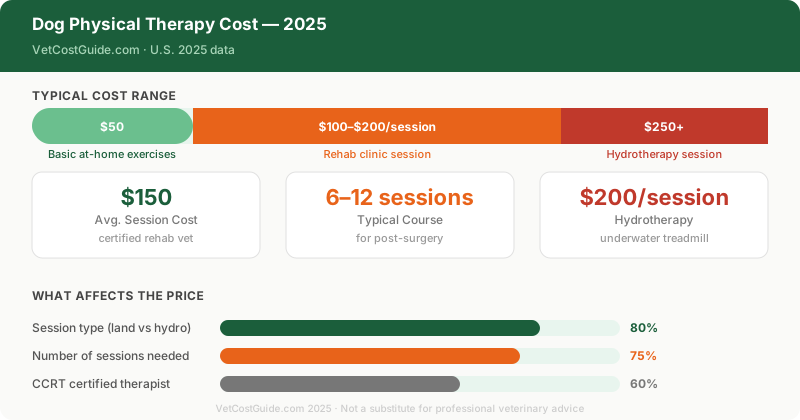
- A full post-surgical rehabilitation course (8–12 sessions) typically costs $800–$2,000 depending on modalities used and session frequency.
- Underwater treadmill (hydrotherapy) sessions run $150–$250 each and are particularly valuable for dogs that cannot fully bear weight post-surgery.
- Canine rehabilitation therapists with CCRT (Certified Canine Rehabilitation Therapist) or CCRP (Certified Canine Rehabilitation Practitioner) credentials provide the highest standard of care—verify credentials before booking.
- Physical therapy is most cost-effective for post-TPLO, hip replacement, neurological conditions, and disc disease recovery; less justified for minor soft tissue injuries in otherwise healthy young dogs.
Canine Physical Therapy Costs by Modality (2025)
| Service | Cost Per Session | When Used | Typical Sessions per Course |
|---|---|---|---|
| Initial rehabilitation evaluation | $125–$200 | All new patients | 1 (before starting treatment) |
| Land-based rehab session (exercises + manual therapy) | $75–$150 | Post-surgery, arthritis, neurologic | 8–12 |
| Hydrotherapy (underwater treadmill) | $150–$250 | Post-orthopedic surgery, hip disease, obesity | 6–10 |
| Laser therapy (therapeutic cold laser) | $50–$100 | Wound healing, pain, tissue repair | 6–12 |
| TENS/NMES (electrical stimulation) | $75–$125 | Muscle atrophy, post-surgical nerve recovery | 4–8 |
| Therapeutic ultrasound | $50–$85 | Deep tissue injury, chronic pain | 4–8 |
| Full post-TPLO course (evaluation + 8–12 sessions) | $800–$2,000 | Following TPLO surgery | One course per surgery |
| Full neurological recovery course | $1,200–$2,500 | IVDD recovery, degenerative myelopathy | Ongoing |
What Each Modality Actually Does
Land-based rehabilitation is the foundation. A certified rehabilitation therapist builds a progressive exercise program — balance boards, cavaletti rails, controlled hill walking, passive range-of-motion exercises — designed specifically to rebuild muscle strength, restore proprioception (the body’s sense of its own position), and correct abnormal gait patterns that develop as compensation for pain or weakness. Manual therapy — massage and joint mobilization — is typically incorporated. Sessions run 45–60 minutes, usually one to two times per week, with a structured home exercise program between visits.
Hydrotherapy (underwater treadmill) uses warm water — maintained at 90–92°F — to provide buoyancy that reduces weight-bearing on injured limbs while allowing full range of motion and muscle activation. Water resistance means muscles work harder than equivalent land exercise with far less joint stress. It’s particularly valuable for dogs who can’t fully bear weight post-surgery and need to maintain cardiovascular fitness and muscle mass during the 8–12 week post-surgical rest window. It’s the most commonly recommended modality after TPLO surgery and hip replacement.
Therapeutic laser therapy (Class IV, also called photobiomodulation) delivers specific light wavelengths to reduce inflammation, accelerate tissue healing, and provide pain relief without heat damage. Sessions run 5–15 minutes. It’s one of the better-documented modalities in veterinary rehabilitation literature and is often combined with manual therapy in post-surgical sessions. For chronic arthritis, it’s used as a standalone pain management option.
TENS/NMES (electrical stimulation) uses controlled electrical impulses to stimulate muscle contractions in dogs with significant atrophy or neurological impairment. NMES is particularly valuable in spinal cord injury recovery — where voluntary muscle activation may be absent — to maintain muscle mass during healing through passive electrical stimulation.
When It’s Worth the Money
This isn’t always a clear-cut decision. Here’s an honest assessment:
Strong evidence supports rehab for:
Post-TPLO and cruciate repair surgery is the primary indication. Research consistently shows better outcomes — faster return to function, reduced compensatory injury to the opposite limb — in dogs completing structured rehabilitation versus rest-only recovery. A $1,000–$1,500 rehab course following a $5,500 surgery is straightforwardly justified.
Hip replacement recovery follows a similar logic. Structured rehabilitation after total hip replacement is linked to faster return to normal function and reduced risk of implant complications from abnormal gait loading.
Intervertebral disc disease (IVDD) — whether managed medically or surgically — benefits substantially from targeted rehabilitation to restore hind limb strength and proprioception. Some dogs with partial paralysis make remarkable recoveries through intensive rehabilitation that simply wouldn’t have occurred with rest alone.
Degenerative myelopathy (DM), common in German Shepherds and Corgis, has no cure — but controlled research shows intensive regular exercise slows progression significantly. Dogs receiving physical therapy maintain walking ability for longer than sedentary dogs. This is one of the most compelling quality-of-life arguments for ongoing rehabilitation investment.
Severe arthritis with obesity is another strong fit. Underwater treadmill combines controlled weight-bearing exercise with reduced joint stress — hard to replicate any other way.
Lower value, or not recommended, for:
- Minor soft tissue strains in young healthy dogs that’ll resolve with rest
- Dogs in the acute inflammatory phase post-surgery (first 72 hours) — rest is indicated, not active therapy
- Situations where therapy cost exceeds the realistic functional benefit — this is worth an honest conversation with your surgeon
- Starting hydrotherapy too soon after surgery without surgeon clearance—incision integrity must be confirmed before water immersion.
- Choosing a facility without CCRT or CCRP-credentialed staff—unqualified “canine massage” or generic exercise facilities are not equivalent to certified rehabilitation therapy.
- Skipping the initial evaluation to save $125–$200—the evaluation establishes baseline function, identifies compensation patterns, and allows the therapist to design an appropriate individualized program.
- Discontinuing therapy at the first signs of improvement rather than completing the full prescribed course—partial recovery is common if therapy stops early.
Finding a Qualified Therapist
The credential gap matters more here than in most veterinary specialties. Look for:
- CCRT (Certified Canine Rehabilitation Therapist) — credentialed by the Canine Rehabilitation Institute
- CCRP (Certified Canine Rehabilitation Practitioner) — credentialed by the University of Tennessee
- DACVSMR (Diplomate, American College of Veterinary Sports Medicine and Rehabilitation) — board-certified specialists, highest level
The IVRSA (International Veterinary Rehabilitation and Sports Medicine Association) maintains a therapist finder at rehabvets.org. The Canine Rehabilitation Institute provides a practitioner directory at caninerehabinstitute.com.
When you’re evaluating a facility, ask:
- What credentials does the therapist hold?
- What’s the initial evaluation process?
- How is the home exercise program communicated and monitored between sessions?
- What equipment does the facility have — underwater treadmill, laser, NMES?
On insurance: most comprehensive pet insurance plans cover rehabilitation for covered conditions. If the underlying condition (TPLO, IVDD) is covered, rehabilitation is typically covered at the same reimbursement rate. Confirm with your insurer before starting.
FAQ
How long does a typical rehabilitation course take? Post-TPLO rehabilitation typically runs 8–12 weeks with weekly or twice-weekly sessions. Neurological recovery may require 12–24 weeks. Chronic arthritis management often transitions to monthly maintenance sessions rather than a defined course.
Can I do canine physical therapy exercises at home instead? Home exercise programs are a critical component of rehabilitation, but they supplement professional sessions rather than replace them. Therapists teach owners specific exercises at each session to perform between appointments. The assessment, manual therapy, and modalities (laser, hydrotherapy, NMES) cannot be replicated at home.
Does my dog need a referral to see a rehabilitation therapist? Not typically. Most rehabilitation facilities accept owner-referred patients, though they will request surgical records, imaging, and the surgeon’s protocol. Some facilities prefer direct communication with the operating surgeon before beginning therapy.
Is hydrotherapy safe for all dogs? Hydrotherapy is contraindicated for dogs with open wounds, urinary tract infections, or skin infections, as water exposure can worsen these conditions. Dogs with significant cardiac or respiratory disease may not tolerate hydrotherapy sessions. Your rehabilitation therapist will screen for contraindications at the initial evaluation.
Frequently Asked Questions
Dog physical therapy typically costs $100-200 per session, with specialized hydrotherapy using an underwater treadmill running $150-250 per session. A full post-surgery rehabilitation course generally ranges from $800-2,000 depending on the number of sessions needed and your location.
Most pet insurance plans cover physical therapy if it is prescribed by a veterinarian as medically necessary treatment, though coverage varies by policy and provider. You should expect to pay out-of-pocket upfront and then submit claims for reimbursement, typically receiving 70-90% back depending on your deductible and coverage limits. Some plans exclude or limit coverage for conditions related to joint issues, so review your policy details before starting treatment.
Physical therapy should begin shortly after TPLO surgery recovery and is critical to prevent complications like muscle atrophy, abnormal gait compensation, and reduced long-term joint function that occur with rest-only recovery. Most veterinarians recommend starting structured rehabilitation within 2-4 weeks post-op and continuing for 8-12 weeks to achieve the best outcomes for your dog's mobility and strength.