Nearly every intact male dog over the age of 5 will develop some degree of benign prostatic hyperplasia (BPH). That’s not hyperbole — studies have shown BPH incidence approaching 80–95% in intact males by age 6. Yet most owners don’t think about the prostate until their dog starts straining to defecate, blood appears in the urine, or the vet mentions it at a routine visit. Here’s what prostate problems cost to diagnose and treat — and why neutering is the single most effective intervention.
- Rectal palpation (included in exam): $0 additional
- Prostatic wash or fine needle aspirate: $150–$350
- Abdominal ultrasound: $200–$500
- Urinalysis and culture: $60–$150
- Antibiotic treatment (prostatitis): $40–$120/course
- Neutering to treat BPH: $200–$600
- Finasteride (medical BPH treatment): $30–$60/month
- Prostate abscess drainage/surgery: $1,000–$3,500
Types of Prostate Problems in Dogs
Benign Prostatic Hyperplasia (BPH)
The most common — testosterone-driven gland enlargement that compresses the urethra and rectum. Usually causes straining to defecate, ribbon-shaped stools, or blood-tinged discharge from the prepuce. Rarely causes obvious pain in early stages.
Bacterial Prostatitis
Infection of the prostate gland. Acute prostatitis causes sudden severe illness — fever, lethargy, pain on abdominal palpation, reluctance to move. Chronic prostatitis may have subtler signs: recurrent UTIs, intermittent blood in urine. Often develops secondary to BPH.
Prostatic Abscess
A contained pocket of pus within the prostate — serious and potentially life-threatening. Causes significant pain, fever, systemic illness, and occasionally a palpable abdominal mass. Requires surgical drainage or prostatectomy.
Prostatic Cysts
Fluid-filled cysts within or adjacent to the prostate. May be incidental findings on imaging or may grow large enough to cause clinical signs.
Prostatic Carcinoma
The most serious: prostate cancer in dogs. Unlike BPH, prostate cancer occurs in both neutered and intact males. Invasive, often metastatic at diagnosis, and carries a poor prognosis regardless of treatment.
Diagnosis Costs
| Diagnostic Test | Typical Cost | Notes |
|---|---|---|
| Physical exam (rectal palpation) | Included in exam fee | Assesses size and symmetry |
| Urinalysis | $40–$80 | Checks for blood, bacteria, cells |
| Urine culture and sensitivity | $60–$120 | Identifies bacterial infection type |
| Prostate wash (prostatic massage) | $100–$200 | Cell collection for cytology |
| Fine needle aspirate | $150–$350 | Cell sampling — ultrasound-guided preferred |
| Abdominal ultrasound | $200–$500 | Best imaging for prostate; guides aspirate |
| Chest X-rays | $150–$350 | Rules out metastasis if cancer suspected |
| Blood panel + CBC | $80–$200 | Evaluates systemic illness in prostatitis |
Ultrasound is the most useful imaging test — it shows gland size, symmetry, cyst or abscess formation, and guides needle placement for aspirates. Most vets will recommend ultrasound when prostate disease is suspected beyond simple BPH.
Treatment Costs by Condition
BPH — Neutering (Most Effective)
Castration is the most definitive treatment for BPH. The prostate begins to shrink within days of neutering and typically reaches normal size within 3–6 weeks. Signs of BPH resolve in most dogs.
Standard neuter cost for an adult dog: $200–$600 depending on dog size and facility. Older or larger dogs cost more due to anesthesia duration and monitoring needs.
For owners who plan to breed their dog but want BPH treated medically in the interim:
BPH — Medical Management
- Finasteride (Proscar): 5-alpha reductase inhibitor — reduces DHT, shrinks prostate. Cost: $30–$60/month. Must be continued long-term; signs return when stopped.
- Osaterone acetate: Available in some countries; not FDA-approved in the US for dogs
- Delmadinone acetate (progestagen): Used in some countries — not available in US
Finasteride is a human drug used off-label in dogs. Women of childbearing age should never handle crushed or broken finasteride tablets — it causes fetal abnormalities. Handle with gloves if any household members are or could be pregnant. This is a serious safety consideration, not a minor caution.
Bacterial Prostatitis — Antibiotics
Antibiotics that penetrate the blood-prostate barrier are required. Not all antibiotics work — the prostate’s lipid barrier excludes many drugs:
Effective antibiotics: trimethoprim-sulfamethoxazole, enrofloxacin, chloramphenicol, doxycycline
Treatment duration:
- Acute prostatitis: 4–6 weeks minimum
- Chronic prostatitis: often 8–12 weeks
Cost: $40–$120/course depending on drug and duration. Cultures guide drug selection — guessing is expensive if the bacteria are resistant.
Neutering after antibiotic resolution is strongly recommended to prevent recurrence — BPH facilitates bacterial seeding.
Prostatic Abscess — Surgery
Abscesses can’t be treated with antibiotics alone. Options include:
- Ultrasound-guided drainage: $500–$1,200 (less definitive; can reaccumulate)
- Surgical drainage (marsupialization): $1,000–$2,500 — most common surgical approach
- Prostatectomy: $1,500–$4,000 — reserved for severe cases; carries significant complication risk including urinary incontinence
Hospitalization for acute prostatitis or abscess: $500–$1,500 for 2–4 days of IV antibiotics and supportive care.
Prostatic Carcinoma: A Different Situation
Prostate cancer in dogs is aggressive and different from human prostate cancer — it doesn’t respond to neutering (unlike BPH). By the time clinical signs appear, metastasis to regional lymph nodes and lumbar vertebrae is common.
Treatment options are limited:
- Piroxicam (NSAID with anti-tumor activity): $15–$30/month — palliative
- Combination chemotherapy: $500–$1,500/cycle — rarely curative
- Radiation therapy: $5,000–$15,000 total — palliative in most cases
- Toceranib (Palladia): $200–$400/month — sometimes used
Median survival with palliative piroxicam treatment is approximately 6–7 months from diagnosis, based on studies published in veterinary oncology literature. Aggressive treatment extends this modestly in some dogs.
The Economic Case for Early Neutering
A standard neuter at 1–2 years of age costs $200–$500. It eliminates BPH risk entirely, dramatically reduces prostatitis risk, and eliminates the need for lifelong BPH monitoring in intact dogs.
The AVMA’s 2023 Pet Ownership Statistics indicate that approximately 80% of pet dogs in the US are neutered. Intact dog owners face meaningfully higher lifetime veterinary costs from reproductive tract diseases — prostate disease, testicular tumors, and perineal hernias (which are facilitated by prostatic enlargement pressing on the rectal wall).
If you have an intact male dog over 5 years old, ask your vet to palpate the prostate at every annual exam. It takes 30 seconds and catches BPH before it becomes symptomatic — or before prostatitis has time to establish.
Questions to Ask Your Vet
- Is my dog’s prostate enlarged on palpation? How enlarged?
- Does this look like BPH, infection, or something requiring imaging?
- Should we do an ultrasound to better characterize this?
- Given my dog’s breeding status, should we treat medically or proceed with neutering?
- If there’s infection, what antibiotic will you use and for how long?
Frequently Asked Questions
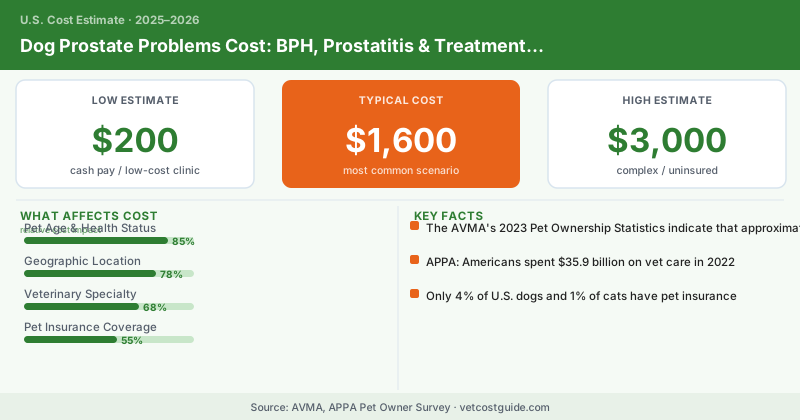
Dog prostate treatment typically costs $200–$3,000 depending on the specific condition and required procedures. Diagnostic imaging (ultrasound or X-rays) runs $200–$500, while neutering to resolve BPH in intact males costs $300–$1,500 depending on your vet and location. Treatment for prostatitis (infection) may require antibiotics ($100–$300) plus follow-up visits.
Most pet insurance plans cover prostate conditions as part of accident-and-illness coverage, though some policies exclude pre-existing conditions or charge higher deductibles for older dogs. You can typically expect to pay a $250–$500 deductible out-of-pocket, with the insurer covering 70–90% of remaining eligible costs after that threshold is met. Check your specific policy, as coverage varies widely between providers.
Neutering is the most effective and permanent solution for benign prostatic hyperplasia (BPH) in intact males, resolving symptoms in 70–90% of dogs within 3–6 weeks as hormone levels decline. For younger, breeding dogs, medical management with antibiotics or hormone-blocking medications offers a temporary alternative, though these typically cost more and require ongoing treatment. Your vet can advise on the best option based on your dog's age, health, and whether future breeding is planned.