Sarah’s 8-year-old unspayed Golden was drinking gallons of water and acting “off” a few weeks after her heat. By the time she got to the ER, the diagnosis was pyometra — a uterus full of pus — and the bill to save her life was $4,200. That’s the brutal reality of this condition: it’s a life-threatening emergency, it strikes intact females, and the surgery costs three to ten times a routine spay.
Pyometra is preventable with one decision — spaying — but once it happens, there’s no waiting it out. The cost reflects an emergency surgery on a critically ill patient.
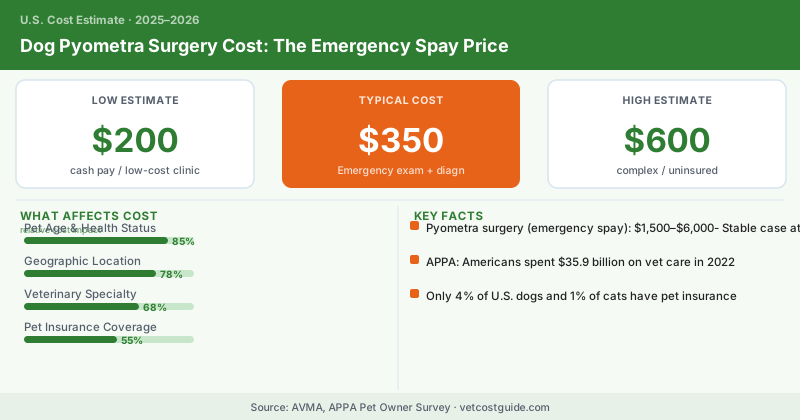
- Pyometra surgery (emergency spay): $1,500–$6,000
- Stable case at general practice: $1,500–$3,000
- Critical case at ER/specialty (sepsis, ICU): $3,500–$6,000+
- A routine spay for comparison: $200–$800
- Pyometra is a medical emergency — a ruptured infected uterus can be rapidly fatal
- It typically strikes intact females within weeks to a couple of months after a heat cycle, most often in dogs over age six
- The ASPCA and most veterinary organizations cite pyometra prevention as one of the major health reasons to spay females who aren’t part of a breeding program
Pyometra Surgery Cost Breakdown
| Item | Low | High | Typical |
|---|---|---|---|
| Emergency exam + diagnostics | $200 | $600 | $350 |
| Blood work + ultrasound | $300 | $900 | $550 |
| Surgery (emergency ovariohysterectomy) | $800 | $3000 | $1600 |
| Anesthesia + monitoring | $400 | $1000 | $650 |
| IV fluids + antibiotics | $200 | $800 | $450 |
| Hospitalization (1–4 days) | $400 | $2000 | $1000 |
| Post-op meds + recheck | $100 | $400 | $200 |
| ER/after-hours surcharge | $150 | $500 | $300 |
Why It Costs So Much More Than a Spay
A routine spay is a planned surgery on a healthy young dog. A pyometra spay is an emergency surgery on a sick, sometimes septic, older dog whose uterus is enlarged, fragile, and full of infection. The surgeon has to remove that bloated organ without spilling its contents into the abdomen — one wrong move and you’ve got life-threatening peritonitis.
Add the emergency setting, pre-surgical stabilization, IV fluids, antibiotics, intensive monitoring, and several days of hospitalization, and you can see why the bill lands so far above a standard spay. It’s not a markup — it’s a different surgery entirely. Many cases land squarely in pet emergency surgery cost territory.
Open vs. Closed Pyometra
There are two forms, and the closed type is the dangerous one. In an “open” pyometra, the cervix is open and pus drains out — you’ll notice discharge, which often prompts an earlier vet visit. In a “closed” pyometra, the cervix is sealed, so the infection builds with nowhere to go, the uterus swells, and the dog gets sick fast with few obvious external signs.
Closed pyometra is the higher-cost, higher-risk scenario because dogs are often sicker by the time they’re diagnosed, frequently after an urgent trip to the dog emergency vet.
Spotting It Early
The classic signs in an unspayed female, especially weeks after a heat: excessive drinking and urinating, lethargy, poor appetite, a swollen belly, and sometimes a smelly vaginal discharge. If your intact female shows these, it’s a same-day emergency — not a wait-and-see.
Diagnosis usually involves dog blood work showing infection and a dog ultrasound confirming the fluid-filled uterus.
The Cheapest Pyometra Is a Spay
There’s no sugarcoating it: the single best way to never pay for pyometra surgery is a routine spay, which costs a fraction of the emergency version. For owners keeping a female intact, the financial reality is worth knowing in advance.
If your intact female does develop pyometra:
- Don’t delay — survival and cost both worsen by the hour
- Use CareCredit for vet bills for immediate financing
- Lean on insurance if you have it — pyometra is covered by most illness policies; our pet insurance how it works guide explains the claim process
Compared to a quiet average vet visit, a pyometra emergency is one of the costliest surprises an intact female can bring — which is exactly why prevention is the smartest money you’ll spend.
Frequently Asked Questions
Emergency pyometra surgery typically costs $1,500–$6,000, with most cases averaging around $3,500–$4,500. The high cost reflects emergency vet fees, imaging (ultrasound or X-rays), anesthesia, the complexity of removing an infected uterus, and often 1–3 nights of hospitalization with IV fluids and antibiotics.
Most pet insurance plans cover pyometra surgery if your policy was active before the condition developed, though you typically pay upfront and submit for reimbursement (usually 70–90% after your deductible). However, many insurers exclude pre-existing conditions or charge higher premiums for unspayed females, and some policies cap payouts at $1,000–$2,000 per condition.
Pyometra requires emergency surgery to remove the infected uterus—antibiotics alone cannot cure it and the condition is fatal without treatment. The only reliable prevention is spaying before the first heat or between heat cycles, which costs $200–$800 for a routine procedure and eliminates the pyometra risk entirely.