Ringworm isn’t a worm. It’s a fungal infection — and despite the name, it has nothing to do with parasites. Dermatophytosis (the clinical term) is caused by fungi from the Microsporum and Trichophyton families that colonize the dead outer layer of skin, hair, and nails.
Here’s what catches most owners off guard: ringworm is highly contagious to other pets and to humans. A single infected dog can set off a chain of infections through the whole household. That shared contagion risk is why treatment has to be thorough — and why cutting corners on treatment is a false economy.
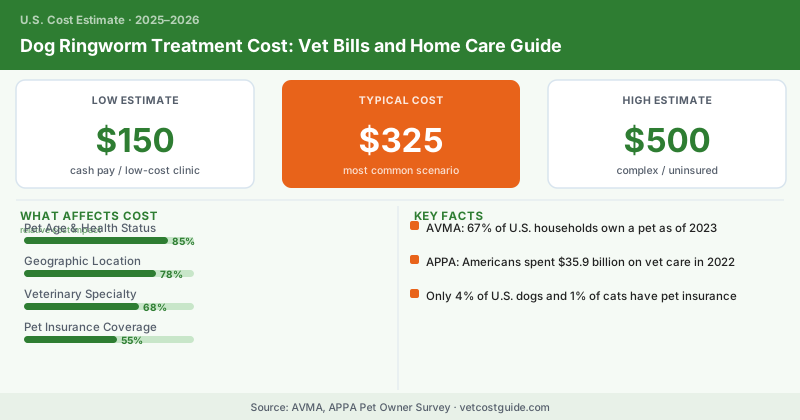
Most cases in otherwise healthy adult dogs cost $150–$500 to treat. Severe cases, household outbreaks, or immunocompromised animals can run $500–$1,200+.
What Ringworm Looks Like in Dogs
The classic presentation is a circular patch of hair loss with scaling and a reddened edge. But it doesn’t always look like a ring. In dogs, ringworm can appear as:
- Patchy, moth-eaten hair loss without obvious redness
- Dry, flaky skin resembling dandruff
- Broken hairs and a dull, rough coat in affected areas
- Nail changes (paronychia) — brittle, deformed nails in rare cases
Young dogs under 12 months, older dogs, and those on immunosuppressive medications are most susceptible. The CDC notes that Microsporum canis accounts for approximately 70% of ringworm cases in companion animals — and it’s the same organism that transmits readily to people handling infected pets.
- Vet exam + diagnosis: $100–$250
- Wood’s lamp exam (in-clinic): $0–$30 add-on
- Fungal culture (definitive diagnosis): $60–$150
- Topical antifungal (miconazole/clotrimazole cream): $15–$40
- Lime sulfur dip (prescription, per session): $30–$80
- Oral antifungal (terbinafine or itraconazole): $50–$200/month
- Medicated antifungal shampoo: $20–$50
- Environmental decontamination products: $30–$100
How Vets Diagnose Ringworm
Diagnosis isn’t as simple as looking at the patch. Several testing options exist, each with different accuracy and cost:
| Test | Cost Range | Accuracy/Notes |
|---|---|---|
| Physical exam only | Included in visit fee | Low — ringworm mimics many skin conditions |
| Wood's lamp (UV light) | $0–$30 | Only ~50% of M. canis strains fluoresce; negative doesn't rule it out |
| DTM fungal culture | $60–$150 | Gold standard; takes 2–3 weeks for results |
| PCR test | $80–$200 | Faster than culture; high sensitivity |
| Skin scraping (for rule-out) | $40–$80 | Helps exclude mange and bacterial infection |
Dermatophyte Test Medium (DTM) culture is the definitive test — a sample of hair and scale is placed in a growth medium that changes color from yellow to red in the presence of dermatophytes. It takes 2–3 weeks to finalize, which is frustrating but accurate. Most vets start treatment empirically while waiting for results.
Treatment Options and Costs
Ringworm treatment is almost always combination therapy: topical treatment directly on lesions plus systemic (oral) antifungal medication for moderate-to-severe cases.
Topical-only treatment (mild, localized infection in adult dogs):
- Antifungal cream (miconazole, clotrimazole) applied twice daily to lesions
- Medicated antifungal shampoo (whole-body treatment twice weekly)
- Duration: 6–8 weeks minimum
- Total medication cost: $40–$120
Systemic antifungal (recommended for extensive, refractory, or household-wide cases):
- Terbinafine (off-label): $50–$150/month. Preferred by many dermatologists for dogs.
- Itraconazole: $80–$200/month. Effective but requires liver monitoring in long courses.
- Treatment duration: typically 6–12 weeks, with monthly rechecks.
- Total oral medication cost: $100–$500+
Lime sulfur dips are an older but highly effective whole-body treatment — the solution kills dermatophytes on the skin surface and prevents environmental contamination from shed spores. Cost: $30–$80 per in-clinic dip, or you can apply at home (buy the concentrate for $20–$50 per bottle). Fair warning: lime sulfur smells strongly of rotten eggs, stains anything it contacts, and must be used outdoors or in well-ventilated areas.
The Environmental Decontamination Problem
Here’s what most owners don’t budget for: ringworm spores shed into the environment and survive for months. Infected bedding, brushes, carpeting, and furniture become reservoirs that re-infect treated animals. Treatment of the dog alone, without addressing the environment, leads to treatment failure or relapse.
What actually works for decontamination:
- Dilute bleach solution (1:10) on hard surfaces, food bowls, crates, and tile floors
- Wash all bedding in hot water weekly throughout treatment
- Vacuum carpets daily and dispose of the bag
- Discard wooden or porous items (wood brushes, rope toys) that can’t be disinfected
Environmental products like Lysol IC (hospital-grade disinfectant) run $25–$60 per bottle. Budget an additional $50–$100 for decontamination supplies over the treatment period.
Multi-Pet Households: The Cost Multiplier
If you have multiple dogs, cats, or children in the household, ringworm quickly becomes a household project. The ASPCA recommends treating all pets showing lesions simultaneously and testing (or prophylactically treating) exposed pets even without visible signs.
- Each additional pet: add $100–$250 for diagnosis and 6–8 weeks of treatment
- Humans who develop a circular, itchy rash should see a dermatologist (ringworm is easily treated in people with over-the-counter antifungal cream, but confirm the diagnosis)
A three-pet household dealing with an active ringworm outbreak can realistically spend $600–$1,500 total between diagnosis, medications, and environmental decontamination.
Ringworm is a zoonotic infection — it transmits from pets to people. Children, elderly individuals, and anyone on immunosuppressive medications are at higher risk of contracting it. Wear gloves when handling infected animals, wash hands thoroughly after contact, and avoid letting infected pets sleep in beds with people until treatment is complete and at least two negative fungal cultures are obtained. Never stop treatment early just because lesions look better — the culture is the only reliable indicator of cure.
How Long Does Treatment Take?
This is where owners get frustrated. Ringworm treatment takes 6–12 weeks minimum. The standard for declaring cure is two consecutive negative fungal cultures taken 2–4 weeks apart. Stopping early because the dog “looks fine” is a common reason for relapse.
Veterinary rechecks every 3–4 weeks during treatment typically cost $60–$100 each, with repeat cultures adding another $60–$150 per visit. Budget for 2–3 recheck visits over the treatment course.
Total Cost Scenarios
- Single dog, mild/localized infection, topical treatment only: $200–$400
- Single dog, moderate infection, oral antifungals + topical + 2 rechecks: $400–$800
- Single dog, severe or refractory infection: $700–$1,200
- Multi-pet household with 2–3 affected animals: $600–$1,800
Frequently Asked Questions
A single vet visit for ringworm diagnosis typically costs $75–$150, while the full treatment plan for mild cases runs $150–$500. If your dog requires systemic antifungal medications for severe or household-wide infections, expect total costs of $300–$1,200 depending on medication type and treatment duration.
Most pet insurance policies cover ringworm treatment as it is considered an illness, though coverage varies by plan and deductible. You'll typically pay your deductible (usually $250–$500) first, then the insurance reimburses a percentage (70–90%) of eligible costs, leaving you responsible for the remainder out-of-pocket.
Ringworm treatment typically lasts 2–8 weeks depending on severity, with topical antifungal creams or medicated baths used for localized infections and oral antifungal medications (like terbinafine or itraconazole) prescribed for systemic cases. Your vet may recommend a combination approach, and follow-up fungal cultures may be needed to confirm cure before treatment ends.