What does it mean when your vet says “idiopathic epilepsy” instead of naming a specific cause? It means, essentially, that seizures are happening and no underlying structural or metabolic cause has been found — which is actually the most common diagnosis for dogs with recurrent seizures, and often the one with the most straightforward long-term treatment path.
Seizures in dogs can stem from several different causes: idiopathic epilepsy (the most common, especially in dogs that start seizing between 1-5 years old), toxin exposure, metabolic problems like liver or kidney disease, or in less common cases, a structural brain issue like a tumor. The diagnostic workup and long-term treatment cost depend heavily on which category your dog falls into.
- Initial exam and bloodwork: $200–$500
- Advanced imaging (MRI) if structural cause suspected: $1,500–$4,000
- Anti-seizure medication (monthly): $30–$100
- Periodic monitoring bloodwork: $80–$200 (every 6-12 months)
- Emergency treatment for status epilepticus (prolonged seizure): $500–$2,000
Full Cost Breakdown
| Component | Low End | High End | When Needed |
|---|---|---|---|
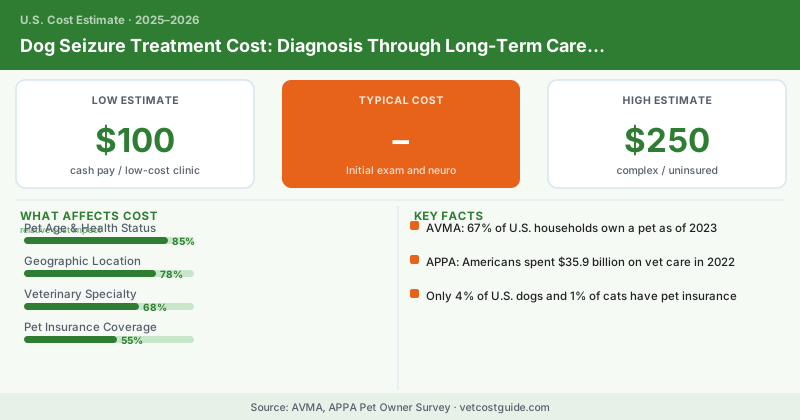
| Initial exam and neurological assessment | $100 | $250 | Every case |
| Baseline bloodwork | $100 | $250 | Every case, rules out metabolic causes |
| MRI (if structural cause suspected) | $1,500 | $4,000 | Atypical age of onset, abnormal neuro exam |
| Anti-seizure medication (monthly) | $30 | $100 | Ongoing, most cases |
| Drug level monitoring bloodwork | $80 | $200 | Every 6-12 months for certain medications |
| Emergency visit for cluster seizures | $300 | $800 | As needed |
| Hospitalization for status epilepticus | $800 | $2,500 | Life-threatening prolonged seizure |
Why Some Dogs Need an MRI and Others Don’t
Idiopathic epilepsy typically follows a recognizable pattern: onset between 1-5 years of age, a normal neurological exam between seizures, and normal baseline bloodwork. When a dog fits this profile, many veterinary neurologists consider advanced imaging optional rather than mandatory, since the diagnosis is largely one of exclusion based on the clinical picture.
An MRI becomes much more strongly recommended when a dog is younger than 1 or older than 5 at first seizure onset, has abnormal findings on neurological exam between seizures, or doesn’t respond well to standard first-line medication — all of which raise the possibility of a structural cause like a brain tumor that only imaging can identify. This is a genuine cost-benefit conversation to have directly with your vet or a referred veterinary neurologist.
Long-Term Medication Costs
Phenobarbital and potassium bromide are among the most commonly prescribed first-line anti-seizure medications, both relatively affordable at $30-$70/month for most dogs. Newer medications like levetiracetam (Keppra) or zonisamide are sometimes used as first-line or add-on therapy and can cost more, particularly if a dog needs the extended-release formulation dosed less frequently for owner convenience.
Phenobarbital specifically requires periodic bloodwork to monitor both drug levels (to confirm the dose is therapeutic but not toxic) and liver function, since it’s processed by the liver and can affect liver enzymes over long-term use. This monitoring, typically every 6-12 months once stable, adds a predictable recurring cost beyond the medication itself.
- Any single seizure lasting longer than 5 minutes is a medical emergency requiring immediate veterinary attention
- Multiple seizures within a 24-hour period (cluster seizures) also warrant an urgent vet visit, even if each individual seizure is brief
- A dog that doesn’t return to normal awareness within 30 minutes after a seizure needs prompt evaluation
- Keep a seizure log (date, time, duration, what happened before/during/after) — this genuinely helps your vet identify patterns and adjust treatment
Managing the Long-Term Cost
Once a dog is stable on medication, ongoing costs are fairly predictable: $30-$100/month for medication plus periodic monitoring bloodwork. The bigger financial risk is a breakthrough cluster seizure or status epilepticus requiring emergency hospitalization, which can add $500-$2,500 unexpectedly. Pet insurance enrolled before any seizure activity begins typically covers both the diagnostic workup and ongoing medication as a chronic condition, making early enrollment worthwhile especially for breeds with higher epilepsy prevalence, like Labradors, Beagles, and German Shepherds.
Frequently Asked Questions
Diagnosing the cause of seizures in dogs typically costs $500–$1,500 for baseline bloodwork and a neurological exam, rising to $2,000–$4,000 if advanced imaging like an MRI is needed to rule out a brain tumor or structural cause. Many dogs, especially those with idiopathic epilepsy, never need advanced imaging if bloodwork and exam findings fit the typical pattern.
Long-term anti-seizure medication for dogs typically costs $30–$100 per month depending on the drug prescribed and your dog's size, with periodic bloodwork ($80–$200 every 6-12 months) needed to monitor liver function and drug levels for certain medications like phenobarbital.