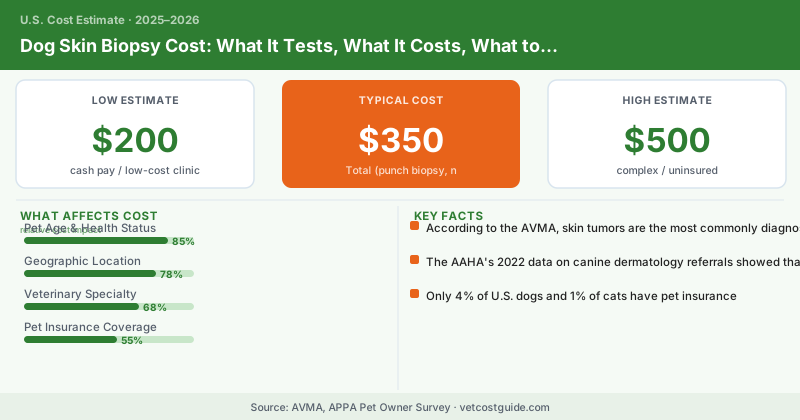
Your vet spent three minutes looking at the lump on your dog’s leg, then said the words you were hoping not to hear: “I think we should biopsy that.” A skin biopsy sounds scary — and expensive. In reality, it’s one of the most straightforward diagnostic procedures in veterinary medicine, the price is predictable, and the information it provides determines every treatment decision that follows. Here’s what you’ll actually pay.
- Punch biopsy (most common): $200–$400 total, including local anesthesia and pathology
- Excisional biopsy (mass removed and submitted): $300–$700, more if general anesthesia is needed
- Dermatology specialist consultation + biopsy: $400–$900
- Pathology lab interpretation fee (included in most estimates): $80–$150
- Results turnaround: 5–10 business days at most labs
Full Cost Breakdown
| Service | Low | Average | High |
|---|---|---|---|
| Office exam (dermatology focus) | $50 | $80 | $130 |
| Punch biopsy (1–2 sites) | $120 | $200 | $300 |
| Excisional biopsy (small mass) | $150 | $275 | $450 |
| General anesthesia (if needed) | $200 | $375 | $600 |
| Pathology lab fee | $80 | $115 | $150 |
| Cytology (fine needle aspirate, less invasive) | $60 | $100 | $160 |
| Dermatology specialist visit | $150 | $225 | $350 |
| Total (punch biopsy, no sedation) | $200 | $350 | $500 |
| Total (excisional biopsy + anesthesia) | $350 | $650 | $1,000 |
Punch Biopsy vs. Excisional Biopsy
A punch biopsy uses a circular cutting instrument — typically 4–6 mm in diameter — to remove a small cylinder of skin from the lesion. Local anesthetic is injected first; most dogs tolerate it with mild sedation or just the local block alone. The sample goes to a veterinary pathology lab in formalin. One to four sites may be biopsied in the same appointment to capture different stages of the skin condition.
An excisional biopsy removes the entire lesion — the mass, bump, or growth — along with a margin of normal tissue. This serves two purposes: it provides a definitive diagnosis AND removes the problem simultaneously. It requires more tissue manipulation and often general anesthesia, which is why it costs more. If the mass is small (under 2 cm), your regular vet can usually perform this in-house. Larger masses or those in complex locations may require a surgeon.
Fine needle aspirate (FNA/cytology) is cheaper and faster but less definitive — $60–$160 total. A needle is inserted into the mass, cells are aspirated onto a slide, and a pathologist reads the cell morphology. FNA works well for obvious lipomas, mast cell tumors with classic cytology, and cystic structures, but it can miss cancer in tumors that don’t exfoliate cells well. When cytology is inconclusive, a true biopsy follows.
What a Skin Biopsy Diagnoses
The list of conditions a skin biopsy can identify is long. Common reasons vets order them:
- Mast cell tumors — one of the most common skin cancers in dogs; biopsy provides grading (Grade 1, 2, or 3) that determines treatment intensity
- Soft tissue sarcomas — fibrosarcoma, myxosarcoma, peripheral nerve sheath tumors
- Sebaceous adenomas and cysts — usually benign but need confirmation
- Autoimmune skin diseases — pemphigus foliaceus, lupus erythematosus, vasculitis
- Chronic unresponsive skin conditions — when allergies, infections, or parasites don’t explain the picture, histopathology finds the answer
- Histiocytoma — a benign tumor common in young dogs that typically resolves on its own; biopsy confirms it’s not something worse
According to the AVMA, skin tumors are the most commonly diagnosed tumor type in dogs, accounting for roughly 30% of all canine cancer cases. Most are benign — but you can’t know without tissue diagnosis.
When Your Vet Recommends a Specialist
Dermatology specialists (board-certified veterinary dermatologists) see complex skin cases — extensive multifocal disease, rare autoimmune conditions, cases where initial biopsy interpretation is unclear, or patients with chronic skin disease that hasn’t responded to standard treatment. A dermatologist consultation runs $150–$350 for the initial visit, and they typically perform their own biopsy sampling as part of that appointment.
If you live near a veterinary university or specialty hospital, costs may be lower through the teaching clinic. Dermatology residency programs often see complex cases at reduced fees while providing excellent specialist-supervised care.
The AAHA’s 2022 data on canine dermatology referrals showed that 68% of dogs referred to dermatologists had a diagnosis change or refinement after specialist evaluation — underscoring that skin disease is often more complex than it appears.
Don’t skip a recommended biopsy on cost grounds alone. The $300 you spend on a punch biopsy tells you whether a mass is benign (save thousands on unnecessary treatment) or malignant (start the right treatment before spread occurs). Mast cell tumors, for example, look like innocent lipomas on the surface — cytology is suggestive, but biopsy with histopathology and grading is what determines whether surgery, radiation, and/or chemotherapy are needed. A benign result is also valuable: it gives you peace of mind and removes the mass from your watchlist.
After the Biopsy: What the Report Means
Results come back as a pathology report — typically 5–10 business days. Your vet will call you to discuss findings. Key terms to understand:
- Benign: Not cancer. The mass can be monitored or removed for cosmetic/comfort reasons, but it’s not life-threatening.
- Malignant: Cancer. Requires treatment planning — surgery, chemo, radiation, or palliative care depending on type and grade.
- Grade: For mast cell tumors, grade determines aggressiveness. Grade 1 = low risk, conservative margins may be sufficient. Grade 3 = aggressive, wide surgical margins plus systemic treatment recommended.
- Margins: If an excisional biopsy was performed, the report notes whether cancer cells extend to the cut edge. “Clean margins” means the tumor was fully removed; “dirty margins” means additional surgery or radiation is needed.
- Inconclusive: Sometimes the sample doesn’t yield a definitive answer — poor tissue quality, sampling error, or rare pathology. Your vet will recommend rebiopsy or specialist consultation.
Frequently Asked Questions
Is a skin biopsy painful for dogs? The local anesthetic injection stings briefly. After that, dogs typically don’t react to the punch biopsy itself. Some dogs get mild sedation if they’re anxious. Post-procedure soreness lasts 1–2 days; most dogs don’t seem to notice the biopsy site at all.
How long does healing take? Punch biopsy sites are small and heal within 7–14 days. One or two sutures are usually placed. Excisional biopsy sites take 10–21 days depending on size and location. E-collar use is recommended to prevent licking.
Can I decline a biopsy and just monitor the mass? You can — your dog, your decision. But understand what you’re accepting: an undiagnosed mass could be slowly growing malignancy. If the mass grows, changes shape, or your dog develops other symptoms, biopsy becomes more urgent. Your vet will document the recommendation and the timeline.
Frequently Asked Questions
A dog skin biopsy typically costs $200–$600, which includes both the biopsy procedure performed by your veterinarian and the pathology lab fees for analyzing the sample. The final cost depends on your location, your vet clinic's pricing, and whether additional testing or multiple samples are needed.
Most pet insurance plans cover skin biopsies as a diagnostic procedure if the condition isn't pre-existing, though you'll typically pay out-of-pocket and submit for reimbursement afterward. Coverage usually ranges from 70–90% of the biopsy cost after your deductible, but some policies exclude certain skin conditions or have specific limits, so check your plan details before the procedure.
Pathology results typically come back within 5–7 business days after your vet sends the sample to the lab, though some labs may take up to 2 weeks during busy periods. Your vet will contact you once results are available to discuss the diagnosis and recommended treatment options.