Your dog woke up this morning and couldn’t stand up. Hind legs dragging, yelping when touched along the back — and now a neurologist is telling you he needs spinal surgery within 24 hours. The estimate on the paper reads $6,500. That number isn’t wrong. Spinal surgery is one of the most expensive procedures in veterinary medicine, and it’s often an emergency. Here’s exactly what you’re looking at.
- Spinal surgery (hemilaminectomy or laminectomy) typically costs $3,000–$8,000 for the procedure itself.
- With pre-surgical diagnostics (MRI, CT, neuro exam) and hospitalization, total bills commonly reach $5,000–$10,000.
- Dogs with grade 1–3 neurological deficits who receive surgery within 24–48 hours of onset have the best outcomes — roughly 85–95% regain function.
- Dogs with grade 4–5 deficits (complete paralysis, no pain sensation) have lower odds — around 50–60% — even with surgery.
What Spinal Surgery Actually Costs
| Service | Low | Average | High |
|---|---|---|---|
| Neurological exam | $150 | $250 | $400 |
| MRI or CT scan | $1,500 | $2,500 | $4,000 |
| Hemilaminectomy (1 disc) | $2,500 | $4,500 | $7,000 |
| Laminectomy (multi-level) | $4,000 | $6,500 | $10,000 |
| Anesthesia + monitoring | $400 | $700 | $1,200 |
| Hospitalization (2–4 days) | $600 | $1,100 | $2,000 |
| Post-op rehab (4–8 wks) | $800 | $1,800 | $3,500 |
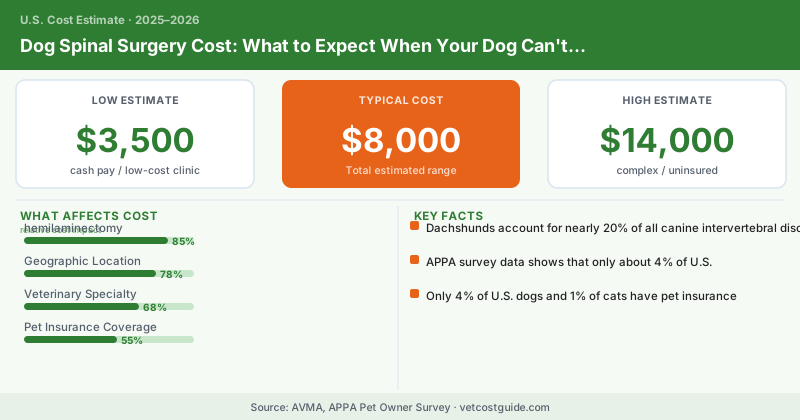
| Total estimated range | $3,500 | $8,000 | $14,000 |
Why Spinal Surgery Is This Expensive
Spinal surgery requires a board-certified veterinary neurologist or surgeon — not your regular vet. These specialists complete 3–4 years of residency training after veterinary school, operate at specialty referral hospitals, and work with equipment that costs hundreds of thousands of dollars.
The most common procedure is a hemilaminectomy: removing a portion of the vertebral bone to relieve pressure on the spinal cord, then extracting the herniated disc material compressing the nerves. For dogs with multiple disc sites involved, a full laminectomy — opening a wider corridor along the spine — is sometimes required.
The AVMA noted in its 2023 workforce study that specialty veterinary care has grown at nearly double the rate of general practice, driven partly by the rising volume of spinal cases in chondrodystrophic breeds (Dachshunds, French Bulldogs, Corgis). That demand shows up in both wait times and fees.
Diagnostic imaging is non-negotiable. Surgeons need to see exactly which disc has herniated and which nerve roots are compressed before they cut. MRI gives the highest resolution for soft tissue; CT myelography (injecting contrast dye into the spinal fluid space) is an alternative at lower cost. Expect $1,500–$4,000 just for the imaging, before any surgical charge appears.
Which Dogs Get Spinal Problems — and Why It Matters
Dachshunds account for nearly 20% of all canine intervertebral disc disease (IVDD) cases, according to data published in the Journal of Veterinary Internal Medicine. French Bulldogs, Beagles, Cocker Spaniels, and Basset Hounds are also disproportionately affected due to their chondrodystrophic genetics — cartilage calcifies in the discs faster than in other breeds.
Larger breeds like German Shepherds and Labrador Retrievers get a different kind of spinal problem — degenerative myelopathy or Hansen Type II disc disease, which typically develops more gradually.
Why does breed matter for costs? Because chondrodystrophic breeds often have multiple disc sites at risk. Surgery on one disc doesn’t prevent others from herniating later. Some owners end up repeating the process two or three years down the road.
Conservative Management: When Surgery Isn’t the First Step
Not every spinal case requires surgery. Dogs with grade 1 or 2 deficits — pain and mild wobbliness but still ambulatory — are sometimes managed conservatively with strict crate rest (6–8 weeks, no jumping), anti-inflammatory medication, and pain management.
Conservative management costs $300–$800 total versus $5,000–$10,000 for surgery. But here’s the tradeoff: roughly 30–40% of dogs managed conservatively relapse, and each relapse that involves a grade 4–5 presentation pushes the surgical success rate lower. The AAHA recommends surgical consultation for any dog that has progressed to paralysis or is not responding to conservative management within 48 hours.
The Insurance Question
APPA survey data shows that only about 4% of U.S. dog owners carry pet insurance — which means the vast majority of families facing a $7,000 spinal surgery bill have no coverage. That number is changing slowly, but not fast enough.
If your dog is a Dachshund, French Bulldog, or other IVDD-prone breed, enrolling in a comprehensive accident-and-illness policy before any back symptoms develop is one of the clearest financial decisions you can make. A policy covering 80% after a $500 deductible would leave you responsible for about $1,600 on a $7,000 bill instead of the full amount.
Do not delay seeking a specialist consultation to “see if it gets better.” Spinal cord compression causes progressive necrosis — the longer the cord stays compressed, the more tissue dies permanently. Dogs presenting with paralysis and absent deep pain sensation have a roughly 50% chance of recovery with immediate surgery. Waiting 48 hours or more with that presentation reduces it significantly. If your vet mentions spinal involvement, ask for a referral to a veterinary neurologist the same day.
Rehabilitation After Surgery
Surgery gets the pressure off the cord — rehabilitation is what actually rebuilds the connection between brain and body. Most dogs need 4–8 weeks of structured physical therapy: underwater treadmill sessions, neuromuscular stimulation, passive range-of-motion exercises, and balance work.
Expect to pay $60–$120 per session, 2–3 times per week for the first month. Some owners learn home exercises from a certified canine rehabilitation therapist (CCRT) to reduce ongoing costs. Carts and wheelchairs ($200–$600) can help non-ambulatory dogs maintain quality of life during recovery.
Frequently Asked Questions
Can my regular vet do spinal surgery? General practitioners can handle some spinal injuries in an emergency, but hemilaminectomy and laminectomy require specialized training and equipment. A board-certified veterinary neurologist or surgeon gives your dog the best odds of a good outcome.
How long is recovery from spinal surgery? Most dogs begin regaining neurological function within 1–4 weeks. Full recovery — return to normal gait and bladder control — typically takes 6–12 weeks with proper rehabilitation. Some dogs with severe pre-surgical deficits take longer or achieve partial recovery only.
Is spinal surgery worth it for a senior dog? Age alone isn’t a contraindication for surgery. A healthy 10-year-old dog with good cardiovascular and kidney function can tolerate anesthesia and recover well. The key factors are neurological grade, overall health status, and how quickly treatment is initiated — not age.
Frequently Asked Questions
Dog spinal surgery typically costs between $3,000 and $10,000, with most procedures falling around $6,500. The final bill depends on the specific procedure type (hemilaminectomy or laminectomy), your geographic location, the veterinary hospital's expertise level, and whether additional imaging or complications arise during surgery.
Many pet insurance policies do cover spinal surgery, but coverage varies widely by plan and pre-existing condition exclusions apply. Most policies require you to pay upfront and then submit for reimbursement, typically covering 70–90% of eligible costs after your deductible, leaving you responsible for $600–$3,000 out-of-pocket depending on your plan.
Spinal surgery is most effective when performed within 24–48 hours of symptom onset, as delayed surgery reduces the chances of full recovery. Your veterinarian will recommend emergency surgery if your dog shows signs of complete paralysis or loss of pain sensation, as waiting longer decreases the likelihood of restoring mobility.