In 2010, a German Shepherd presented to a Colorado emergency clinic with a distended abdomen and a heart rate of 170. Internal bleeding from a ruptured splenic mass. The owner had no idea anything was wrong. Surgery: $4,200. That story plays out thousands of times a year — the spleen is one of the most frequent sites of mass development in dogs, and it often gives no warning.
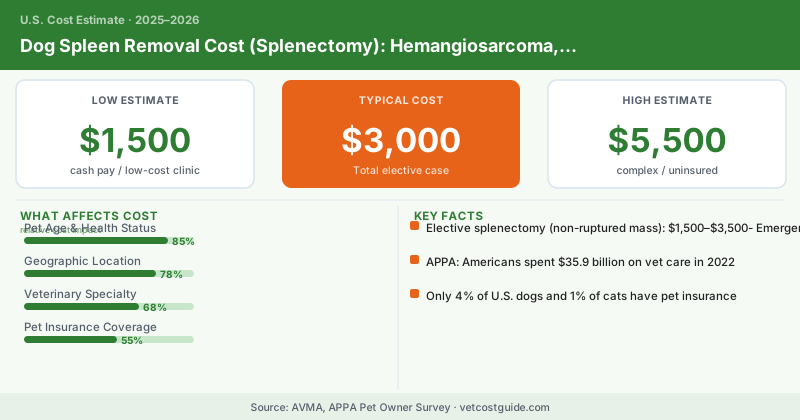
- Elective splenectomy (non-ruptured mass): $1,500–$3,500
- Emergency splenectomy (active internal bleeding): $3,000–$7,000
- Hemangiosarcoma (the most common malignant splenic tumor in dogs) affects approximately 0.2% of all dogs, but 1–2% of Golden Retrievers and German Shepherds — the AVMA identifies these breeds as highest-risk
- About 2/3 of splenic masses in dogs are malignant, primarily hemangiosarcoma; 1/3 are benign (hematoma, nodular hyperplasia)
- Splenectomy adds 2–3 months of survival time for hemangiosarcoma; with chemotherapy (doxorubicin protocol), median survival extends to 4–6 months
- Dogs can live a normal life without a spleen — the organ is not essential for adult survival
Dog Splenectomy Cost Breakdown
| Service | Low | Average | High |
|---|---|---|---|
| Abdominal ultrasound + aspirate | $300 | $600 | $1,000 |
| Pre-surgical bloodwork + clotting panel | $150 | $300 | $500 |
| Elective splenectomy (surgery) | $1,000 | $2,000 | $3,000 |
| Emergency splenectomy (ruptured) | $2,000 | $3,500 | $5,500 |
| Blood transfusion (if needed) | $500 | $800 | $1,500 |
| ICU hospitalization per day | $400 | $700 | $1,200 |
| Post-op hospitalization (2–3 days) | $800 | $1,400 | $2,500 |
| Histopathology (mass analysis) | $150 | $250 | $400 |
| Chemotherapy consultation (if cancer) | $200 | $400 | $700 |
| Doxorubicin chemo (per cycle) | $400 | $700 | $1,200 |
| Total elective case | $1,500 | $3,000 | $5,500 |
| Total emergency case | $3,000 | $5,500 | $8,500 |
Why Splenic Masses Develop
The spleen filters blood and supports the immune system. In older dogs, cellular mutations lead to abnormal growths — some benign, some not. The challenge: splenic masses are often found accidentally on routine ultrasound, or discovered only when they rupture.
Hemangiosarcoma (HSA) is the most feared. It’s a malignant tumor of blood vessel lining cells that bleeds internally and metastasizes early — typically to the liver, lungs, and heart. The mass often gives no symptoms until it ruptures catastrophically.
Benign masses (hematomas, nodular hyperplasia) look identical on ultrasound. The only way to tell the difference is histopathology after removal. This is why many oncologists say “remove first, diagnose after” — the alternative is waiting and risking a rupture.
Emergency vs. Elective: The Cost Difference
An elective splenectomy is performed after a mass is found incidentally on imaging, before it’s ruptured. The dog is stable, the surgeon can plan, and blood transfusions are usually not needed. Total: $1,500–$3,500.
An emergency splenectomy happens when the mass ruptures, causing internal hemorrhage. The dog arrives collapsed, pale gums, heart rate 160+. The surgeon needs to work fast, often with active bleeding in the abdomen. A blood transfusion (or two) is frequently required. ICU monitoring follows surgery. Total: $3,000–$7,000.
The math is clear: if your vet finds a splenic mass, scheduling surgery soon — before rupture — saves both money and crisis. The problem is that many owners choose to “watch and wait,” not realizing that rupture is unpredictable and often fatal within hours without immediate surgery.
The ABCD Rule for Splenic Masses
Oncology vets use a rough rule of thumb: Age, Breed, Clinical signs, Diameter. Older large-breed dogs (especially Golden Retrievers, German Shepherds, Labrador Retrievers, Vizslas) with masses larger than 5 cm have a significantly higher probability of malignancy. This isn’t a perfect predictor, but it helps guide the urgency of surgical planning.
What Happens After Surgery
If histopathology returns as a benign mass — good news. No further treatment. Dogs typically return to normal life within 2–3 weeks. Recheck ultrasound at 3 months to ensure no recurrence elsewhere.
If histopathology returns as hemangiosarcoma, the conversation turns to:
- Median survival with surgery alone: 1–3 months
- Median survival with surgery + doxorubicin chemotherapy: 4–6 months
- Chemotherapy costs: $400–$1,200 per cycle, typically 5–6 cycles = $2,000–$7,000 total
Some owners choose surgery for quality of life but decline chemotherapy. There’s no wrong answer — it’s a personal decision informed by the dog’s age, overall health, and the family’s goals.
Know the signs of internal splenic bleeding in at-risk large breeds: sudden profound weakness or collapse, pale or white gums, rapid weak heartbeat, distended abdomen. This is a life-threatening emergency. Don’t wait for a regular vet appointment. Go directly to the nearest emergency clinic. Minutes matter.
Surveillance for High-Risk Breeds
For Golden Retrievers and German Shepherds over age 7, many veterinary oncologists recommend abdominal ultrasound every 6–12 months as surveillance. Cost: $200–$400 per ultrasound. The goal is finding masses before rupture, when elective surgery is both safer and cheaper. Whether this surveillance changes survival outcomes significantly remains debated, but it does increase the chance of scheduled rather than emergency surgery.
Does Pet Insurance Cover Splenectomy?
Yes — surgical removal of a diseased spleen is covered as an illness or surgical procedure under all comprehensive policies. Cancer treatment including hemangiosarcoma chemotherapy is covered by most plans that include cancer coverage (Trupanion, Nationwide, Fetch, Embrace, ASPCA). Read your policy’s cancer coverage section carefully — some budget plans exclude cancer treatment.
The Bottom Line
Dog splenectomy costs $1,500–$8,500 depending on whether surgery is elective or emergency. Owners of high-risk breeds — Golden Retrievers, German Shepherds, and Labrador Retrievers — should discuss surveillance imaging with their vet starting around age 7. When a mass is found, the decision to operate before it ruptures is almost always the right call, both medically and financially.
Frequently Asked Questions
Emergency splenectomy typically costs $3,500–$6,000, significantly higher than elective surgery due to overnight hospitalization, blood transfusions, and 24/7 anesthesia monitoring. A ruptured splenic mass with internal bleeding can push costs toward the upper range, especially at specialty or emergency clinics.
Most pet insurance plans cover splenectomy if the condition isn't classified as pre-existing, though you'll typically pay 10–30% out-of-pocket after meeting your deductible ($250–$1,000). Emergency splenectomy claims often have higher approval rates than elective surgery since the condition is acute and life-threatening.
Most dogs recover within 2–3 weeks and can resume normal activity after 10–14 days, though surgical site stitches stay in for 10–14 days. The spleen is not essential for survival, so dogs live normal lifespans post-splenectomy without long-term dietary or activity restrictions.