Over 20,000 dogs have been treated with stem cell therapy in the US since VetStem Biopharma launched in 2004. The results for osteoarthritis are genuinely impressive — but the cost is steep, and this is a decision worth researching carefully before committing.
Canine stem cell therapy has moved from experimental to mainstream at specialty veterinary practices and university hospitals. It’s not a cure for the conditions it treats, and it doesn’t work for every dog. But for dogs with moderate-to-severe osteoarthritis who have plateaued on conventional therapy — NSAIDs, gabapentin, joint supplements — it offers a legitimate regenerative option with documented outcomes.
Here’s exactly what it costs, how it works, and how to evaluate whether the investment makes sense for your dog.
How It Works: The Science Behind the Price
The most widely used approach in veterinary medicine is adipose-derived mesenchymal stem cell therapy (AD-MSC). Here’s the process:
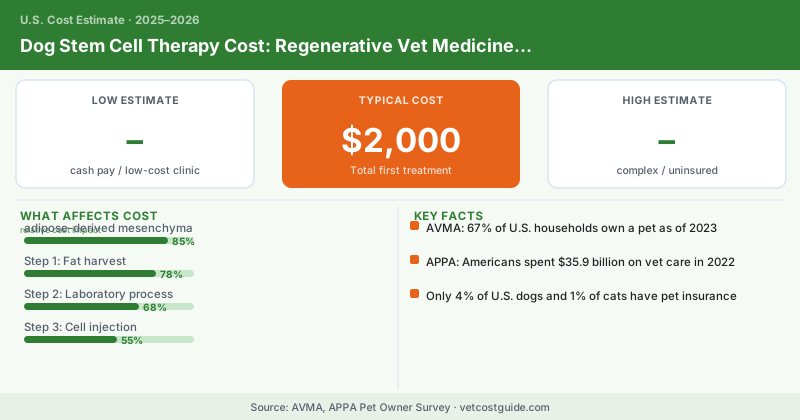
Step 1: Fat harvest. Under general anesthesia, the veterinarian removes a small amount of adipose (fat) tissue — typically 5–10 grams — from a site like the subcutaneous fat behind the shoulder blades or near the falciform ligament.
Step 2: Laboratory processing. The fat tissue is shipped overnight to a processing laboratory. VetStem Biopharma (San Diego, CA) processes the majority of US veterinary cases. Technicians isolate and concentrate the mesenchymal stem cells from the fat sample.
Step 3: Cell injection. Approximately 24–48 hours after the fat harvest, the concentrated stem cells are shipped back and injected into the affected joints, often under light sedation. For hip dysplasia, both hip joints are typically injected. Intravenous infusion is also used in some protocols for systemic conditions.
The mechanism: mesenchymal stem cells have anti-inflammatory properties and can differentiate into cartilage, bone, and connective tissue cells. In OA joints, they reduce the inflammatory cytokine environment, promote local tissue repair, and modulate the immune response — resulting in measurably less pain and better joint function in responding dogs.
What It Actually Costs
| Component | Cost Range | Notes |
|---|---|---|
| Initial consultation and workup | $200–$500 | Radiographs, bloodwork, OA staging |
| Fat harvest surgery (anesthesia + procedure) | $500–$1,200 | Outpatient; 1–2 hour procedure |
| VetStem/lab processing fee | $900–$1,500 | Per treatment case |
| Joint injection appointment | $200–$500 | Light sedation usually included |
| Banked stem cell booster injection | $300–$600 | From cells stored at first harvest |
| Second booster (if needed) | $300–$600 | Usually 6–12 months after first treatment |
| Total first treatment (all-in) | $2,000–$4,500 | National average |
| High-cost markets (CA, NY, WA) | $3,000–$6,000 | Urban specialty practices |
One significant advantage: VetStem and similar processors bank additional stem cells from the initial fat harvest. These banked cells can be used for future booster injections at a lower cost ($300–$600) without requiring a second surgery. This brings the cost of long-term maintenance down substantially.
Who Responds Best
Not all dogs respond equally, and honest practitioners will tell you this upfront.
Strong candidates:
- Dogs with moderate OA who have plateaued on NSAIDs and joint supplements
- Hip dysplasia patients — VetStem reports improvement in 80%+ of dogs treated for hip OA in their published case series
- Dogs with elbow dysplasia or stifle OA
- Dogs who can’t tolerate NSAIDs long-term (kidney disease, GI sensitivity)
- Dogs who have maintained muscle mass and aren’t severely debilitated
Poor candidates or situations requiring caution:
- Dogs with severe, end-stage joint destruction — there’s not enough joint architecture left for stem cells to work with
- Dogs with active infection or cancer — stem cell therapy is contraindicated
- Very old or debilitated dogs who are poor anesthesia candidates — the fat harvest requires general anesthesia
- Dogs whose pain is primarily neuropathic rather than inflammatory-arthritic
A published 2016 case series in Veterinary Surgery involving dogs treated with adipose-derived stem cells for hip OA showed significant improvements in pain scores and range of motion at 30 and 90 days post-treatment, with benefits maintained at 6-month follow-up in the majority of cases.
Most US veterinary stem cell procedures use VetStem Biopharma’s centralized laboratory processing. Some larger specialty practices have invested in point-of-care processing units (Arthrex PureBMC, MediVet) that process cells on-site the same day — eliminating the 24-hour shipping window but typically costing more for the equipment. Both approaches have published evidence. Ask your vet which system they use and why.
Pet Insurance Coverage
The insurance landscape for canine stem cell therapy has improved over the past five years, as the procedure has shifted from experimental to recognized veterinary treatment.
Plans more likely to cover it:
- Trupanion — covers “therapeutic procedures” prescribed by vets; stem cell therapy often qualifies
- Nationwide Whole Pet with Wellness plan
- Healthy Paws (some cases with prior authorization)
- ASPCA Pet Health Insurance alternative care riders
Always required: prior authorization from the insurer before the procedure. Do not schedule stem cell therapy and then submit a retroactive claim — most insurers require pre-approval for procedures over $500.
Pre-existing conditions: If your dog already has an OA diagnosis before your policy started, that joint condition is almost certainly excluded as a pre-existing condition. New diagnoses after policy inception have a much better chance of coverage.
Get the prior authorization in writing before your dog goes into surgery for the fat harvest. Some owners have scheduled the procedure based on a verbal okay from a customer service representative, only to receive a denial when the claim was submitted. Written pre-authorization protects you.
Comparing Stem Cell Therapy to Alternatives
At $2,000–$5,000, canine stem cell therapy is expensive. How does it compare to other options for moderate-to-severe OA?
Librela (bedinvetmab) monthly injections: $80–$150/month = $960–$1,800/year. No anesthesia required. Newer drug (FDA approved 2023). Different mechanism (anti-NGF monoclonal antibody). Many dogs do very well. If Librela works for your dog, it may be a lower-cost path.
Total hip replacement (THR): $4,500–$7,000 per hip for severe hip dysplasia. Genuinely curative for the joint, but higher surgical risk, longer recovery, not appropriate for all patients.
Continued NSAIDs + supplements: $100–$300/month depending on the drug. Works until it doesn’t — or until kidney values start climbing. No procedure risk, but not a long-term solution for all dogs.
Stem cell therapy + banked boosters: $2,000–$4,500 initial; $300–$600 boosters as needed. Many dogs need one or two treatments per year after the initial procedure. Some sustain benefits for 12–18 months between boosters.
For dogs who can’t tolerate NSAIDs long-term, who’ve maxed out conventional therapy, or whose owners want to avoid the significant risks of joint replacement surgery, stem cell therapy fills a real gap in the treatment algorithm.
Finding a Qualified Practice
Not every vet performs canine stem cell therapy. Look for:
- Specialty practices (internal medicine, surgery, rehabilitation) with explicit stem cell experience
- University veterinary hospitals — major universities (UC Davis, Cornell, Colorado State, NC State) have regenerative medicine programs
- ISVRA members — the International Veterinary Stem cell Research Association maintains a practitioner directory
Ask the practice: How many canine stem cell procedures have you performed? What is your typical patient improvement rate? Do you bank cells for future boosters? What follow-up care is included?
A practice with honest answers — including acknowledgment of cases where the therapy didn’t produce significant benefit — is a practice you can trust with a $3,000 decision.
Frequently Asked Questions
Canine stem cell therapy typically costs $2,000–$5,000 for the complete procedure — fat harvest surgery, cell processing, and injection. Follow-up booster injections cost $300–$800 each. The total first-year investment is often $2,500–$5,500 when boosters are included.
The strongest evidence is for osteoarthritis (hip, elbow, stifle joints) and hip dysplasia. It's also used for degenerative joint disease, chronic soft tissue injuries, and sometimes inflammatory bowel disease and immune-mediated conditions, though the evidence for non-orthopedic applications is less robust.
Coverage varies significantly. Some policies with alternative or advanced therapy provisions cover it; many standard plans don't. Because stem cell therapy is increasingly mainstream in veterinary medicine, more insurers are beginning to cover it — but prior authorization is almost always required. Check your policy before scheduling.
In the most common method (adipose-derived), the vet surgically removes a small amount of fat tissue (usually from behind the shoulder or near the kidney). That fat is sent to a laboratory (VetStem Biopharma processes most US cases) where mesenchymal stem cells are isolated and concentrated. The cells are then injected into the affected joints — typically 24–48 hours after the fat harvest.