Myth: the $150 “anesthesia-free” teeth cleaning at the groomer is basically the same thing as the $500 vet cleaning, just cheaper.
Fact: they’re not the same service. At all. One removes visible surface tartar. The other treats actual periodontal disease — the infection that lives below the gumline where instruments can’t safely go in a conscious dog. This distinction explains the price difference, and understanding it protects you from spending money on something that makes the teeth look better while disease progresses invisibly underneath.
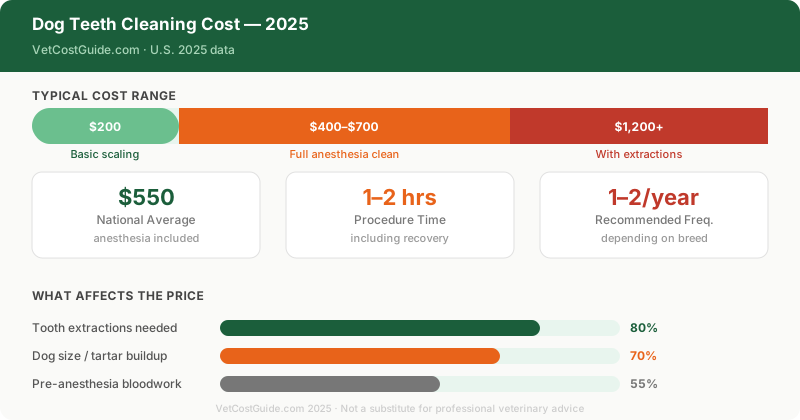
Professional cleaning under anesthesia runs $300–$900 at most US clinics. Here’s what determines where you land in that range — and what the bill actually covers.
- Professional veterinary dental cleaning costs $300–$900 and requires anesthesia.
- Anesthesia-free cleanings cost $100–$300 but only remove visible surface tartar — they don’t treat disease.
- Tooth extractions add $10–$25 per tooth for simple pulls, $100–$300+ per tooth for surgical extractions.
- Pre-anesthetic bloodwork adds $80–$200 and is typically required for dogs over age 7.
- Annual cleanings cost less than treating advanced periodontal disease, which can require $1,000–$3,000 in extractions.
Dog Teeth Cleaning Cost in 2025
| Service | Low | Average | High |
|---|---|---|---|
| Dental cleaning (anesthesia included) | $300 | $550 | $900 |
| Pre-anesthetic bloodwork | $80 | $150 | $200 |
| Dental X-rays (full mouth) | $75 | $150 | $300 |
| Simple tooth extraction (per tooth) | $10 | $20 | $50 |
| Surgical tooth extraction (per tooth) | $100 | $200 | $350 |
| Advanced periodontal treatment | $200 | $500 | $1,200 |
| Anesthesia-free cleaning (cosmetic only) | $100 | $175 | $300 |
| Specialist dental clinic | $500 | $900 | $1,800 |
What’s Actually in the Price
A proper veterinary dental cleaning isn’t just tartar scraping. It includes:
Pre-operative examination to assess oral health before anesthesia begins. Inhalant anesthesia with intubation — intubation isn’t just for the dog’s comfort, it’s necessary to protect the airway from aerosolized bacteria and debris during the cleaning. Ultrasonic scaling above and below the gumline — that below-the-gumline part is the reason anesthesia is required. You cannot safely instrument the periodontal pockets of a conscious, moving patient. Hand scaling for spots the ultrasonic unit can’t reach. Polishing to smooth enamel and slow future tartar accumulation. Full-mouth dental radiographs — up to 40% of dental disease is detectable only on radiographs. Teeth that look fine above the gumline may have severe root disease hiding below it.
Anesthesia for a healthy dog carries under 0.1% mortality risk. The health consequences of untreated periodontal disease — documented associations with cardiac valve disease, kidney damage, chronic oral pain — are meaningfully more dangerous than the anesthesia required to treat it.
Pre-anesthetic bloodwork (CBC and chemistry panel) screens organ function before anesthesia. Most vets require it for dogs over 7; it’s recommended for any dog with unknown health history or existing conditions. It’s a safety measure that changes anesthesia protocols when it identifies kidney or liver issues — not an upsell.
The Anesthesia-Free Question
The American Veterinary Dental College is explicit on this: anesthesia-free cleanings are cosmetic. They remove surface tartar. They do not treat periodontal disease. The infection, bone loss, and pocket bacteria that characterize the disease live below the gumline — and you cannot reach them in a conscious dog without causing injury.
This doesn’t mean anesthesia-free services are fraudulent. But they should be understood accurately: cosmetic tartar removal, not dental disease treatment. A dog whose teeth look cleaner after an anesthesia-free cleaning may still be accumulating subgingival disease that’s now harder for an owner to notice.
What Pushes Your Bill Higher
Your dog’s oral health at cleaning time. This is the biggest variable. A young dog with minimal tartar and no periodontal disease: $300–$450. A 10-year-old with advanced disease, loose teeth, bone loss, and multiple extractions needed: $800–$2,000+. Your vet can assess the likely severity at a wellness exam, but the exact extraction count isn’t known until your dog is under and fully examined.
Dental radiographs. Full-mouth X-rays add $75–$300 and are clinically essential — not optional extras. Some clinics include them in the cleaning quote; others bill separately. Ask upfront.
Dog size. Larger dogs have more teeth, need more anesthetic, and take longer to clean. A large dog with significant buildup costs more than a small dog with clean gums.
Clinic type and location. Corporate practices (Banfield, VCA) sometimes offer flat-rate dental packages ($400–$700). Independent specialty dental clinics with board-certified veterinary dentists charge more ($800–$1,800) but offer the highest level of dental expertise available. Urban coastal practices run 30–50% above comparable services in the rural Midwest.
Cleaning frequency. Dogs with daily tooth brushing and annual cleanings accumulate minimal tartar — their appointments are faster and cheaper. A dog that hasn’t been cleaned in five years brings proportionally more calculus and a higher likelihood of needing extractions.
- Anesthesia-free cleanings marketed as equivalent. The American Veterinary Dental College explicitly states that non-anesthetic cleanings are cosmetic and do not treat periodontal disease. Tartar below the gumline — where disease actually progresses — cannot be safely removed in a conscious dog. This isn’t a cost-cutting alternative; it’s a different (and ineffective) service.
- Open-ended extraction estimates. Clinics may give you a base cleaning price but can’t guarantee extraction costs until surgery. Ask for a worst-case estimate and authorize a spending limit — your vet should call you intraoperatively if extractions will exceed that amount.
- Skipping dental X-rays to save money. Teeth that look normal above the gumline may have severe root disease detectable only on radiograph. Skipping X-rays now often means a more expensive, painful problem later.
Pet Insurance and Dental Coverage
Most pet insurance plans don’t cover routine dental cleanings — they’re classified as preventive or wellness care. Dental illness (periodontal disease treatment, extractions, dental infections) is covered by many comprehensive illness plans. If your dog develops advanced disease requiring multiple surgical extractions ($500–$1,500+), dental illness coverage pays meaningful benefits.
Wellness add-ons from carriers like Nationwide, Embrace, and ASPCA Pet Health Insurance typically cover one annual cleaning, reimbursing $75–$150. Not full coverage, but a real offset for annual maintenance.
Practical Ways to Spend Less
Start brushing now. Daily brushing with enzymatic toothpaste is the single most effective cost-reduction tool for dental care. It slows tartar accumulation, extends time between professional cleanings, and reduces the complexity — and cost — of each procedure. It’s not a platitude. A dog brushed daily from puppyhood may need cleaning every two to three years instead of annually.
Don’t wait. A dog with mild tartar and no periodontal disease costs $300–$500 to clean. The same dog with moderate disease and several extractions needed three years later costs $900–$1,800. This is one of the most concrete examples in veterinary medicine of prevention being cheaper than treatment.
Ask for a pre-dental exam. An oral assessment at a regular wellness visit gives you a realistic sense of disease severity before you schedule a cleaning — so you can budget rather than be surprised.
Check February discounts. February is National Pet Dental Health Month. Many clinics offer 10–20% off dental procedures. Worth asking about in January.
Use VOHC-accepted dental chews between cleanings. Greenies, OraVet, and CET chews carry the Veterinary Oral Health Council seal — meaning they’ve been tested and shown to reduce tartar accumulation. Cost: $20–$40/month.
Frequently Asked Questions
How often does my dog need a professional teeth cleaning? Most dogs need a professional cleaning every 1–3 years. Small breeds (Chihuahuas, Yorkies, Pugs) are prone to accelerated tartar and periodontal disease and may need annual or even twice-yearly cleanings. Large breeds with good home care may go 2–3 years between cleanings. Your vet will assess your individual dog.
Is anesthesia dangerous for my dog? For healthy dogs, anesthesia risk is very low (under 0.1% mortality). For senior dogs or those with heart or kidney disease, pre-anesthetic bloodwork and careful monitoring reduce risk substantially. The risk of untreated periodontal disease — including heart, kidney, and liver complications from chronic oral bacteria — typically exceeds the anesthesia risk.
My dog had teeth pulled last cleaning. Will it hurt them? Dogs tolerate tooth extractions remarkably well. Most are eating normally within 24–48 hours after extraction, often with significantly better comfort than before — because they’re no longer in chronic dental pain. Dogs with no teeth at all can eat dry food using their gums.
What’s the difference between a dental cleaning and a dental procedure? A “cleaning” refers to prophylactic scaling and polishing in a mouth with mild to moderate tartar. A “dental procedure” or “dental surgery” implies extractions, treatment of significant periodontal pockets, or management of a dental infection. The latter is meaningfully more expensive due to time, materials, and complexity.
Frequently Asked Questions
A professional veterinary teeth cleaning with anesthesia typically costs $300–$900, depending on your dog's size, age, and the extent of tartar buildup or periodontal disease. This price usually includes pre-anesthetic bloodwork, the cleaning procedure itself (which reaches below the gumline), and post-operative monitoring. Additional extractions or treatments for advanced dental disease can push costs higher.
Most standard pet insurance plans do not cover routine teeth cleaning because it's classified as preventive or elective care, though a few insurers offer it as an optional add-on rider. However, if your dog develops periodontal disease that requires treatment, some policies may cover a portion of the procedure if it's deemed medically necessary rather than cosmetic. Check your specific policy details, as coverage varies significantly between providers.
Anesthesia-free cleanings at groomers ($100–$300) remove only visible surface tartar above the gumline and cannot safely access the areas where periodontal disease develops. A veterinary cleaning with anesthesia ($300–$900) cleans below the gumline, treats actual infections, and allows your vet to assess and extract diseased teeth—making it a therapeutic procedure rather than purely cosmetic. Skipping professional cleaning can lead to tooth loss and serious infections if periodontal disease goes untreated.