A positive Lyme test at your dog’s annual exam is genuinely alarming — until your vet explains that most dogs who test positive for Lyme disease never develop clinical illness and don’t require treatment. But Lyme isn’t the only tick-borne disease dogs get, and the others — ehrlichiosis and anaplasmosis in particular — can cause serious, expensive illness. Knowing which disease you’re dealing with and what treatment involves changes the cost picture dramatically.
The Tick-Borne Disease Landscape
The CDC reports that tick-borne diseases in the US have more than doubled over the past two decades, with Lyme disease representing the majority of cases. Dogs are exposed to multiple pathogens through the same tick bites:
- Lyme disease (Borrelia burgdorferi) — transmitted by black-legged deer ticks, primarily in the Northeast, Upper Midwest, and Pacific Coast
- Ehrlichiosis (Ehrlichia canis, E. chaffeensis) — transmitted by brown dog ticks and lone star ticks; seen throughout the Southeast and South-Central US
- Anaplasmosis (Anaplasma phagocytophilum) — black-legged ticks; similar range to Lyme
- Rocky Mountain Spotted Fever (Rickettsia rickettsii) — American dog tick, Rocky Mountain wood tick; can be rapidly fatal without treatment
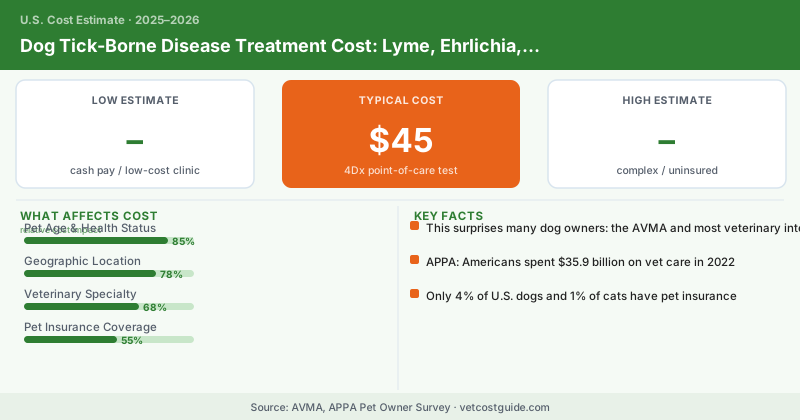
Most general vet practices use a 4Dx test (IDEXX) as a point-of-care screen that tests simultaneously for heartworm, Lyme, Ehrlichia, and Anaplasma. This is often included in annual preventive care panels.
Diagnosis Costs
| Test | Cost | What It Tests For |
|---|---|---|
| 4Dx point-of-care test | $45–$80 | Heartworm + Lyme + Ehrlichia + Anaplasma antibodies |
| Lyme SNAP titer (standalone) | $35–$60 | Lyme antibody |
| Lyme Quant C6 (quantitative) | $60–$120 | Lyme antibody level; guides treatment decision |
| PCR panel (tick-borne diseases) | $150–$300 | Active infection (more specific than antibody) |
| CBC + chemistry | $150–$300 | Baseline; checks for low platelets (ehrlichiosis) |
| Urinalysis + protein:creatinine ratio | $80–$150 | Lyme nephritis screening |
| Full diagnostic workup | $400–$700 | When clinical illness is suspected |
Treatment Costs by Disease
| Disease | First-Line Treatment | Duration | Treatment Cost |
|---|---|---|---|
| Lyme (asymptomatic, low titer) | Often no treatment needed | — | $0–$100 (monitoring) |
| Lyme (symptomatic or high titer) | Doxycycline 10 mg/kg/day | 30 days | $50–$150 |
| Lyme nephritis | Intensive hospitalization + immunosuppression | Weeks | $2,000–$6,000 |
| Ehrlichiosis (acute) | Doxycycline | 4–8 weeks | $80–$200 |
| Ehrlichiosis (chronic, severe) | Hospitalization + blood transfusion possible | Variable | $1,500–$5,000 |
| Anaplasmosis (acute) | Doxycycline | 2–4 weeks | $60–$150 |
| RMSF (Rocky Mountain Spotted Fever) | Doxycycline urgently | 7–10 days | $100–$300 + hospitalization if severe |
Lyme Disease: Why Most Dogs Don’t Need Treatment
This surprises many dog owners: the AVMA and most veterinary internal medicine specialists recommend against treating asymptomatic Lyme-positive dogs with low antibody titers. Here’s why — only 5–10% of Lyme-exposed dogs ever develop clinical illness. The antibody test detects exposure, not active disease. Most dogs clear the infection without showing any symptoms.
Treatment with doxycycline is recommended when:
- The dog is showing clinical signs (joint pain, fever, lethargy, limping)
- The Quant C6 titer is elevated (above 30 U/mL is one threshold vets use)
- Protein is found in the urine (suggesting Lyme nephritis risk)
If your dog is asymptomatic and the titer is low, your vet may recommend monitoring rather than immediate treatment — and that’s evidence-based, not inattention.
A small percentage of Lyme-positive dogs develop Lyme nephritis — an immune-mediated kidney disease where Lyme antibody-antigen complexes deposit in the kidneys and destroy function. Affected dogs develop protein in the urine, hypoalbuminemia, edema, and eventually kidney failure.
Certain breeds are disproportionately affected: Labrador Retrievers, Golden Retrievers, and Shetland Sheepdogs appear in Lyme nephritis case series far more than their population proportion would predict.
Treatment requires addressing both the Lyme infection and the immune-mediated kidney damage — immunosuppressants, protein-restricted diet, blood pressure management. Hospitalization costs: $2,000–$6,000. Long-term management: $200–$500/month. Prognosis is often guarded.
Annual urine protein screening (urine protein:creatinine ratio) in Lyme-endemic areas costs $50–$100 and can catch nephritis early. Worth doing in high-exposure dogs, especially predisposed breeds.
Ehrlichiosis: The More Dangerous Tick Disease
Ehrlichiosis causes more serious acute illness than Lyme in most dogs. Ehrlichia bacteria infect white blood cells, causing fever, low platelet counts, lethargy, spontaneous bleeding (nosebleeds, blood in urine), and — in severe cases — bone marrow suppression.
Acute ehrlichiosis responds well to doxycycline when caught early: 4–8 weeks of treatment, total cost $80–$200. The problem is chronic ehrlichiosis — when the disease goes undiagnosed and the organism persists in the body for months. Chronic cases cause severe bone marrow suppression (pancytopenia), and treatment becomes significantly more complex and expensive.
Blood transfusions for severely anemic or thrombocytopenic dogs: $500–$1,500 per transfusion. Some chronic cases require multiple transfusions.
Rocky Mountain Spotted Fever is the most serious tick-borne disease in dogs and moves fast — dogs can deteriorate from mild illness to critical within 24–48 hours. If your dog has fever, lethargy, or unusual bruising/pinpoint hemorrhages on gums after a tick exposure, see a vet the same day. RMSF is treated with doxycycline; delaying treatment even 24 hours significantly worsens outcomes.
Prevention: Where the Real Money Is Saved
Year-round tick prevention is the most cost-effective approach. A positive tick disease test leads to bloodwork, specialist consultations, and potentially months of treatment. Prevention costs a fraction of that.
Prescription tick preventives:
- Isoxazolines (Bravecto, Nexgard, Simparica Trio, Credelio): $15–$30/month, or $50–$80/quarter for Bravecto. Highly effective; kill ticks before they can transmit most pathogens
- Seresto collar: $50–$70 upfront, lasts 8 months (~$6–$9/month equivalent)
- Permethrin (dogs only — toxic to cats): $10–$20/month for topical products
Lyme vaccine: $25–$50 per dose, requires initial 2-dose series then annual booster. Recommended in high-exposure areas; doesn’t protect against other tick-borne diseases.
Frequently Asked Questions
Should I treat my dog if the Lyme test is positive but they seem fine? Not necessarily. Talk to your vet about the Quant C6 titer level. Low titers in asymptomatic dogs are often monitored rather than treated immediately. High titers, clinical symptoms, or protein in the urine change that calculus. This is genuinely a conversation to have with your vet based on your dog’s specific results, not a one-size-fits-all answer.
How long does doxycycline treatment take? Lyme: 30 days minimum. Ehrlichiosis: 4–8 weeks. Anaplasmosis: 2–4 weeks. Most dogs feel significantly better within 48–72 hours of starting doxycycline, but stopping treatment early increases the risk of relapse and resistance.
Does pet insurance cover tick-borne diseases? Yes, under illness coverage in most plans — as long as the condition wasn’t documented before enrollment. Year-round tick prevention is a separate consideration; most wellness add-ons cover tick preventive costs.
Frequently Asked Questions
Treatment for uncomplicated cases of Lyme disease, ehrlichiosis, or anaplasmosis typically costs $200–$800, including diagnostics and antibiotics. Chronic or severe ehrlichiosis can escalate to $2,000–$5,000 if complications develop or hospitalization is needed.
Most pet insurance plans cover tick-borne disease treatment as an illness claim, though you may pay 10–30% coinsurance after meeting your deductible ($250–$1,000). However, some policies exclude tick-borne diseases or cap annual payouts, so review your specific plan before your dog tests positive.
Initial antibiotic treatment typically lasts 2–4 weeks, with most dogs showing improvement within 5–7 days of starting medication. Follow-up testing may be recommended 4–6 weeks after treatment completion to confirm the infection has cleared, extending total care duration to 6–10 weeks.