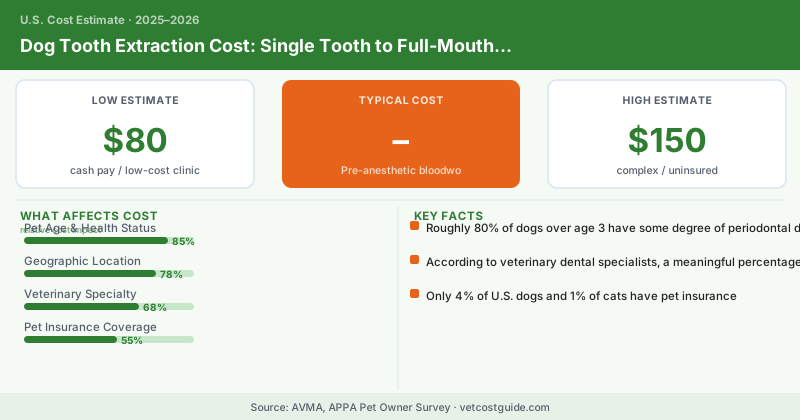
Roughly 80% of dogs over age 3 have some degree of periodontal disease, according to the American Veterinary Dental College — a statistic that explains why “just a cleaning” so often turns into “we found three teeth that need to come out” once your dog is actually under anesthesia. Here’s what that actually costs and why the estimate you got beforehand was a range, not a fixed number.
Dental extractions in dogs happen for a few main reasons: advanced periodontal disease that’s loosened a tooth beyond saving, a fractured tooth (common from chewing hard objects like antlers, bones, or ice), or a tooth that’s simply in the way of resolving an infection. The cost per tooth varies based on whether it’s a simple extraction or requires a surgical approach.
- Simple single-tooth extraction (with anesthesia): $150–$400
- Surgical extraction (fractured/multi-rooted tooth): $200–$600 per tooth
- Full dental cleaning with several extractions: $600–$2,000+
- Dental X-rays (recommended for every extraction): $150–$300 for the full set
- Pre-anesthetic bloodwork: $80–$150
Full Cost Breakdown
| Component | Low End | High End | Notes |
|---|---|---|---|
| Pre-anesthetic bloodwork | $80 | $150 | Required before general anesthesia |
| Anesthesia and monitoring | $150 | $400 | Scales with procedure length |
| Dental X-rays (full mouth) | $150 | $300 | Reveals disease below the gumline |
| Simple extraction (per tooth) | $50 | $150 | Single-rooted, minimal disease |
| Surgical extraction (per tooth) | $150 | $400 | Multi-rooted or fractured teeth |
| Pain medication (take-home) | $30 | $70 | Standard after any extraction |
| Antibiotics (if infection present) | $20 | $50 | When indicated |
| Full cleaning + multiple extractions | $600 | $2,000 | Total package cost, varies by tooth count |
Why the Anesthesia Is the Biggest Cost Driver, Not the Tooth
A single extraction genuinely doesn’t take long once your dog is under anesthesia, which means the anesthesia and monitoring — required regardless of how many teeth are pulled — represents a bigger fixed cost than the extraction procedure itself. This is exactly why extracting one additional tooth during an already-scheduled dental cleaning adds relatively little to the total bill, since the anesthesia cost is already accounted for; it’s the very first extraction, requiring its own dedicated anesthesia event, that carries the highest relative cost.
Simple vs. Surgical Extraction
A simple extraction applies to single-rooted teeth (like small incisors) with minimal disease, removed with relatively straightforward technique. A surgical extraction is needed for multi-rooted teeth (premolars and molars) or any fractured tooth, requiring the gum to be opened and sometimes bone removed to fully extract all root material — leaving any root fragment behind risks ongoing infection. Surgical extractions take longer, require more surgical skill, and cost proportionally more per tooth.
Why Dental X-Rays Matter for Every Extraction
Periodontal disease frequently causes damage below the gumline that’s invisible on a purely visual exam — bone loss around a tooth root, for instance, can only be assessed via dental X-ray. According to veterinary dental specialists, a meaningful percentage of teeth that look normal above the gumline actually have significant disease below it. Skipping X-rays to save $150-$300 risks leaving diseased tooth roots in place, which can cause ongoing pain and infection your dog can’t communicate to you directly.
- Ask whether the estimate is a fixed number or a range that depends on findings once your dog is under anesthesia
- Confirm dental X-rays are included — this is the standard of care, not an optional upsell
- Ask how many extractions are anticipated based on the pre-anesthetic exam, understanding the actual number may change
- Ask about pain management protocol — extractions are genuinely painful, and adequate take-home pain medication matters for recovery
Preventing Future Extractions
Regular dental cleanings (typically recommended annually, sometimes more or less often depending on your dog’s individual dental health) catch periodontal disease before it progresses to the point of requiring extraction. Daily tooth brushing, dental chews with the Veterinary Oral Health Council (VOHC) seal of acceptance, and avoiding hard chew items like real bones, antlers, and ice — common causes of fractured teeth — meaningfully reduce the likelihood of needing extractions down the road.
Given that dental disease is both extremely common and largely preventable with consistent home care, budgeting for annual cleanings ($300-$700 without extractions) is generally far cheaper over your dog’s lifetime than reactive treatment once significant disease and extractions become necessary.
Frequently Asked Questions
Extracting a single, straightforward tooth from a dog typically costs $150–$400 once anesthesia and pre-surgical bloodwork are included, since the anesthesia event itself is a bigger cost driver than the extraction procedure. A fractured tooth requiring surgical extraction (cutting the gum and removing bone) can cost more per tooth, often $200–$600.
Many dental issues, like periodontal disease under the gumline, aren't visible until a dog is under anesthesia and the vet can probe each tooth and take dental X-rays. This is why most dental cleaning estimates include a range covering possible extractions, since roughly 80% of dogs over age 3 have some degree of periodontal disease according to the American Veterinary Dental College, and some of that disease is only discoverable once your dog is already under anesthesia.