Parvovirus can kill an unvaccinated puppy in 48 to 72 hours. It’s extraordinarily hardy — survives on surfaces for months, resists most household disinfectants, spreads through fecal matter. Survival rates with aggressive treatment run 70–90%, but treatment costs $1,500–$3,000. The vaccine is roughly 99% effective.
That context is why your puppy’s first vet visit at 8 weeks includes a vaccine called DHPP and a schedule for three more rounds over the next eight weeks. By the time the puppy series wraps up, you’ll have spent somewhere between $75 and $200 at a traditional clinic — or as little as $40 at a low-cost community clinic.
Here’s the complete schedule, what each vaccine actually does, and how to figure out which non-core vaccines your specific dog needs.
Core Vaccines: Every Dog Gets These
The AVMA and AAHA define “core” vaccines as those recommended for all dogs regardless of lifestyle — because the diseases they prevent are either highly contagious, potentially fatal, or transmissible to humans. No lifestyle exceptions.
DHPP (Distemper, Hepatitis, Parvovirus, Parainfluenza)
Usually given as a combination. The schedule:
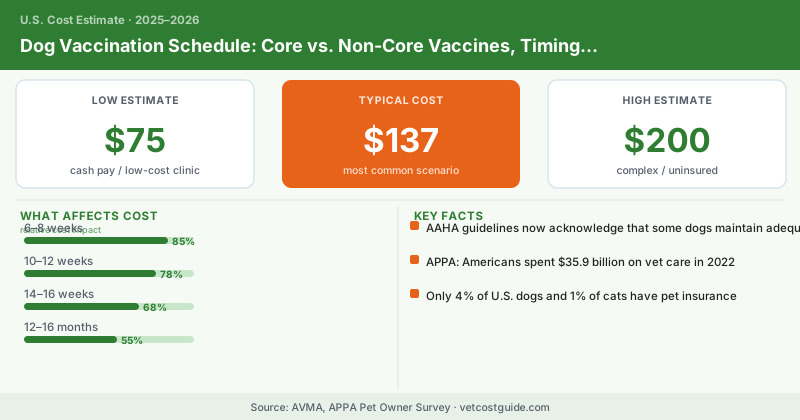
- 6–8 weeks: First DHPP
- 10–12 weeks: Second DHPP
- 14–16 weeks: Third DHPP
- 12–16 months: Booster
- Every 3 years thereafter (after initial adult booster)
Why all the rounds? Maternal antibodies passed through the mother’s milk can neutralize vaccines in young puppies. Vaccinating every 3–4 weeks until 16 weeks ensures at least one dose lands after maternal antibodies have waned — but before the puppy has unprotected exposure to the real world.
Rabies
- 12–16 weeks: First dose
- 12 months: Booster (required in most states)
- Every 1–3 years thereafter: Depends on state law and vaccine type
Rabies vaccination is legally required in all 50 states. Some mandate annual boosters regardless of vaccine type; others accept 3-year vaccines. Your vet will know your state’s specific rules. The 3-year vaccine costs slightly more per dose but saves money over time — fewer vet visits.
Parvovirus can kill an unvaccinated puppy in 48–72 hours. The disease causes severe vomiting, bloody diarrhea, and rapid dehydration. Puppies should be considered unprotected until at least 2 weeks after their final puppy series dose (at 14–16 weeks minimum). Keep young puppies away from dog parks and pet store floors until the series is complete.
Non-Core Vaccines: Based on Your Dog’s Life
Non-core vaccines aren’t optional in the sense of unimportant — they’re tailored. A dog who hikes in tick-heavy Pennsylvania woods has very different needs than a city apartment dog who never leaves the sidewalk.
Bordetella (Kennel Cough)
Who needs it: Any dog who visits groomers, boarding facilities, dog parks, daycare, or training classes. Most boarding facilities require it.
Bordetella bronchiseptica is the primary bacterial component of kennel cough. It spreads easily through the air in close-contact environments. The vaccine doesn’t prevent all cases — kennel cough has multiple causes — but dramatically reduces severity and duration. Available as injectable, intranasal, or oral. The intranasal and oral versions may provide faster protection, which matters if you’re boarding soon.
Frequency: Every 6–12 months depending on exposure level.
Leptospirosis
Who needs it: Dogs who swim in natural water sources, drink from puddles or streams, live near wildlife (especially raccoons, rodents, deer), or are in flood-prone regions.
Leptospirosis is a bacterial disease spread through infected wildlife urine. It causes kidney and liver failure — and it’s one of the few pet diseases transmissible to humans. The AVMA has noted increasing cases even in suburban areas as wildlife ranges expand. Given as a separate injection, annually.
Lyme Disease
Who needs it: Dogs in the Northeast, Upper Midwest, mid-Atlantic states, and northern California — anywhere Ixodes ticks are endemic. AVMA data shows Lyme cases concentrated in these regions but expanding year over year.
The vaccine helps, but tick prevention (topical or oral preventives) remains essential alongside it. Lyme disease in dogs causes joint pain, fever, and in some cases kidney disease that can be fatal.
Canine Influenza (CIV)
Who needs it: Dogs in urban areas, dogs who frequently attend shows or events, dogs in regions with documented CIV outbreaks.
Two strains circulate in the US — H3N8 and H3N2. The bivalent vaccine covers both. Not universally recommended, but worth the conversation if your dog has an active social life.
| Vaccine | Cost Per Dose | Frequency |
|---|---|---|
| DHPP (combination) | $20–$45 | Every 3yr (after puppy series) |
| Rabies | $15–$30 | Every 1–3yr (state-dependent) |
| Bordetella | $20–$40 | Every 6–12 months |
| Leptospirosis | $20–$35 | Annually |
| Lyme | $25–$45 | Annually + booster |
| Canine Influenza (bivalent) | $30–$50 | Annually |
| Full puppy series (total) | $75–$200 | One-time |
| Annual adult maintenance | $80–$200 | Annually |
Low-cost clinics at pet supply stores or humane societies may charge 40–60% less per vaccine. Full-service vet visits include an exam fee ($50–$75) on top of vaccine costs.
Titer Testing: An Alternative to Automatic Boosters
Titer testing measures antibody levels against specific diseases in your dog’s blood. A positive titer for parvovirus or distemper suggests existing immunity without re-vaccination.
AAHA guidelines now acknowledge that some dogs maintain adequate immunity for longer than 3 years after their last DHPP booster. Titer testing costs $75–$150 — sometimes more than just getting the vaccine. But for dogs with vaccine sensitivities, immune conditions, or owners who want to minimize unnecessary vaccination, it’s a reasonable path.
Important caveat: Titer testing isn’t a valid substitute for rabies vaccination in most states. Even a strongly positive titer won’t satisfy the legal rabies requirement.
Low-cost vaccine clinics at pet stores or community events offer vaccines for $15–$25 versus $30–$45 at a full-service clinic. The trade-off is no physical exam, no individualized lifestyle discussion, and no ongoing relationship with a veterinarian. For healthy adult dogs on a tight budget, they’re a reasonable option for routine boosters. For puppies, sick pets, or dogs with health conditions, the full-service clinic visit is worth the premium.
Annual Cost Estimates by Life Stage
A puppy’s first year costs more than subsequent years — the series, exam fees, and establishing baseline records all stack up:
- Puppy year 1 (full series + exams): $200–$400 at a full-service vet; $75–$150 at low-cost clinics
- Adult dog, basic core vaccines only: $80–$150/year
- Adult dog with non-core vaccines (Bordetella + Lepto + Lyme): $150–$250/year
These figures don’t include the annual physical exam ($50–$100), heartworm test ($25–$50), or fecal parasite test ($25–$45) that typically happen at the same visit. Budget $200–$350/year for a healthy adult dog’s routine preventive care including vaccines and standard tests.
The vaccines themselves are a fraction of lifetime vet costs. Skipping them to save $100/year means gambling on the exact diseases that are most preventable — and most expensive when they hit.
Frequently Asked Questions
A full puppy vaccination series typically costs $75–$200, depending on your veterinarian and location. This covers the core vaccines (DHPP and rabies) given in multiple visits between 6–16 weeks of age, plus any initial exam fees.
Most pet insurance plans do not cover routine preventive care like vaccinations; these are typically excluded from coverage. Some insurers offer optional wellness or preventive care add-ons for $10–$25 per month that may reimburse vaccination costs, but you'll need to check your specific policy.
Puppies receive core vaccines at 6–8 weeks, 10–12 weeks, 14–16 weeks, and a rabies booster at 12–16 weeks. Delaying vaccines beyond these windows increases infection risk, especially for parvovirus, which can be fatal within 48–72 hours in unvaccinated puppies.