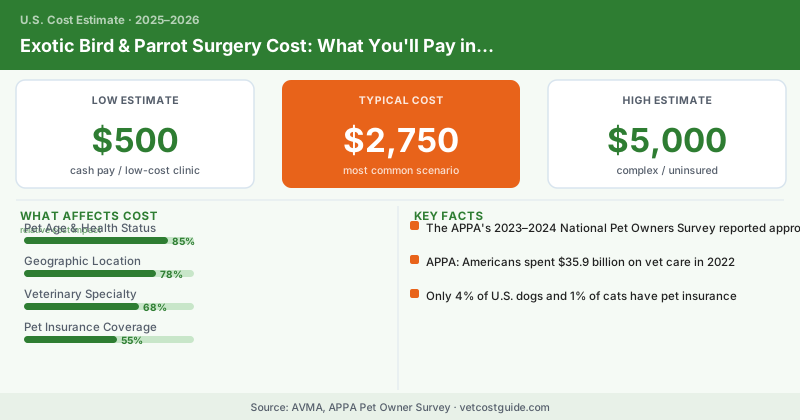
What does parrot surgery actually cost? Most bird owners get the answer the hard way — during an emergency, when their African Grey or Amazon has a tumor, egg-binding crisis, or foreign body ingestion, and they’re staring at an estimate that starts at $800 and goes up from there. Avian surgery is genuinely specialized, expensive, and not available everywhere. Here’s what you need to know before you’re in that moment.
Why Bird Surgery Is Expensive
Birds aren’t small dogs. Avian anesthesia requires different equipment, different drugs, and — critically — a vet with specific training in avian medicine. The American Association of Avian Veterinarians (AAAV) notes that birds have a far narrower margin for error under anesthesia than mammals, and even minor fluctuations in body temperature or oxygen delivery can be fatal during a procedure.
Finding a board-certified avian veterinarian or an exotic animal specialist with strong avian experience typically means traveling further and paying a premium. Many general-practice vets won’t perform surgery on parrots or large exotic birds at all.
Common Surgical Procedures and Costs
| Procedure | Average Cost | Notes |
|---|---|---|
| Egg removal / egg-binding surgery | $600–$2,500 | Common in female parrots |
| Tumor / mass removal | $800–$3,000 | Location and size affect cost |
| Foreign body removal | $700–$2,500 | GI surgery, endoscopy if possible |
| Proventricular surgery | $1,500–$4,000 | Complex GI tract procedures |
| Wing repair / fracture surgery | $500–$2,000 | Pins, external fixators |
| Cloacal prolapse repair | $500–$1,500 | Often requires multiple procedures |
| Crop surgery (ingluviotomy) | $600–$2,000 | Foreign body or impaction |
| Laparoscopy / biopsy | $600–$2,000 | Minimally invasive diagnostics |
Pre-surgical diagnostics (bloodwork, radiographs, crop swab) typically add $200–$600 before the surgical fee is even calculated.
Anesthesia and Hospitalization
Avian anesthesia is billed separately from surgery at most specialty practices. Expect:
- Anesthesia and monitoring fee: $150–$400
- Intraoperative fluids and warming: $50–$150
- Post-op hospitalization (per night): $100–$300
- Post-op medications: $50–$200
A bird requiring a two-night stay post-surgery can add $200–$600 to the surgical bill.
- How many of these procedures have you performed in the last year?
- What is your avian anesthesia mortality rate?
- Will a veterinary technician specifically trained in avian monitoring be present throughout?
- What post-op pain management protocol do you use?
- Are there any non-surgical alternatives we haven’t explored yet?
Geographic Cost Variation
Avian surgeons are concentrated in major metropolitan areas and university veterinary centers. If you live in a rural area, you may need to factor in travel costs — or accept that the nearest avian specialist is several hours away.
Urban specialty avian practice (NYC, LA, Chicago): expect fees 40–60% above the national average shown above. University veterinary teaching hospitals often charge 20–40% less than private specialists for the same procedures, though wait times for non-emergency cases can be longer.
Emergency vs. Planned Surgery
Emergency avian surgery — egg-binding that’s become life-threatening, severe GI obstruction, prolapsed cloaca — carries an additional emergency surcharge of $200–$600 on top of the surgical fee. It also typically means less time for you to shop around or arrange financing.
For non-emergency surgeries (mass removals, elective repairs), you have time to:
- Get a second estimate from another avian vet
- Confirm your pet insurance covers the procedure
- Apply for CareCredit before the procedure date
Birds hide illness instinctively as a survival mechanism — by the time a parrot looks visibly sick, it’s often been unwell for days or weeks. A bird that’s fluffed up, lethargic, sitting on the floor of the cage, or has a change in droppings should be seen by an avian vet same-day, not “wait and see.” The sicker a bird is at surgery time, the higher the anesthetic risk and the higher the complication rate.
Pet Insurance for Exotic Birds
Standard dog-and-cat pet insurance doesn’t cover birds. Exotic pet insurance plans from providers like Nationwide cover parrots and other pet birds, but check the fine print carefully — many plans have per-incident caps of $1,000–$2,500, which may not fully cover a complex surgery.
The APPA’s 2023–2024 National Pet Owners Survey reported approximately 9.9 million pet birds in US households, but fewer than 5% carry pet insurance — meaning most bird owners are paying for surgery entirely out of pocket.
Realistic Financial Planning for Bird Owners
If you own a parrot — especially a large species like a Macaw, African Grey, Cockatoo, or Amazon — budget a $3,000–$5,000 emergency fund specifically for veterinary care. These birds live 30–80 years, and most will need at least one significant medical intervention over that lifespan. Given their longevity, the math on exotic pet insurance often works in your favor for large parrots.
Frequently Asked Questions
Most avian surgeries range from $800 to $3,000 for routine procedures like tumor removal or foreign body extraction, though complex cases can exceed $5,000. The final cost depends on the bird species, procedure complexity, pre-operative diagnostics (X-rays, blood work), and whether your veterinarian requires referral to an avian surgery specialist. Emergency surgeries performed after-hours or on weekends typically cost 25-50% more than standard daytime procedures.
Most standard pet insurance plans exclude or severely limit coverage for avian surgery, with many carriers requiring separate exotic pet riders that cost $30-$60 monthly and still carry high deductibles ($500-$1,000) and 20-50% coinsurance. Some specialty exotic pet insurers like Nationwide offer better avian coverage with deductibles as low as $250, but pre-existing conditions are never covered. It's essential to review your specific policy's avian exclusions before an emergency, as out-of-pocket costs typically represent your full surgical expense.
Most avian surgical recoveries take 2-4 weeks, with strict cage rest and limited activity for the first 10-14 days to prevent incision complications. Your bird will require pain medication (typically 7-10 days), antibiotics (10-14 days), and post-operative checkups at 10 days and again at 4 weeks, which add $200-$400 in follow-up veterinary costs. Many avian specialists recommend pre-operative conditioning with your vet and post-surgical monitoring at home, as re-hospitalization for complications can add another $500-$2,000 to your final bill.