You call the top pet insurance companies asking about coverage for your African grey parrot. Nationwide says yes. ASPCA says yes. Trupanion says no. Pets Best says no. Healthy Paws says absolutely not. This is the actual landscape of exotic pet insurance in the U.S.: a handful of insurers cover exotics, most don’t, and the ones that do have very different definitions of what “exotic” means and what they’ll actually pay for.
Here’s the honest, numbers-first breakdown of what exotic pet insurance costs and whether it’s worth buying.
Who Actually Covers Exotic Pets
Most major pet insurers — Trupanion, Healthy Paws, Embrace, Lemonade, Figo — cover dogs and cats only. Period. A few extend coverage to small mammals and birds:
| Insurer | Species Covered | Monthly Cost Range | Notes |
|---|---|---|---|
| Nationwide Pet | Birds, reptiles, small mammals, rabbits, ferrets | $15–$50/month | Most comprehensive exotic coverage in U.S. |
| ASPCA Pet Insurance | Horses, birds, small mammals | $20–$45/month | Underwritten by Chubb; limited exotic specifics |
| Exotic Direct (UK-based) | Birds, reptiles, small mammals | $10–$40/month | Available in some U.S. states; strong bird coverage |
| Bivvy Pet Insurance | Small mammals, birds | $10–$25/month | Budget plan; limited coverage depth |
| Hartville Pet Insurance | Birds, exotic mammals | $15–$35/month | Underwritten by Nationwide; similar coverage |
Nationwide’s avian/exotic plan is the most commonly cited option for U.S. exotic pet owners. It uses an annual benefit schedule — fixed payouts per condition rather than a percentage reimbursement model. That means you know in advance how much you’ll receive for a given condition, but you can’t always count on full reimbursement for expensive procedures.
Monthly Cost by Species
Premiums vary by species primarily because of documented veterinary cost patterns and species longevity. Parrots and tortoises — which can live 40–80 years — command higher premiums than gerbils.
| Species | Monthly Premium Range | Annual Premium | Deductible Range |
|---|---|---|---|
| Parakeet/budgie | $10–$20 | $120–$240 | $50–$200 |
| Cockatiel | $12–$25 | $144–$300 | $50–$200 |
| Conure | $15–$30 | $180–$360 | $100–$250 |
| African grey/Amazon parrot | $25–$50 | $300–$600 | $100–$250 |
| Cockatoo/macaw | $30–$55 | $360–$660 | $150–$300 |
| Ball python/corn snake | $10–$20 | $120–$240 | $50–$150 |
| Bearded dragon | $12–$25 | $144–$300 | $50–$200 |
| Tortoise | $15–$35 | $180–$420 | $100–$250 |
| Rabbit | $20–$45 | $240–$540 | $100–$250 |
| Ferret | $20–$40 | $240–$480 | $100–$250 |
| Guinea pig | $10–$25 | $120–$300 | $50–$150 |
What’s Typically Excluded
Exotic pet insurance exclusions are broad. Know these before you buy:
- Pre-existing conditions — any illness or injury documented before coverage start date
- Husbandry-related illness — conditions caused by improper diet, lighting, temperature (common in reptiles; often disputed)
- Dental disease (on most plans)
- Breeding-related costs — egg binding in some policies if the animal is bred intentionally
- Grooming — beak/nail trims, wing clips
- Parasites — some plans exclude internal parasites as “preventable”
- Behavioral conditions
- Exam fees — some plans exclude the consultation fee itself
The husbandry exclusion is particularly important for reptile owners. Metabolic bone disease (MBD), respiratory infections, and dystocia (egg binding) are frequently blamed on husbandry by insurance adjusters — and if they can make that argument, the claim gets denied. Get clarity in writing on how your insurer defines a husbandry-related condition before handing over your credit card.
Waiting until your exotic pet is sick to look into insurance is too late. Most plans have a 14–30 day waiting period before coverage begins, and any condition that appears before or during the waiting period becomes a pre-existing exclusion. Buy coverage when the animal is healthy, young, and has no documented diagnoses.
Is It Worth the Math?
The break-even analysis depends entirely on your species and your risk tolerance.
Scenario 1 — African grey parrot, $40/month Nationwide plan, $250 deductible: Annual premium: $480 + $250 deductible = $730 out-of-pocket before you break even. A single emergency visit ($500–$1,500) may or may not cross that threshold. The real value kicks in when your bird needs surgery or extended illness treatment — not if your bird stays healthy year after year.
Scenario 2 — Ferret, $30/month, $200 deductible: Annual premium: $360 + $200 deductible = $560. Given that 75% of ferrets develop adrenal disease or insulinoma (treatment: $700–$2,500), the break-even math strongly favors insurance for ferrets over age 2. This is one of the clearest “worth it” cases in exotic pet insurance.
Scenario 3 — Ball python, $15/month, $100 deductible: Annual premium: $180 + $100 deductible = $280. Annual vet costs for a healthy ball python: $100–$250. Insurance rarely breaks even for healthy small reptiles.
The Emergency Fund Alternative
For species with predictably lower vet costs — small geckos, budgies, goldfish — a dedicated emergency savings account funded with the same monthly premium amount may be more financially flexible than insurance. A $20/month deposit yields $240/year and $1,200 over 5 years — often enough to cover common exotic pet conditions.
For larger species (macaws, tortoises, large parrots) where a single emergency can run $1,000–$3,000, insurance provides protection that an emergency fund can take years to build. The APPA’s 2023–2024 survey found that unexpected vet bills are the number one financial stress cited by exotic pet owners — which makes the case for some form of financial planning, whether insurance or a dedicated savings buffer.
For more on the broader insurance question, see our is pet insurance worth it guide and pet insurance cost per month breakdown for dogs and cats — the analytical framework applies equally to exotic species.
Bottom Line
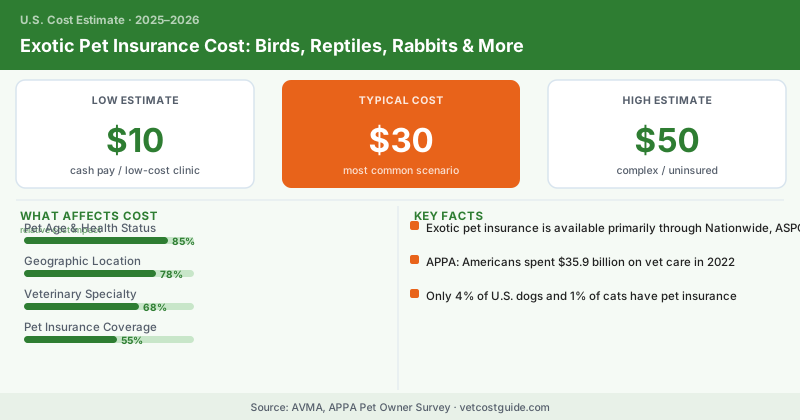
Exotic pet insurance is available primarily through Nationwide, ASPCA, and a few specialty insurers. Monthly costs run $10–$55 depending on species and coverage level. The value proposition is strongest for ferrets (near-certain expensive illness after age 3), large parrots (long lifespan, high emergency costs), and rabbits (GI stasis and dental disease are costly). It’s weakest for small, short-lived species with low annual care costs. Before purchasing any plan, read the husbandry exclusion language carefully, confirm your specific species is covered, and enroll before any health conditions are documented.
Frequently Asked Questions
Exotic pet insurance typically costs between $10 and $50 per month, depending on the species, age, and coverage level you select. Birds and rabbits tend to fall on the lower end of that range, while larger reptiles and parrots may cost $30-$50 monthly for comprehensive coverage.
No—most major pet insurers explicitly exclude exotic pets from their standard policies. Only a handful of companies like Nationwide and ASPCA offer exotic pet coverage, and even those have varying definitions of which species qualify; Trupanion, Pets Best, and Healthy Paws do not cover exotics at all.
Exotic pet emergency visits can cost $500-$2,000+ depending on the condition and required diagnostics, so consider getting a quote from local exotic vets before an emergency occurs. You can also ask about payment plans, apply for veterinary credit cards like CareCredit, or contact breed-specific rescue organizations that sometimes help with emergency costs.