Your cat’s diagnosis just came back: diabetic. The vet has explained the insulin injections, the twice-daily feeding schedule, the monitoring — and now you’re home wondering what this actually costs every month. The honest answer: $100 to $300 per month for most well-managed diabetic cats. Some months are cheaper. Some — with rechecks, curve testing, and dosage adjustments — run higher. Here’s where every dollar goes.
- Ongoing monthly costs run $100–$300 for insulin, syringes, and supplies.
- Initial diagnosis workup (bloodwork, urinalysis, exam) costs $200–$500.
- Glucose curve monitoring at home saves $100–$200 per visit compared to in-clinic testing.
- About 1 in 230 cats develops diabetes — it’s far more common than most owners realize.
- Roughly 25–50% of cats achieve diabetic remission with early, aggressive insulin management and a low-carbohydrate diet.
The Full Cost Picture
Feline diabetes has three cost phases: initial diagnosis, the stabilization period (typically 3–6 months), and long-term maintenance. Each has its own cost profile.
| Expense Category | Low Cost | Typical | High Cost |
|---|---|---|---|
| Initial exam + bloodwork + urinalysis | $200 | $350 | $500 |
| First insulin vial (Lantus/Basaglar/ProZinc) | $60 | $110 | $180 |
| Syringes (box of 100) | $15 | $25 | $40 |
| Glucose meter + starter kit | $25 | $60 | $130 |
| Test strips (100 count) | $20 | $50 | $90 |
| Veterinary glucose curve (in-clinic) | $80 | $150 | $250 |
| Monthly insulin ongoing | $45 | $90 | $175 |
| Prescription low-carb food (monthly) | $40 | $80 | $160 |
| Annual recheck labwork | $150 | $280 | $500 |
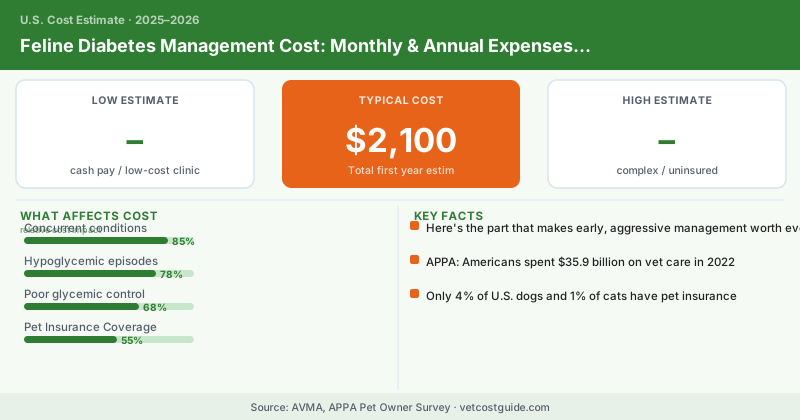
| Total first year estimate | $1,200 | $2,100 | $3,500 |
What You’re Actually Buying Every Month
Insulin is the biggest recurring cost. The three most commonly prescribed insulins for cats in 2025 are glargine (sold as Lantus or Basaglar — the cheaper biosimilar), PZI insulin (ProZinc), and NPH insulin. Glargine is the current favorite because it closely mimics the cat’s natural insulin release and has the best remission rates. A vial of Lantus costs $80–$150 at most pharmacies; Basaglar biosimilar runs $60–$100 and is therapeutically equivalent. Vials last 28–30 days once opened.
Syringes are cheap — U-100 insulin syringes (29–31 gauge, 0.3 mL) run about $15–$25 per 100. Your cat gets two injections daily, so you’ll use 60 syringes per month.
Glucose monitoring supplies vary based on your approach. Home glucose curves — taking blood glucose readings at home every 2 hours over a day — cost roughly $1–$2 per strip. Doing your own curves means you’re not paying $150–$250 for the vet to keep your cat for a day. The upfront investment in a reliable meter (a human glucose meter works fine — AlphaTrak or a standard Walmart ReliOn meter) pays for itself after one avoided in-clinic curve.
Food matters more than most owners initially realize. A recent study published in the Journal of Veterinary Internal Medicine found that cats fed a high-protein, low-carbohydrate diet had significantly better glycemic control and higher remission rates than cats on standard kibble. Prescription diabetic diets (Hill’s m/d, Purina DM) run $40–$80 per month. Many vets recommend canned food with under 10% carbohydrates — even commercial brands like Fancy Feast Classic pâtés fit the bill and cost $25–$50/month.
The Stabilization Period (First 3–6 Months)
This phase is the most expensive. You’re figuring out the right insulin dose, adjusting based on glucose curves, and doing frequent vet rechecks. Expect veterinary visits every 2–4 weeks initially.
Each recheck visit (not including glucose curves) typically runs $50–$120 for an exam and brief consultation. Glucose curves in-clinic add $80–$250. Plan for $600–$1,500 in additional vet expenses during stabilization beyond your monthly supply costs.
The alternative — and what most experienced feline diabetic owners prefer — is learning home glucose monitoring. Your vet can show you how to collect a drop of blood from the ear margin or paw pad. It sounds intimidating. After three tries, most cats barely notice.
Geographic Cost Variation
Insulin prices are relatively stable nationally because they’re purchased at pharmacy retail (not vet markup), but veterinary service costs vary substantially:
| Region | Monthly Supply Cost | In-Clinic Glucose Curve | Annual Vet Rechecks |
|---|---|---|---|
| Rural Midwest | $90–$150 | $80–$130 | $300–$500 |
| Suburban South/Midwest | $100–$170 | $100–$180 | $400–$650 |
| Urban Northeast/West Coast | $130–$250 | $150–$280 | $600–$1,000 |
One cost-saving move: buy insulin at a human pharmacy with a GoodRx coupon. Glargine/Lantus for a cat is the same product as the human version. GoodRx often brings a vial down to $60–$90 compared to $130–$180 at a veterinary clinic.
Diabetic Remission: The Goal That Changes Everything
Here’s the part that makes early, aggressive management worth every dollar: feline diabetes is potentially reversible. According to research published in the Journal of Feline Medicine and Surgery, 25–50% of newly diagnosed diabetic cats achieve remission — defined as no longer needing insulin injections — when treated promptly with glargine insulin and a low-carbohydrate diet. Remission typically occurs within 1–4 months of diagnosis in these cats.
If your cat achieves remission, your ongoing costs drop to periodic monitoring (bloodwork every 6–12 months) and dietary maintenance. That’s the prize that makes the stabilization period’s costs worthwhile.
Cats that remain diabetic long-term — usually those diagnosed later, those with concurrent illness, or those that had prolonged blood sugar elevation before treatment — do require lifetime management. But even at $150–$200/month, that’s often less than people fear.
What Affects Whether Costs Escalate
Concurrent conditions are the biggest cost multiplier. Diabetic cats frequently have hyperthyroidism, pancreatitis, or urinary tract infections, all of which interfere with glucose regulation. If your cat’s blood sugar won’t stabilize, a concurrent condition may be the reason — and diagnosing it means more testing. A full abdominal ultrasound runs $300–$600; a full thyroid panel $80–$150.
Hypoglycemic episodes (blood sugar crashing too low) are a diabetic emergency. If your cat becomes wobbly, seizures, or won’t respond, that’s an ER visit — easily $300–$700 for a middle-of-the-night emergency stabilization. Home monitoring dramatically reduces this risk by alerting you to dangerous glucose trends before they become crises.
Poor glycemic control over time increases the risk of diabetic neuropathy — a weakness and abnormal stance in the hind legs — which may require neurological workup ($300–$600) and additional supportive care.
Pet Insurance and Diabetic Cats
There’s a harsh reality here: if your cat is already diagnosed with diabetes, pet insurance won’t cover it. Diabetes is a pre-existing condition under virtually every pet insurance policy in the US.
If your cat isn’t yet diagnosed — or if you have a breed at elevated risk (Burmese cats have a genetic predisposition; male neutered cats are overrepresented) — enrolling in pet insurance before any symptoms appear is smart financial planning. Policies with chronic illness coverage can save $1,000+ annually in ongoing management costs.
For cats already diagnosed, CareCredit and Scratch Pay offer veterinary financing with 0% promotional APR periods. See how vet payment plans work for specifics.
Honest Monthly Budget
Here’s what you’ll realistically spend once you’re past the stabilization phase and managing at home:
| Monthly Expense | Budget Range | Notes |
|---|---|---|
| Insulin (Basaglar or ProZinc) | $55–$120 | GoodRx at human pharmacy saves 30–40% |
| Syringes (60/month) | $10–$20 | Buy in bulk |
| Glucose test strips (30–60/month) | $15–$45 | Home curves only |
| Low-carb prescription food | $40–$90 | Or quality canned food |
| Routine vet recheck (amortized monthly) | $25–$65 | 1–2 visits/year once stable |
| Contingency/emergency fund | $25–$50 | For unexpected glucose swings |
| Monthly total | $170–$390 | Varies significantly by location |
Managing feline diabetes is absolutely doable. It takes a learning curve — probably 2–4 weeks before injections and monitoring feel routine — but thousands of cat owners do it every day. The cats, for their part, are often more tolerant of twice-daily injections than their owners expect.
Your vet is your partner here. Ask about home glucose monitoring at your next visit. Ask about glargine if your cat isn’t already on it. And don’t skip the dietary conversation — the food change alone can be the difference between a cat that achieves remission and one that needs insulin for life.
Frequently Asked Questions
Insulin typically costs $20–$60 per month depending on the type and brand your vet prescribes. Most cats use either NPH or glargine insulin, with glargine (Lantus) being more expensive but often requiring lower doses. When combined with syringes and needles ($10–$20/month), insulin supplies alone account for $30–$80 of your monthly management costs.
Most pet insurance plans exclude pre-existing conditions, so diabetes diagnosed before coverage begins won't be covered; however, some policies will cover ongoing management costs if the condition develops after enrollment. Out-of-pocket costs for insulin, glucose monitoring, and vet rechecks typically run $100–$300/month, though pet owners should check their specific policy exclusions and waiting periods before enrolling.
After initial diagnosis, most vets recommend rechecks every 2–4 weeks during the first few months to adjust insulin dosage, with each visit costing $50–$150. Glucose curve testing (monitoring blood sugar levels throughout the day) costs $100–$300 per curve and may be needed 2–4 times in the first year as insulin is adjusted. Once your cat's diabetes is stable, rechecks can drop to every 3–6 months, significantly reducing ongoing costs.