Most cat owners have never heard of hepatic lipidosis until their cat stops eating and a vet says the word out loud. It’s the most common liver disease in cats in North America, and it’s almost entirely preventable — yet it kills cats that go untreated. Here’s what happens, what it costs, and why timing is everything.
Feline hepatic lipidosis (fatty liver disease) develops when a cat stops eating for any reason — stress, another illness, a diet change the cat refuses — and the body starts mobilizing fat reserves faster than the liver can process them. Fat accumulates inside liver cells, impairing function. Unlike in dogs or humans, cats are uniquely vulnerable to this cascade: even 2-3 days of not eating can trigger it in an overweight cat.
- Diagnostic workup (bloodwork, ultrasound, +/- biopsy): $400–$1,200
- Feeding tube placement: $300–$800
- Hospitalization (per day, IV fluids + monitoring): $150–$400
- Typical hospital stay: 3–10 days
- Total treatment cost: $1,500–$5,000
- Outpatient feeding tube management after discharge: $100–$300/month in supplies
The Full Cost Breakdown
| Component | Low End | High End | Notes |
|---|---|---|---|
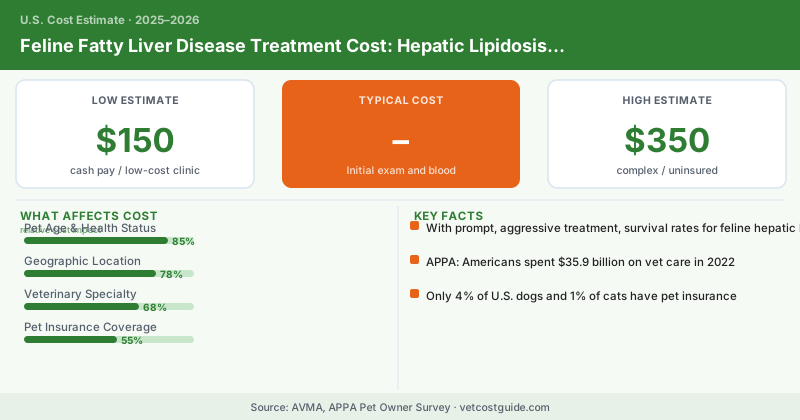
| Initial exam and bloodwork | $150 | $350 | Liver enzymes, bilirubin panel |
| Abdominal ultrasound | $300 | $600 | Confirms diagnosis, rules out other causes |
| Liver biopsy (if needed) | $400 | $900 | Not always required for diagnosis |
| Feeding tube placement (esophagostomy) | $300 | $800 | Usually done under light sedation |
| Hospitalization per day | $150 | $400 | IV fluids, monitoring, nursing care |
| Typical 5-day hospitalization | $750 | $2,000 | Most common length of stay |
| Anti-nausea and appetite medications | $50 | $150 | Ongoing through recovery |
| Home feeding tube supplies (monthly) | $100 | $300 | Syringes, prescription liquid diet |
Why This Disease Is So Expensive to Treat
The core treatment for hepatic lipidosis isn’t a drug — it’s forced, aggressive nutrition. A cat with this condition needs to eat, and if it won’t eat voluntarily, a feeding tube goes in. That’s the single biggest cost driver: not the diagnosis, the ongoing nutritional support required for the liver to recover.
Recovery takes weeks, not days. A cat may need the feeding tube for 3-6 weeks total, split between hospitalization and at-home management once it’s stable enough to go home. Every day of hospitalization adds $150-$400. Cats that stabilize quickly and go home on tube feeding save thousands compared to cats that need extended inpatient care for complications like electrolyte imbalances or secondary infections.
Why Cats Get This and Dogs Rarely Do
Cats are obligate carnivores with a metabolism tuned for a steady stream of dietary protein. When a cat stops eating, its body still needs energy and starts breaking down fat stores for fuel — but feline liver metabolism isn’t well-equipped to process that much fat that fast. The fat backs up inside liver cells faster than it can be exported, and liver function starts failing within days.
This is why any cat that hasn’t eaten in 24-48 hours needs to see a vet — not “wait and see if she’s hungry tomorrow.” Overweight cats are at the highest risk because they have more fat reserves to mobilize. A stressful event as simple as a move, a new pet in the house, or even switching food brands can be the trigger that stops a cat from eating long enough to start this cascade.
- Any cat refusing food for more than 24 hours needs veterinary attention — don’t wait for “maybe tomorrow”
- Yellowing of the gums, ears, or eyes (jaundice) is a red flag requiring immediate evaluation
- Overweight cats are at the highest risk — any illness or stress event that stops eating can trigger this in as little as 2-3 days
- Do not attempt to force-feed at home with a syringe without veterinary guidance — aspiration pneumonia is a real risk
Prognosis and What Determines It
With prompt, aggressive treatment, survival rates for feline hepatic lipidosis exceed 80-90%, according to veterinary internal medicine references. The key variable is timing — cats diagnosed and started on nutritional support within the first week of anorexia recover dramatically better than cats where diagnosis was delayed by weeks.
This is genuinely one of those diseases where the cost of waiting is measured in both dollars and lives. A cat that comes in on day 3 of not eating has a much better shot at a shorter, cheaper hospitalization than one that comes in on day 10, already in liver failure.
Managing the Cost
If your cat is diagnosed, ask your vet about the option of managing feeding tube care at home after initial stabilization — many practices will train you to administer feedings yourself, cutting days off the hospitalization bill. Pet insurance purchased before any symptoms appear typically covers 70-90% of this treatment since it’s an acute illness, not a pre-existing or preventable condition. If cost is a barrier, ask about CareCredit, Scratchpay, or whether your vet offers a payment plan — many will work with you given the urgency and good prognosis of early treatment.
Frequently Asked Questions
Treating feline hepatic lipidosis typically costs $1,500–$5,000, driven mostly by hospitalization days and feeding tube placement and management. Mild cases caught early and managed on an outpatient basis with a feeding tube can run closer to $800–$1,500.
Yes — with prompt, aggressive nutritional support, the survival rate for feline hepatic lipidosis exceeds 80-90% according to veterinary internal medicine literature. Cats that go untreated or whose diagnosis is delayed have a dramatically worse prognosis because the liver damage becomes progressively harder to reverse.