Your cat hasn’t had a normal bowel movement in weeks despite medication, enemas, and dietary changes — and your vet just said the word “colectomy.” Here’s what that surgery actually involves and what it costs, because at this stage in megacolon, surgery is often the only remaining option that actually works.
Megacolon is a condition where the colon becomes chronically, severely dilated and loses its ability to contract normally, making it physically incapable of moving stool through the body effectively. It develops gradually — often following chronic constipation that goes unmanaged, pelvic injuries that narrow the pelvic canal, or in some cases with no clearly identifiable cause. Once the colon’s muscle function is significantly damaged, medications and dietary management stop working reliably, and subtotal colectomy — surgically removing most of the colon — becomes the definitive treatment.
- Pre-surgical diagnostics (bloodwork, X-rays, sometimes CT): $300–$700
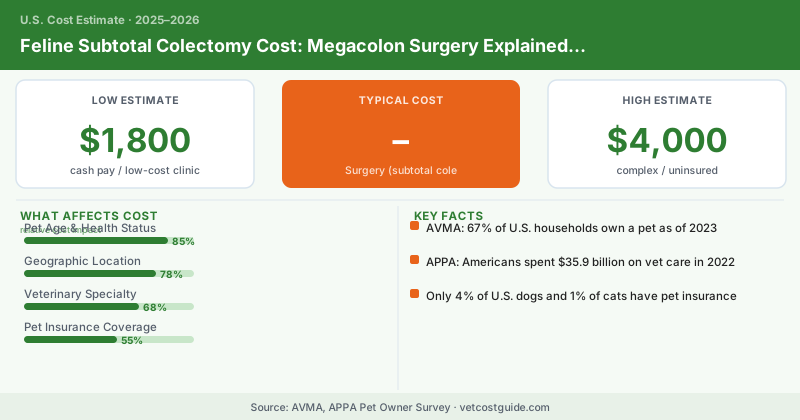
- Surgery itself (subtotal colectomy): $1,800–$4,000
- Hospitalization (typically 2-5 days): $400–$1,200
- Post-op medications and follow-up: $150–$350
- Total typical range: $2,500–$6,000
Full Cost Breakdown
| Component | Low End | High End | Notes |
|---|---|---|---|
| Pre-surgical bloodwork and imaging | $300 | $700 | X-rays confirm colon dilation severity |
| Anesthesia and monitoring | $300 | $700 | Abdominal surgery requires extended monitoring |
| Surgery (subtotal colectomy) | $1,800 | $4,000 | Specialist surgeons charge toward the high end |
| Hospitalization (2-5 days) | $400 | $1,200 | IV fluids, pain management, monitoring |
| Post-op medications | $50 | $150 | Pain control, sometimes antibiotics |
| Follow-up recheck visits | $100 | $200 | Typically 2-3 visits over following month |
| Total typical surgery package | $2,500 | $6,000 | Full episode of care |
Why This Surgery Costs What It Does
Subtotal colectomy is major abdominal surgery, not a routine procedure. The surgeon removes the majority of the colon and reconnects the remaining healthy bowel to the rectum, a delicate procedure requiring careful technique to avoid leakage at the surgical connection — a serious complication if it occurs. This complexity is exactly why many general practitioners refer these cases to board-certified veterinary surgeons, which raises the cost but improves outcomes for a technically demanding procedure.
Hospitalization after colectomy typically runs longer than after a routine spay or mass removal — 2 to 5 days is standard, since your cat needs monitoring for pain control, appetite return, and initial bowel function before going home. Cats that develop complications, like surgical site issues or slow-to-return appetite, may need extended stays that push costs toward the higher end of the range.
When Colectomy Becomes the Right Call
Vets typically exhaust medical management first: stool softeners, prokinetic medications like cisapride, dietary fiber adjustments, and manual deobstipation (removing impacted stool under sedation) when needed. According to veterinary internal medicine consensus, cats that experience recurrent, severe constipation episodes despite consistent medical management — especially those requiring repeated hospitalization for manual deobstipation — are the strongest surgical candidates, since the colon’s ability to function normally has typically been lost by that point.
The decision usually comes after multiple failed medical attempts, not as a first-line treatment, which is why by the time surgery is on the table, owners have often already spent significant money on the medical management that came before it.
- Ask whether your case would benefit from referral to a board-certified surgeon versus your general practice vet performing it
- Confirm what’s included in the surgical quote — some estimates don’t include the full hospitalization stay
- Ask about expected diet changes after surgery — most cats need a permanent transition to a high-fiber or specialized GI diet
- Ask about the realistic timeline for return to normal stool consistency — temporary loose stool for several weeks is common and not a sign of failure
Recovery and Long-Term Outlook
Most cats show significant improvement in defecation within days of surgery, though loose or soft stool is common for the first several weeks as the shortened colon adapts to its new function. This typically resolves on its own without further intervention. Long-term, the majority of cats that undergo subtotal colectomy for medically unmanageable megacolon go on to have a good quality of life with normal or near-normal bowel habits.
Given the significant cost, ask your vet upfront about payment plan options or whether CareCredit is accepted — many practices that perform this surgery regularly have financing conversations built into their process because they understand the financial weight of a $2,500-$6,000 surgery arriving somewhat unexpectedly after weeks of medical management costs.
Frequently Asked Questions
Subtotal colectomy surgery for feline megacolon typically costs $2,500–$6,000, including pre-surgical diagnostics, the surgery itself, hospitalization, and post-operative care. The wide range reflects whether the surgery is performed by a general practitioner or a board-certified surgeon and regional cost differences.
Subtotal colectomy has a good long-term success rate for cats with severe, medically unmanageable megacolon, with most cats returning to normal or near-normal defecation within weeks of surgery. Some cats experience temporary loose stool for several weeks post-surgery as the remaining colon adapts, which typically resolves on its own.