Most people adopting their first ferret budget for food, a cage, and maybe a vet visit. Then they Google “ferret insulinoma treatment cost” at 2am when their ferret starts stumbling. That conversation would have gone better a year earlier.
Ferrets are wonderful — playful, curious, surprisingly personable — but they’re also medically unique in ways that catch new owners off guard. According to the American Ferret Association, the vast majority of ferrets in the US develop at least one of three serious conditions (insulinoma, adrenal disease, or lymphoma) if they live past age 4. That’s not pessimism; it’s veterinary reality. The upfront question isn’t whether you’ll face a health crisis with your ferret — it’s whether you’re financially prepared when it arrives.
Finding a Ferret Vet (and What It Costs)
Ferrets are exotic animals. A general practice dog-and-cat vet may decline to see them or may lack the species-specific knowledge to properly diagnose ferret illness. You need an exotic vet — or at minimum a vet with documented ferret experience.
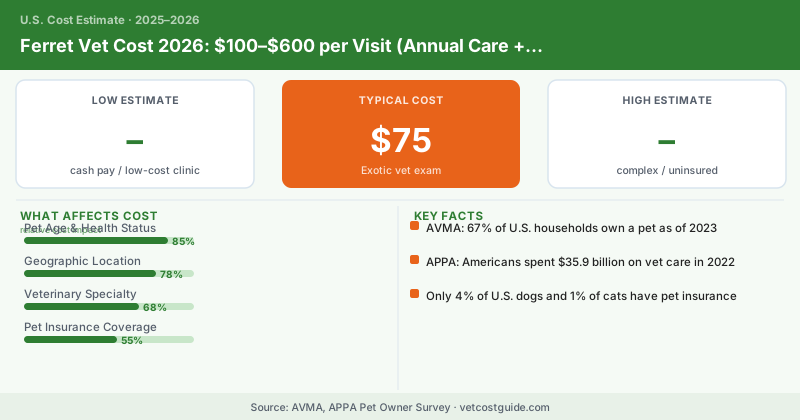
This matters for cost: exotic vets typically charge 20–40% more than general practitioners for equivalent services. An exam that costs $50 at a standard clinic often runs $75–$150 at an exotic practice. It’s worth it — a misdiagnosed insulinoma costs far more than the premium for an experienced vet.
To find a ferret-experienced vet: check the American Ferret Association’s vet directory, ask local ferret shelters or clubs for recommendations, or call ahead and ask directly whether the vet has experience with mustelids.
Annual Wellness Care Costs
| Service | Typical Cost | Notes |
|---|---|---|
| Exotic vet exam | $75–$150 | Annual wellness visit |
| Distemper vaccine (USDA-licensed ferret vaccine) | $20–$40 per dose | 2-dose series for new ferrets; annual booster after |
| Rabies vaccine | $20–$40 | Annual in most states; required by law in some |
| Basic blood panel (glucose, chemistry) | $100–$200 | Important after age 3 to screen for insulinoma |
| Fecal exam | $30–$60 | Rules out parasites |
| Heartworm prevention (Revolution) | $15–$30/month | Recommended in heartworm-endemic areas |
| Full annual visit (exam + vaccines + basic labs) | $200–$450 | Once all services combined |
Young, healthy ferrets (under 3 years) with no health issues typically cost $200–$350/year in routine care. That changes significantly after age 3.
Ferrets are extremely susceptible to distemper — it’s nearly 100% fatal in ferrets and there’s no treatment. Use only USDA-licensed ferret distemper vaccines (PUREVAX Ferret Distemper or Merial’s Fervac-D). Do not use dog distemper vaccines on ferrets — they can cause fatal vaccine reactions. Your vet should know this; if they suggest a dog vaccine, find a different vet.
Common Ferret Illnesses and What They Cost
Insulinoma
Insulinoma is a pancreatic tumor that produces excess insulin, causing chronically low blood sugar (hypoglycemia). It’s by far the most common serious condition in ferrets — studies cited in ferret veterinary literature suggest it affects upwards of 25% of ferrets over age 3, with incidence rising steeply after age 5.
Signs: Episodes of weakness, pawing at the mouth (a classic sign), glassy eyes, drooling, wobbling, or collapse. You may notice your ferret seems “drunk” after activity or seems to recover after eating.
Diagnosis: Blood glucose test ($30–$60) plus an insulin level ($80–$150). Abdominal ultrasound ($200–$400) helps visualize the tumor.
Treatment options and costs:
- Medical management (prednisone + diet changes): $30–$80/month for medication plus quarterly monitoring bloodwork ($100–$200 per visit). This manages symptoms but doesn’t remove the tumor.
- Surgery (partial pancreatectomy): $1,500–$3,000. Removes the visible tumors. Most ferrets recur within 6–18 months and still need medical management after surgery, but quality of life is often significantly better post-op.
Realistic 2-year cost for medically managed insulinoma: $1,500–$3,500. Surgery upfront adds $1,500–$3,000 but may improve quality of life significantly.
Adrenal Gland Disease
The second most common ferret illness. One or both adrenal glands become enlarged (usually due to a tumor or hyperplasia), overproducing sex hormones. This isn’t the same as Cushing’s disease in dogs — it’s a different hormonal pathway.
Signs: Hair loss starting at the tail and working forward (alopecia), vulvar swelling in spayed females, difficulty urinating in males (prostate enlargement from excess androgens), muscle wasting.
Treatment options:
- Lupron (leuprolide) injections: $100–$200/injection every 1–4 months depending on dose formulation. Controls signs effectively but doesn’t remove the tumor.
- Melatonin implants: $80–$150 per implant (every 3–6 months). Less effective than Lupron but useful as an adjunct.
- Surgical adrenalectomy: $1,500–$3,000. Curative for unilateral disease. Bilateral cases (both glands affected) require careful surgical management to preserve adrenal function.
Annual medical management cost (Lupron + monitoring): $800–$2,400/year.
Lymphoma
Ferret lymphoma ranges from indolent (slow-growing, years of survival) to aggressive (months). It’s the third most common serious ferret disease.
Diagnosis: FNA (fine needle aspirate) or biopsy plus pathology — $300–$800.
Treatment: Chemotherapy protocols for ferrets (typically prednisone + chlorambucil) run $100–$300/month. More aggressive protocols using multi-drug chemotherapy can cost $500–$1,500/month. Prognosis depends heavily on tumor type; some ferrets do well for 1–2 years on simple protocols.
| Condition | Annual Ongoing Cost | One-Time/Surgical Cost |
|---|---|---|
| Insulinoma (medical) | $1,000–$2,500/year | — |
| Insulinoma (surgical) | $500–$1,500/year post-op | $1,500–$3,000 |
| Adrenal disease (medical) | $800–$2,400/year | — |
| Adrenal disease (surgical) | $200–$500/year post-op | $1,500–$3,000 |
| Lymphoma (low-grade chemo) | $1,200–$3,600/year | $300–$800 (diagnosis) |
If your ferret is staring blankly, drooling, pawing at their mouth, or collapses and won’t respond, this may be a hypoglycemic crisis from insulinoma. Emergency response: rub a small amount of honey, corn syrup, or sugar water on the gums. This gives a temporary glucose boost while you get to an emergency vet. Do not give food to a seizing ferret — choking risk is high. Call an emergency exotic vet immediately after administering glucose to the gums.
Pet Insurance for Ferrets
Nationwide’s Avian & Exotic Pet plan is the primary mainstream option. It covers ferrets for accidents and illness — including the major three conditions above. Monthly premiums typically run $20–$40 depending on your location and coverage tier.
Given that a single insulinoma diagnosis can mean $1,000–$3,000 in year one, and adrenal disease treatment runs $800–$2,400 annually, insurance often pays for itself with a single serious illness.
Limitations: pre-existing conditions are excluded. If your ferret has shown signs of any illness before enrollment, those conditions won’t be covered. The strongest case for ferret insurance is enrolling a young, healthy ferret (under 2 years old) before any senior illness manifests.
Total Annual Cost Estimate
A young healthy ferret: $300–$500/year (routine care) A ferret over 3 with one managed condition: $1,500–$3,500/year A ferret with multiple conditions: $3,000–$6,000+/year
Ferrets live 6–10 years. Plan accordingly — the back half of that lifespan tends to be medically intensive. An emergency fund of $1,000–$2,000 before problems develop, combined with an exotic pet insurance policy, is the most financially sound approach to ferret ownership.
Frequently Asked Questions
A routine wellness exam for a ferret at an exotic vet costs $60–$150 for the exam itself, often plus vaccines — distemper and rabies run $20–$40 each. A fully loaded annual visit with vaccines and a basic blood panel comes to $150–$350. Emergency or illness visits typically run $150–$600 depending on diagnostics and treatment needed.
Insulinoma (pancreatic tumor causing low blood sugar) and adrenal gland disease are the two most common illnesses in ferrets over age 3, affecting the majority of ferrets in the US if they live to age 5 or 6. Both are chronic and require ongoing management. Lymphoma is the third most common serious condition. All three are more expensive to manage than typical dog/cat illnesses.
Yes — Nationwide offers an avian and exotic pet plan that covers ferrets for accidents and illnesses including insulinoma, adrenal disease, and lymphoma. Monthly premiums typically run $20–$40 for ferrets. Given that insulinoma medication alone can cost $50–$150/month and adrenal treatment $30–$200/month, insurance often pays for itself within the first serious illness.