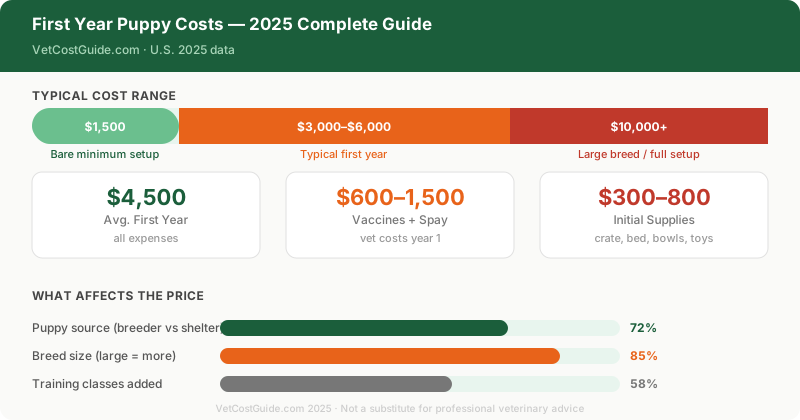
Nobody warns you that parvo treatment costs $1,500–$3,000 when you could have vaccinated for $30. Nobody mentions that a spay at a private clinic for a 70-pound dog runs $500. The supplies, the food, the training classes — these are the costs people expect. It’s the vet bills and the compounding of everything at once that catches new puppy owners off guard. Year one is the most expensive year of dog ownership, and the total for most families lands between $3,000–$5,000 before your dog’s first birthday. The good news is that most of these costs are genuinely one-time.
- Small breeds typically cost $1,500–$3,500 in year one; large breeds run $3,500–$7,000.
- The puppy vaccine series (3–4 visits) costs $200–$400 and is non-negotiable for health.
- Spay or neuter surgery runs $200–$600 and is usually the single largest first-year vet bill.
- Pet insurance in year one averages $300–$800 and can save thousands if something goes wrong.
First Year Puppy Cost Breakdown
| Expense | Low Estimate | High Estimate |
|---|---|---|
| Adoption or purchase fee | $50 | $3,000 |
| Initial vet exam | $75 | $150 |
| Puppy vaccine series (3–4 visits) | $200 | $400 |
| Spay or neuter surgery | $200 | $600 |
| Microchip | $25 | $50 |
| Heartworm/flea prevention (year 1) | $100 | $200 |
| Starter supplies (crate, bed, bowls, leash, collar) | $200 | $500 |
| Food (year 1, size-dependent) | $400 | $1,200 |
| Puppy training classes | $150 | $500 |
| Pet insurance (year 1) | $300 | $800 |
| Grooming (breed-dependent) | $0 | $600 |
| Toys and treats | $100 | $300 |
Where the Money Goes — Category by Category
Veterinary care is the biggest wild card. Every puppy needs three to four rounds of DHPP (distemper, hepatitis, parvovirus, parainfluenza) spaced three to four weeks apart, plus rabies at 12–16 weeks. Each visit runs $65–$120 for the exam before you add vaccine costs. Puppies adopted from shelters are often partway through their series already, which trims some of this. Puppies from breeders rarely are.
Spay or neuter is typically scheduled between 6 and 12 months depending on your vet’s guidance and your dog’s size. It’s almost always the single biggest veterinary line item in year one. Low-cost clinics charge $50–$200; private practices charge $200–$600 or more for large breeds where additional anesthesia is needed.
Starter supplies are largely one-time purchases. Crate, dog bed, food and water bowls, collar, leash, and ID tags together come to $200–$500 depending on how much you spend per item. Puppies outgrow things — save the nice stuff for adulthood.
Food swings wildly by size. A 10-pound small breed eating mid-range kibble might cost $30–$50/month ($360–$600/year). A 70-pound large breed costs $80–$100/month ($960–$1,200/year) on the same quality food. Raw or fresh-food diets (Farmer’s Dog, Ollie) for a large dog can run $3,000–$4,000/year in food alone.
Training is where owners most commonly cut corners and most commonly regret it. Behavioral problems are the leading reason dogs are surrendered to shelters. The critical socialization window is 8–16 weeks — that period can’t be recreated later. Group puppy classes run $150–$300 for a six-week session. Private trainers run $100–$150 per session. Skipping training is rarely the savings it appears to be.
The Cost Drivers That Matter Most
Breed size is the biggest factor in almost every expense category. Large dogs eat more, need larger medication doses, cost more to spay or neuter, and incur higher boarding fees. Giant breeds push the high end of every estimate.
Purebred vs. mixed breed changes acquisition cost dramatically — $50–$300 from a shelter vs. $800–$3,000 from a reputable breeder — but has less impact on ongoing care costs than most people assume. The real differentiator is breed-specific health risks, not pedigree itself.
Where you live. Veterinary care in Manhattan or San Francisco costs 40–60% more than the same services in mid-size Midwest cities or rural areas. If you’re in a high-cost metro, the high end of every estimate in this guide applies.
Coat type. Short-coated breeds like Beagles or Boxers have near-zero grooming costs. Double-coated and curly-coated breeds — Goldendoodles, Poodles, Samoyeds — need professional grooming every 6–10 weeks at $60–$120 per session, adding $400–$800/year. This cost continues every year of the dog’s life.
Insurance timing. Year one is the best time to buy pet insurance — before any conditions develop and while premiums are lowest. Accident-only plans start around $25/month; comprehensive accident-and-illness plans typically run $40–$80/month for puppies.
- Impulse-buying from pet stores: Puppies from pet store chains often come from commercial breeders and may arrive with undisclosed health issues that generate large vet bills in the first weeks.
- Skipping the puppy series: Each of the 3–4 puppy vaccine visits matters. Parvo kills unvaccinated puppies, and parvo treatment costs $1,500–$3,000.
- Forgetting the heartworm test and prevention: Puppies under 7 months can start prevention without testing first, but you’ll need an annual test going forward. Heartworm treatment costs $500–$3,500 compared to $6–$15/month for prevention.
- Underestimating grooming needs: Ask your breeder or vet about expected adult coat maintenance before bringing a dog home. High-maintenance coats add $600–$1,000/year ongoing.
Pet Insurance in Year One: Worth It?
The argument for buying insurance as a puppy is strong. Young dogs are statistically more likely to swallow something they shouldn’t — a foreign body surgery runs $2,000–$5,000, which exceeds an entire year’s premium several times over. Puppies are also energetic in ways that sometimes result in bone fractures and soft tissue injuries.
Monthly premiums for puppies typically run $30–$80 depending on breed and location. A $500 deductible with 80% reimbursement is a common plan structure. If you’ve got three to four months of vet costs in an emergency fund, self-insuring is a reasonable alternative — but few first-time owners actually have that cushion ready.
How to Keep Year One Affordable
Use a low-cost spay/neuter clinic. These licensed facilities perform the same surgery with the same techniques as private practices. The ASPCA database and your local humane society can point you to options. Budget difference: $300–$400 vs. $50–$150.
Buy supplies secondhand. Crates, playpens, and baby gates appear constantly on Facebook Marketplace as puppy owners upgrade sizes. A used crate at $30 works identically to a $150 new one.
Compare preventative prices online. Heartworm and flea/tick preventatives from PetMeds or Chewy with a vet prescription often cost 20–30% less than buying directly from the clinic. The products are identical.
Bundle training into a group class. Private trainers charge $100–$150/hour. A six-week group class covering the same fundamentals runs $150–$300 total — and has the added benefit of socialization with other puppies.
Price-compare for vaccine series. Some corporate vet clinics (Banfield, VCA at PetSmart) offer first-year puppy wellness packages for $250–$400 that bundle exams and vaccine series together, sometimes at a meaningful discount over à la carte pricing.
FAQ
How much should I budget for a puppy’s first year? A reasonable all-in first-year budget is $2,500–$5,000 for most medium-sized dogs. Small breeds can come in under $2,000; large or giant breeds from reputable breeders can easily exceed $6,000 once the purchase price is included.
What vet visits does a puppy need in the first year? Expect at least four vet visits: three to four puppy vaccine appointments spaced three to four weeks apart, plus a spay or neuter consultation and surgery. Many vets also recommend a post-surgery recheck, bringing the total to five or six visits.
Can I skip puppy training classes? You can, but most veterinary behaviorists say it’s one of the highest-ROI investments in dog ownership. Behavioral problems are the leading reason dogs are surrendered to shelters, and early socialization during the critical window (8–16 weeks) cannot be replicated later.
Is it cheaper to adopt or buy from a breeder? Shelter adoption fees run $50–$300 and often include spay/neuter, vaccines, and microchip — making the all-in cost much lower than a breeder purchase. Reputable breeders charge $800–$3,000 for most breeds. Either can be a good choice; the first-year cost gap is real but narrows once you factor in what shelters include in their fees.
Frequently Asked Questions
Puppy vaccinations typically cost $75–$200 for the complete series (usually 3–4 visits), with each visit running $25–$75 depending on your vet and location. This includes core vaccines like DHPP (distemper, hepatitis, parvovirus, parainfluenza) and rabies, which are essential for all puppies.
Most pet insurance plans do not cover routine preventive care like vaccinations, spaying, or neutering unless you add a wellness rider, which costs $10–$25 extra per month. Accident and illness policies typically only cover emergency vet visits and treatment for unexpected health problems, leaving you responsible for elective procedures and preventive care out-of-pocket.
Veterinarians generally recommend spaying or neutering between 4–6 months of age, though some recommend waiting until 12–18 months for larger breeds. Most puppies recover within 7–10 days, requiring limited activity and cone-wearing to prevent licking the incision site.