A single adult flea can lay up to 50 eggs per day. Those eggs fall into your carpet, furniture, and bedding — hatching into larvae, pupating, and emerging as new adults weeks to months later. By the time you notice fleas on your pet, the adults on the animal are only about 5% of the total infestation. The other 95% — eggs, larvae, and pupae — are already throughout your home.
That’s why fleas kill kittens. Small bodies, rapid blood loss, severe infestation — flea anemia is real and it happens every year. That’s also why tick-borne diseases kill dogs. Lyme disease, Rocky Mountain spotted fever, ehrlichiosis — these aren’t nuisances. They’re serious illnesses that, left untreated, cause lasting damage or death.
The good news: the range of prevention products available today is genuinely excellent. The harder part is sorting through oral chewables, topicals, collars, and sprays to understand what each actually does, what it doesn’t cover, and what it costs over a year.
Why Prevention Matters: The Real Health Stakes
Fleas
Health consequences beyond the itch:
- Flea allergy dermatitis (FAD): The most common skin disease in US pets. According to the AVMA, FAD affects millions of pets annually. Even one flea bite per week can perpetuate severe allergic reactions in sensitized animals. Affected pets scratch, lick, and chew until secondary infections develop — turning a flea problem into a skin disease problem.
- Tapeworms (Dipylidium caninum): Fleas serve as intermediate hosts for the most common tapeworm in dogs and cats. A pet that ingests a flea while grooming — extremely common — can develop tapeworm infection within weeks. Easy to treat, but the flea source must also be addressed.
- Flea anemia: In kittens, small dogs, and debilitated animals, heavy flea burdens cause significant blood loss. Kittens with severe infestations can develop life-threatening anemia within days.
Ticks
Ticks transmit disease by remaining attached and feeding. Most tick-borne pathogens require 24–48 hours of attachment to transmit (Lyme disease); some require as little as 4–6 hours (RMSF). The practical implication is that finding a tick doesn’t mean the disease was prevented — prevention is better than detection.
Tick-borne diseases to know:
- Lyme disease (Borrelia burgdorferi): Causes joint pain, lameness, fever, and in some dogs, Lyme nephritis — a kidney disease that can be fatal. The AVMA reports more than 300,000 canine Lyme cases annually, concentrated in the Northeast and Upper Midwest but expanding.
- Rocky Mountain spotted fever (RMSF): Found throughout the US despite the name. Can cause death in dogs and humans within days of symptom onset without rapid treatment.
- Ehrlichiosis and Anaplasmosis: Cause fever, lethargy, bleeding disorders, and joint pain. Both respond well to doxycycline if caught early.
Product Categories: How They Work and What They Cost
Oral Chewables (Dogs Only)
Products like NexGard (afoxolaner), Bravecto (fluralaner), and Simparica (sarolaner) are monthly or quarterly chewable tablets. They work systemically — the active ingredient circulates in the dog’s bloodstream. When a flea or tick bites, it ingests the drug and dies.
What they kill: Most oral chewables kill fleas and multiple tick species (varies by product — check the label). Bravecto lasts 12 weeks. Simparica Trio combines flea/tick protection with heartworm and intestinal parasite prevention.
Advantages: No topical residue, no bath restrictions, works regardless of swimming or bathing, excellent compliance (most dogs eat them willingly as treats).
Disadvantages: Prescription required. Higher upfront cost. A small percentage of dogs show neurological side effects — tremors, ataxia — though rare. The FDA caution from 2018 notes these are typically mild and resolve without treatment.
Annual cost: $150–$300 for an average medium dog.
Topical Spot-On Products
Applied to skin between the shoulder blades (sometimes multiple spots along the back), these spread through the skin’s oil layer. They include Frontline Plus (fipronil + IGR), Revolution (selamectin, also covers heartworm and ear mites), Advantage II (imidacloprid, fleas only), and Bravecto Plus (fluralaner + moxidectin, for cats).
What they kill: Varies by product. Frontline Plus covers fleas and ticks. Advantage II covers fleas only. Revolution covers fleas, heartworm, ear mites, and some mange mites. Check labels carefully — this is where people get caught.
Advantages: Available without prescription for some products. Works for cats (many topicals are approved for cats). Lower monthly cost on some options.
Disadvantages: Pets and children shouldn’t contact treated skin until it dries — typically a few hours. Some products have reduced efficacy in dogs who swim frequently.
Annual cost: $120–$250 for dogs; $100–$200 for cats.
Flea and Tick Collars
Modern prescription-grade collars like Seresto (imidacloprid + flumethrin) last 8 months and are among the most studied collar products available. Active ingredients diffuse from the collar polymer over time, distributing across the coat.
What they kill: Fleas and ticks, including deer ticks/black-legged ticks that carry Lyme. Seresto has solid efficacy data and achieves repellent action, not just kill-on-bite.
Advantages: Low daily cost, 8-month duration, no monthly dosing to remember, no prescription required.
Disadvantages: The EPA has received adverse event reports (skin irritation, hair loss at collar site, rare neurological symptoms) associated with Seresto — though the Companion Animal Parasite Council’s independent review found the risk profile acceptable. Some concern about safety if young children frequently handle the collar.
Annual cost: $60–$80 (approximately one collar for dogs; cats use the same collar).
Shampoos, Sprays, and Dips
These treat existing infestations but provide little to no residual prevention. Pyrethrin or pyrethroid shampoos kill fleas and ticks present on the pet during the bath — and that’s it. By the following week, new fleas from the environment will reinfest.
When to use them: Active flea infestation requiring immediate knockdown while waiting for a preventive product to arrive or take effect. Not a substitute for monthly prevention.
Never use dog flea products on cats. Many dog-formulated topicals and sprays contain permethrin — a synthetic pyrethroid acutely toxic to cats. Cats lack the liver enzymes to metabolize pyrethroids, leading to tremors, seizures, hyperthermia, and death if exposed. Even indirect exposure — a cat grooming a dog treated with permethrin — has caused feline permethrin toxicosis. Always check species labeling before applying any flea or tick product to a cat, and keep recently treated dogs away from cats until the product has fully dried.
Year-Round vs. Seasonal Prevention
The temptation to use prevention only in summer is understandable — it saves money and parasite pressure is highest in warm months. The problem: it’s not actually safe to stop.
Fleas: Survive in protected environments — your warm house, your car — year-round. A single flea that comes inside in November can establish an indoor population that persists through winter.
Ticks: The deer tick (Ixodes scapularis), which transmits Lyme disease, remains active down to 35°F. Tick activity doesn’t end with the first frost. In mild winters, active black-legged ticks have been documented in January and February throughout the Northeast.
Both the Companion Animal Parasite Council (CAPC) and AVMA recommend year-round prevention. For most owners, the modest cost savings of seasonal use isn’t worth the protection gap — especially in tick-endemic areas.
Annual Cost Comparison by Pet Size and Product
| Product Type | Annual Cost (Cat) | Annual Cost (Small Dog) | Annual Cost (Large Dog) |
|---|---|---|---|
| Oral chewable (NexGard/Simparica) | Not available | $150–$220 | $200–$280 |
| Topical (Revolution) | $120–$190 | $130–$200 | $160–$240 |
| Flea + tick collar (Seresto) | $60–$80 | $60–$80 | $70–$90 |
| Combo oral (Simparica Trio, includes HW) | Not available | $200–$300 | $280–$420 |
| Environmental spray (add if infested) | $50–$100 | $50–$100 | $50–$100 |
If Your Home Already Has Fleas
Prevention prevents infestations. It doesn’t solve an existing one quickly. If you’re dealing with active fleas in the house, you need a multi-front approach:
- Treat all pets in the household — even the cat that “never goes outside.” Fleas move between animals.
- Vacuum extensively: every day if possible. This physically removes eggs, larvae, and pupae. Dispose of the vacuum bag or canister contents outside immediately.
- Wash bedding: all pet bedding, any human bedding pets sleep on, at the hottest setting.
- Environmental treatment: An IGR (insect growth regulator) spray — not just an adulticide — breaks the life cycle. Products containing methoprene or pyriproxyfen prevent flea eggs and larvae from developing. Treating carpets, upholstered furniture, and baseboards is necessary for severe infestations.
- Patience: Flea pupae (cocoons) resist all treatments and insecticides. They hatch over days to weeks, then emerge as adults. You may keep seeing a few fleas for 4–6 weeks after thorough treatment. The key is preventing the new adults from reproducing — which your prevention product handles.
Compliance matters more than which specific product you choose. The best monthly oral chewable does nothing the month you forget to give it. The best topical fails if your dog swims daily and it’s a water-sensitive formulation. Pick the product that fits your pet’s lifestyle, your budget, and your ability to maintain the schedule. If remembering monthly doses is genuinely hard, discuss the Bravecto extended-duration oral (12 weeks) or Seresto collar (8 months) with your vet. The one that’s actually administered is the one that works.
Frequently Asked Questions
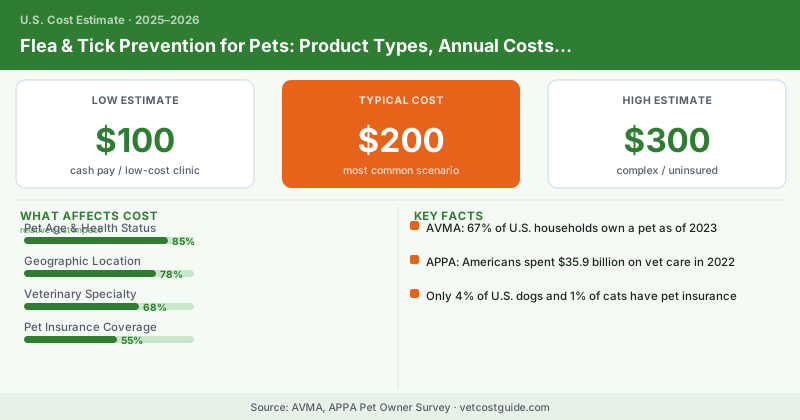
Year-round prevention typically costs $100–$300 annually depending on the product type and your pet's weight. Prescription topical treatments (like Simparica or Bravecto) generally range from $120–$200/year, while over-the-counter collars and sprays may cost $50–$150/year, though they're often less effective.
Most standard pet insurance plans do not cover preventive medications like flea and tick treatments, as they're considered routine preventive care rather than illness treatment. Some wellness add-on riders may reimburse 50–90% of prevention costs for an additional $10–$30/month, but you'll need to check your specific policy.
Most prescription preventives are applied monthly or every 3 months depending on the product (Bravecto lasts 12 weeks; Simparica is monthly). Year-round prevention is recommended in most US regions, though you can typically reduce frequency in winter months—consult your vet about your specific climate and local parasite risk.