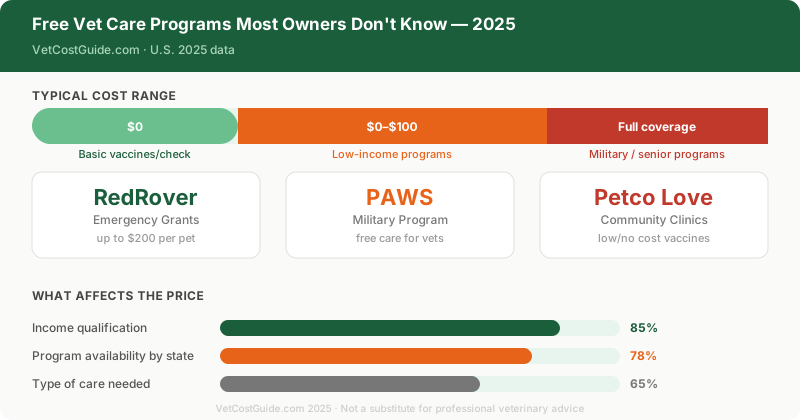
Here’s a number that’s worth sitting with for a moment: somewhere between 20% and 30% of independent veterinary practices maintain informal charity care funds that they never put on their website. On top of that, there’s an entire ecosystem of national grant programs, breed-specific rescue funds, manufacturer patient assistance programs, and subsidized clinic networks that most pet owners have never heard of. The ASPCA estimates that cost is one of the primary reasons pets go without care — but a lot of that gap is a research problem, not just a money problem. These programs are funded. They exist. They go underutilized every year.
- RedRover Relief provides emergency grants of up to $200 per pet for acute medical crises—applications are processed within 1–2 business days.
- PAWS (Pets and Women’s Shelters) and similar military support programs offer free or heavily subsidized veterinary care for active duty service members, veterans, and domestic violence survivors.
- Veterinary school community clinics serve general public patients at 30–50% below private clinic rates with no income requirement.
- Manufacturer patient assistance programs (Hill’s, Purina, Zoetis) provide free prescription foods and medications to qualifying low-income pet owners.
Free and Low-Cost Vet Care Programs at a Glance
| Program | What They Cover | Max Benefit | Eligibility |
|---|---|---|---|
| RedRover Relief | Emergency vet care | Up to $200 | Financial hardship + crisis situation |
| The Pet Fund | Chronic/serious illness | Varies ($200–$1,000+) | Non-emergency, documented financial need |
| Brown Dog Foundation | Cancer treatment | Varies | Cancer diagnosis, financial hardship |
| PAWS for People | Full vet care support | Full or partial | Active duty, veterans, first responders |
| Pets of the Homeless | Vaccines, basic care | Low-cost to free | Experiencing homelessness |
| HSUS/ASPCA affiliate clinics | Vaccines, spay/neuter, wellness | Service-based | Income verification varies |
| Vet school teaching hospitals | Specialist and primary care | 30–50% discount | No income req. (open to public) |
| Hill's A/D Patient Assist | Prescription foods | Free product | Vet referral + income documentation |
| Zoetis/Merck coupons | Medications, vaccines | 20–50% off | Pet owner registration |
Nine Programs Worth Knowing About
RedRover Relief at redrover.org is probably the most accessible emergency grant available in the country. Grants top out at $200 per pet — that won’t cover everything, but it frequently covers the critical gap. The application is online, processes in 1–2 business days, and payment goes directly to the veterinary clinic. Two eligibility requirements: genuine financial hardship and a genuine veterinary emergency. RedRover also runs a Domestic Violence Safe Housing Fund that helps survivors bring their pets to safety when fleeing abusive situations — a resource that doesn’t get nearly enough attention.
The Pet Fund (thepetfund.com) operates in a different lane. Rather than acute emergencies, it focuses on non-emergency chronic and serious illnesses — cancer, heart disease, diabetes management, kidney disease. Applications take several weeks, so it’s not the right tool for a middle-of-the-night crisis. For owners managing long-term conditions on tight budgets, though, typical awards run $200 to over $1,000. You’ll need vet records, proof of income, and documentation showing active treatment.
Brown Dog Foundation (browndogfoundation.org) exists specifically to help dogs with cancer whose owners can’t access oncology care. Narrow focus, but an important one — veterinary oncology is expensive, and families who’d do anything to treat their dog often hit a financial wall. Applications require a veterinary oncology referral and income documentation.
PAWS programs — the acronym shows up under several organizations, so be specific when searching. The most relevant for financial assistance are military-connected programs providing free or subsidized care to active duty service members, veterans, and in some cases first responders. Start with your base’s veterinary clinic if you’re active duty. For veterans, Pets for Patriots (petsforpatriots.org) connects qualifying vets with pet adoption assistance and veterinary care partnerships. Local VFW chapters sometimes know about region-specific resources too.
Pets of the Homeless (petsofthehomeless.org) works with more than 500 veterinary practices and low-cost clinics to provide free vaccines, basic care, and emergency treatment for pets belonging to people experiencing homelessness. Services differ by location but typically include core vaccines, rabies certification, flea treatment, and basic wound care.
Resources That Fly Under the Radar
Local SPCAs and Humane Societies. Worth emphasizing: local Humane Societies and SPCAs operate completely independently of each other and of any national organization. Each one sets its own programs. Many run financial assistance funds for community members that don’t appear anywhere on their public websites. Search “[your city/county] SPCA financial assistance” and call directly — the conversation takes five minutes and occasionally surfaces significant help.
Breed-specific rescue organizations. If your dog is a recognized breed, there’s almost certainly a national rescue organization for it, and many maintain emergency vet funds. Golden Retriever rescues, Bulldog rescues, Dachshund networks — these are funded through donations from breed enthusiasts, and many extend assistance to owned dogs, not just rescues. Search “[breed name] rescue financial assistance” and contact the organization directly.
Veterinary school community clinics. Cornell, UC Davis, Colorado State, Tufts, and 27 other AVMA-accredited programs provide both general and specialist care at 30–50% below private clinic rates. No income verification required — these are training environments open to the public. You can read a full breakdown in our veterinary school clinics guide.
Manufacturer patient assistance programs. Hill’s Prescription Diet offers a patient assistance program for low-income pet owners who need therapeutic prescription food. Zoetis — the manufacturer behind Revolution, Apoquel, and Cytopoint — provides discount programs through participating veterinarians. Ask your vet specifically about manufacturer assistance for any prescription product your pet is on. Most vets don’t volunteer this information unprompted, but they know about it.
- Applying to emergency grant programs for non-emergency conditions—funds like RedRover Relief are specifically for acute crises and applications for elective or chronic care are routinely declined.
- Waiting until a pet is in crisis to research programs—identify the resources available to you before you need them, since most have application processing times of 1–7 days.
- Overlooking local SPCA and county shelter assistance funds in favor of only national programs—local organizations often have faster response times and less competition.
- Not asking your veterinary clinic directly if they have a charity care fund or sliding-scale fee program—approximately 20–30% of independent practices have informal assistance programs not publicly advertised.
The Right Order of Operations
When a pet health crisis and financial strain collide, the sequence matters. Here’s what actually makes sense:
For acute emergencies, go to redrover.org/our-work/redrover-relief/ immediately and have your vet’s contact information and a cost estimate ready before you submit. Simultaneously, tell your vet you’re applying — most clinics will begin or continue treatment while awaiting a grant payment if they know it’s in process.
For non-emergency ongoing conditions, contact The Pet Fund or Brown Dog Foundation early. These take time, so apply as soon as possible in the treatment process — don’t wait until you’ve already burned through savings.
For any situation, call your local SPCA and Humane Society. Even if they can’t help directly, they tend to know about local resources that don’t show up in any national database.
Ask your vet about payment plans and manufacturer assistance at every visit involving a prescription product. Most practices have internal hardship options for established clients that are never mentioned unless the client asks.
FAQ
Do I need to prove my income to apply for these grants? Most programs require some form of hardship documentation — pay stubs, benefits letters, or a written statement. Requirements vary significantly. RedRover is relatively accessible; The Pet Fund requires more formal documentation. Vet school clinics have no income requirement whatsoever.
Can I apply to multiple programs for the same condition at the same time? Yes, and you should. There’s no prohibition on combining assistance sources. A RedRover grant plus a clinic payment plan plus a manufacturer coupon applied to the same visit is a legitimate and common approach.
How fast can emergency assistance actually arrive? RedRover is the fastest at 1–2 business days, with payment going directly to the clinic. Most other programs take 1–3 weeks. If you need care right now, tell your vet you’re applying and ask whether they can begin treatment while the application processes — many will.
Are these programs available for cats, not just dogs? Mostly yes. RedRover, The Pet Fund, Pets of the Homeless, and most other programs cover any species. Brown Dog Foundation is dog-specific by design. Breed-specific rescue funds are obviously breed-specific, which means cats and mixed-breed dogs may not have equivalent options in that category.
Frequently Asked Questions
RedRover offers up to $200 per pet for emergency veterinary care, while other programs like The Pet Fund and Mosby Foundation typically cover $200-$500 depending on your income level and location. Most grants require proof of financial hardship and are awarded on a first-come, first-served basis, so applications can take 1-2 weeks to process.
No—pet insurance does not cover care received at free or low-cost community clinics, but using these clinics instead of traditional emergency or specialty hospitals can save you $800-$2,500 per visit. However, if you use a traditional vet after getting help from a grant program, pet insurance will only reimburse costs above what the grant already paid, so combining both strategies requires careful coordination.
PAWS (Pet Assistance for Warriors) provides free preventive care, vaccinations, and emergency treatment for active-duty military, veterans, and their families at participating locations nationwide. All dog and cat breeds qualify regardless of age or pre-existing conditions, though you must provide military ID or discharge papers, and availability varies significantly by region.