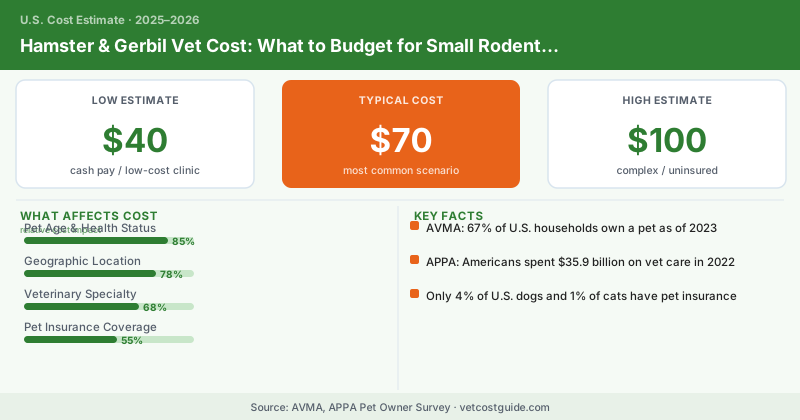
Here’s a question most new hamster owners don’t think to ask: do hamsters even need vet care? The answer is yes — and the cost surprises a lot of people. While the exam fee for a hamster is similar to or less than a cat or dog, small rodents often have conditions that require exotic specialist knowledge, and a specialist who sees pocket pets regularly charges accordingly. Budget $40–$100 for a basic wellness visit and potentially $300–$800 for a sick hamster or gerbil.
Finding a Vet Who Sees Hamsters and Gerbils
Not every vet sees small rodents. General practices that take “exotic” patients will see hamsters and gerbils, but the quality of care varies. Look for a practice listing “pocket pets,” “small mammals,” or “exotic small animals” in their services. The Association of Exotic Mammal Veterinarians (AEMV) directory is the best place to find a qualified exotic vet in your area.
An exotic specialist will charge more than a general practice — but they’ll also correctly diagnose and treat conditions that a generalist might miss or mismanage.
Typical Vet Costs for Hamsters and Gerbils
| Service | Hamster Cost | Gerbil Cost |
|---|---|---|
| Wellness exam | $40–$90 | $40–$85 |
| Fecal test (parasites) | $30–$60 | $30–$60 |
| Radiograph (1–2 views) | $80–$200 | $80–$200 |
| Anesthesia (isoflurane) | $50–$150 | $50–$150 |
| Tumor / lump removal | $200–$600 | $200–$500 |
| Teeth trimming (malocclusion) | $60–$150 | $60–$150 |
| Antibiotics (14-day course) | $25–$60 | $25–$60 |
| Euthanasia (humane) | $50–$100 | $50–$100 |
Most Common Health Issues (and Their Costs)
Hamsters
Wet tail (proliferative ileitis): A bacterial GI infection, most common in young Syrian hamsters. It’s rapidly fatal if untreated — a hamster can decline and die within 24–48 hours. Treatment includes antibiotics, supportive fluids, and sometimes anti-diarrheal medication.
- Treatment cost: $100–$300
- Note: Wet tail carries a poor prognosis even with treatment; early intervention is critical
Tumors and masses: Hamsters, especially Syrians, are highly prone to developing tumors as they age. Mammary tumors, adrenal tumors, and cheek pouch masses are all common.
- Surgery cost: $250–$600 depending on location and size
Dental malocclusion: Hamster and gerbil teeth grow continuously. If they’re misaligned, they overgrow and prevent eating.
- Trimming: $60–$150 per visit, often needs repeating every 4–8 weeks
Respiratory infections: Bacterial pneumonia and upper respiratory infections respond to antibiotics but require prompt treatment.
- Exam + medications: $100–$200
Gerbils
Epilepsy/seizures: Gerbils have a genetic predisposition to seizure disorders — studies suggest 20–40% of gerbils develop seizures, with onset usually at 2–6 months of age. Mild cases don’t require treatment; severe cases may benefit from phenobarbital.
- Management cost: $50–$150/year if treatment is needed
Tail degloving: Gerbils’ tails can lose their skin if grabbed. In many cases, amputation of the exposed tail tip is required.
- Procedure cost: $100–$250
Respiratory infections: Similar to hamsters — bacterial pneumonia is a real risk.
Hamsters live 2–3 years. Gerbils live 3–5 years. This affects how most owners think about major interventions — a $500 tumor surgery on a 2.5-year-old Syrian hamster requires a different calculation than the same surgery on a 1-year-old gerbil. Most exotic vets will discuss this with you honestly. There’s no wrong answer — it comes down to your financial situation, your pet’s quality of life, and your personal relationship with that animal.
Emergency Care for Small Rodents
Small rodents deteriorate rapidly when sick — what looks like a minor issue Monday morning can be a life-threatening emergency Monday evening. Emergency exotic vets charge 30–60% more than routine fees. An emergency hamster visit at a 24-hour exotic clinic can run $150–$400 for exam and initial treatment.
The AVMA notes that pocket pets like hamsters and gerbils are among the most commonly owned small pets in the US, yet they have the lowest rates of veterinary care — often because owners don’t realize how quickly conditions escalate or that treatment is available.
Preventive Care Costs
Annual wellness exams aren’t strictly standard for hamsters and gerbils (given their short lifespans), but a baseline exam when you first get your pet is valuable. It establishes a health baseline, gets you connected with an exotic vet before you need one in an emergency, and gives you a chance to ask about normal vs. abnormal behavior.
- New pet exam: $50–$90
- Annual wellness check (for long-lived gerbils): $50–$85
- Parasite screening (if purchased from a pet store): $30–$60
Small rodents hide illness until they can’t anymore — it’s a survival mechanism. By the time a hamster or gerbil looks visibly sick (hunched posture, half-closed eyes, not eating, labored breathing), it’s often in a serious state. Don’t wait 24 hours to “see if they improve.” Contact an exotic vet the same day you notice symptoms. With animals this small, time is genuinely measured in hours.
Realistic Budget for a Hamster or Gerbil Over Its Lifetime
- Healthy animal, no major illness (hamster): $50–$200 total vet care over 2–3 years
- One significant illness requiring treatment: $150–$500 added cost
- Surgery for tumor or dental issue: $300–$700
- Gerbil lifetime vet care (healthy): $100–$400 over 3–5 years
Small doesn’t mean no-cost. It means the individual bills are lower, but they’re just as likely to happen — and an exotic vet visit for a hamster costs nearly as much as a dog’s exam at most practices.
Frequently Asked Questions
A basic wellness exam for a hamster or gerbil typically costs $40–$100 at most veterinary clinics. If you need to see an exotic animal specialist who regularly treats pocket pets, expect to pay toward the higher end of that range or slightly above, since these vets have specialized training in small rodent care.
Most standard pet insurance plans do not cover small rodents like hamsters and gerbils, as they focus on dogs and cats. You would need to pay out-of-pocket for all veterinary care, though some exotic pet insurance providers may offer limited coverage—check your specific policy for exclusions and coverage limits.
Hamster and gerbil surgeries typically cost $200–$600 depending on the procedure complexity and your location. Recovery usually takes 7–14 days, during which you'll need to provide a quiet, warm environment and monitor the surgical site; follow-up exams may add $50–$100 to the total cost.