Imagine a worm that can reach 10 to 12 inches long living inside your dog’s heart and the blood vessels feeding its lungs. Now imagine dozens of them. That’s a heavy heartworm infection — and it’s entirely preventable for about $10 a month.
Heartworm treatment, if you skip prevention and the disease establishes, costs $1,000–$3,000. It involves injectable drugs derived from arsenic compounds, three clinic stays over several months, and 60 days of strict cage rest where your dog is essentially prohibited from doing anything more strenuous than a slow walk to the food bowl.
Prevention is one of the easiest calls in pet ownership. But before we talk about what works and what it costs, you need to understand what this disease actually does to a dog’s body — because that context makes the math feel even more obvious.
How Heartworm Disease Works
Dirofilaria immitis — the heartworm parasite — moves through mosquitoes. When a mosquito carrying heartworm larvae bites your dog, it deposits L3 larvae (third-stage larvae) under the skin. These migrate into body tissues over the next few weeks, molting through additional larval stages.
By about 45–65 days post-infection, the maturing larvae reach the bloodstream and travel to the right side of the heart and the pulmonary arteries — the blood vessels leading to the lungs. Over the next several months they mature into adult worms. A single adult female heartworm can reach 10–12 inches in length.
In moderate to heavy infections, the heart and pulmonary arteries become physically crowded with worms. The resulting inflammation, mechanical obstruction, and vascular damage causes a progressive form of heart and lung disease. Adult worms also release microfilariae (immature heartworms) back into the bloodstream, which mosquitoes pick up and carry to the next dog.
From infection to detectable adult worm: about 6 months.
Geographic Risk and the “It Doesn’t Happen Here” Myth
The American Heartworm Society (AHS) tracks heartworm prevalence through annual veterinary clinic surveys. Cases have been reported in all 50 US states. Historically highest prevalence:
- The Mississippi River valley (Louisiana, Mississippi, Arkansas, Tennessee)
- Gulf Coast and Southeast states
- Atlantic Coast as far north as New Jersey
But “low-risk area” is a relative term. Climate change has expanded the range of Aedes and Culex mosquitoes northward. AHS data shows consistent case increases in previously low-prevalence states. Dogs adopted from Southern rescues and transported north — increasingly common over the last decade — also bring heartworm dynamics to new regions.
The AHS recommends year-round prevention in all dogs, regardless of geography. The cost of being wrong about your “low-risk area” is $1,000–$3,000 and months of your dog’s misery.
Symptoms by Stage
The insidious feature of heartworm disease is how long it progresses without visible symptoms.
Class I (early): No symptoms at all. The only way to detect Class I infection is a heartworm antigen test — which detects proteins produced by adult female worms, meaning it only goes positive at 6+ months post-infection. A dog infected in March tests negative in August, positive in September.
Class II (moderate): Mild cough, some exercise intolerance, tires more quickly on walks. Easy to chalk up to other causes.
Class III (severe): Persistent cough, labored breathing, weight loss, lethargy, pronounced exercise intolerance, heart murmur on exam.
Class IV (“Caval Syndrome”): Heavy worm burden creates a mechanical obstruction blocking blood flow through the heart. Dogs collapse suddenly, pass dark “coffee-colored” urine from hemolysis. Surgical emergency with high mortality even with intervention.
Annual Testing: Why It’s Required Even on Prevention
Heartworm prevention is highly effective — Heartgard, Interceptor, and similar products are greater than 99% effective when given on time. “On time” is the key phrase. Missing a single dose by two or more weeks, or a dog vomiting a chewable tablet without the owner noticing, creates a window for infection.
The AHS recommends annual heartworm testing for dogs on prevention for two reasons: to catch the rare breakthrough infections that do occur, and because a dog should not start preventives without testing first — putting a dog on prevention when they already have adult heartworms can cause a severe reaction as microfilariae are rapidly killed.
Most vets run a 4Dx SNAP test at the annual wellness visit — this tests for heartworm antigen plus three tick-borne diseases (Lyme, ehrlichiosis, anaplasmosis) simultaneously. Cost: $40–$60.
Prevention Options: Comparing Cost and Convenience
| Product | Type | Coverage | Monthly Cost (Average Dog) |
|---|---|---|---|
| Heartgard Plus | Monthly oral chew | Heartworm + intestinal parasites | $6–$10 |
| Interceptor Plus | Monthly oral chew | Heartworm + 5 intestinal parasites | $8–$14 |
| Simparica Trio | Monthly oral chew | Heartworm + fleas + ticks + parasites | $20–$35 |
| Revolution (topical) | Monthly topical | Heartworm + fleas + ear mites + mange | $15–$25 |
| Revolution Plus (cats) | Monthly topical | Heartworm + fleas + ticks | $18–$28 |
| ProHeart 6 | Injection (vet-administered) | Heartworm only, 6-month duration | $50–$75/dose |
| ProHeart 12 | Injection (vet-administered) | Heartworm only, 12-month duration | $75–$150/dose |
The ProHeart injectable options are worth discussing for owners who genuinely struggle with monthly compliance — forgotten pills, inconsistent schedules. One injection at the vet covers 6 or 12 months with zero ongoing compliance burden. If the main reason doses get missed is that you forget, that’s a real solution.
Heartworm Treatment: What You’re Trying to Avoid
If your dog tests positive, treatment looks like this:
Stabilization: Dogs in Class III–IV often need several weeks of anti-inflammatory medication and exercise restriction before they’re stable enough for the arsenic-based injections.
Melarsomine dihydrochloride (Immiticide): The adulticide drug. The AHS protocol:
- A single injection into the lumbar muscles (Day 1)
- 30 days of strict rest
- Two injections 24 hours apart (Day 60 and 61)
- 30 more days of strict rest
The worms die over the following weeks. Dead worms fragment and are cleared through the lungs — and this process carries real risk of pulmonary thromboembolism (lung clots). Exercise restriction during this period isn’t optional. Activity increases blood flow to the lungs and increases the risk of complications from fragmenting worm material.
Cost breakdown:
- Pre-treatment bloodwork, chest X-rays, staging: $200–$500
- Melarsomine injections (3 doses): $400–$900
- Hospitalization and monitoring: $200–$600
- Follow-up testing and medications: $200–$400
- Total: $1,000–$3,000
Heartworm treatment requires 60 days of strict rest — no running, no jumping, no off-leash play, no stairs if avoidable. Dead and dying worms fragment in the pulmonary arteries, and physical exertion increases blood flow to the lungs, raising the risk of life-threatening pulmonary embolism. For active dogs and their owners, this two-month period is often described as one of the most challenging experiences in pet ownership. A dog that desperately wants to run, confined to leash walks and crate rest.
The 10-Year Math
| Scenario | 10-Year Cost |
|---|---|
| Prevention only (Heartgard Plus, average dog) | $720–$1,200 |
| Annual heartworm test (4Dx) | $400–$600 |
| Prevention + annual testing over 10 years | $1,120–$1,800 |
| One course of heartworm treatment | $1,000–$3,000 |
| Prevention cost vs. one treatment | Prevention wins by $200–$2,000 |
The numbers make the case. The discomfort of treatment — for your dog and for you — makes it even more compelling.
Missed or late doses are the primary cause of prevention failure. The simplest strategy: tie prevention to a fixed calendar date (the 1st or 15th of the month) rather than “around the same time each month.” Most prevention apps and calendar reminders help. Some owners tie it to their own monthly medication schedule. Whatever system works consistently — use it. A single dose missed by 3+ weeks during high-mosquito exposure in a high-prevalence region can be enough for an infection to establish.
Frequently Asked Questions
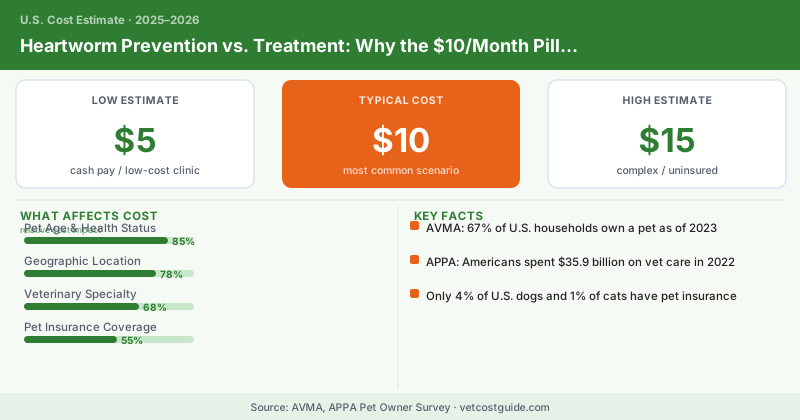
Heartworm prevention typically costs $5–$15 per month, depending on your dog's weight, the specific medication prescribed, and your veterinary clinic. Most pet owners find monthly prevention far more affordable than treating an active infection, which can run $1,000–$3,000.
Most pet insurance plans do not cover heartworm prevention because it is considered a routine preventive medication rather than treatment for illness. You'll typically pay out-of-pocket for monthly prevention pills or injections, making it one of the most cost-effective pet care investments you can make.
Dogs should receive heartworm prevention monthly during mosquito season, which for most of the US means spring through fall, though year-round prevention is recommended in warm climates like the South and Southwest. Your veterinarian will determine the appropriate schedule based on your location and can prescribe either monthly oral tablets or longer-acting injectable prevention that lasts 6 or 12 months.