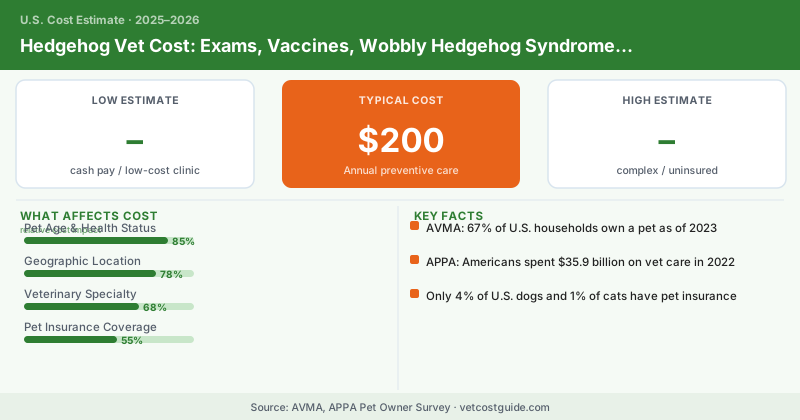
Here’s what most hedgehog owners find out too late: hedgehogs are exotic animals in veterinary terms, which means not every vet sees them — and the ones who do often charge more than you’d pay for a dog or cat exam. They’re also prone to serious diseases that develop quietly and expensively between ages 2 and 5.
If you’re bringing home a hedgehog or already own one, this is the honest cost picture.
Annual Wellness Care Costs
Hedgehogs should see an exotic-animal vet at least once a year. After age 3, twice-yearly exams are recommended because disease progression in small mammals moves faster than it does in dogs and cats.
| Service | Typical Cost | Notes |
|---|---|---|
| Annual wellness exam (exotic vet) | $60–$120 | Exotic surcharge applies; not all vets see hedgehogs |
| Fecal parasite exam | $25–$50 | Checks for Crenosoma and other parasites |
| Blood panel (age 3+) | $100–$200 | Baseline organ function |
| Anesthesia for thorough exam | $100–$250 | Hedgehogs ball up; many exams require sedation |
| Radiographs (x-rays) | $100–$250 | Two views |
| Annual preventive care total | $200–$450 | Healthy young hedgehog |
The anesthesia note matters: hedgehogs curl tightly when stressed, making any meaningful physical examination — feeling the abdomen, listening to heart and lungs, examining the mouth — nearly impossible without sedation. Many exams on hedgehogs either find nothing because the animal won’t uncurl, or require isoflurane anesthesia to examine properly. Budget for it.
Finding a Hedgehog Vet
This is the first hurdle. Most general practices don’t see hedgehogs, and in rural areas the nearest qualified exotic vet could be a 1–2 hour drive. The Association of Exotic Mammal Veterinarians (AEMV) maintains an online directory. State-licensed hedgehog ownership is required in some states — hedgehogs are banned in California, Georgia, Hawaii, and a handful of others — so verify legality in your state first.
When calling a practice, ask specifically: “Do you regularly see African pygmy hedgehogs?” Not just “do you see exotics.” A practice that sees mostly birds and reptiles may have limited hedgehog experience.
The Three Expensive Hedgehog Conditions
The APPA estimates approximately 200,000–300,000 hedgehogs are kept as pets in the US. Despite their popularity, hedgehogs are prone to a cluster of serious conditions that drive most of the expensive veterinary bills.
Wobbly Hedgehog Syndrome (WHS): A progressive neurological disease unique to African pygmy hedgehogs. It causes gradual muscle wasting and weakness, typically starting in the hindquarters and progressing forward. There’s no cure and no treatment that reliably slows progression. Diagnosis is primarily clinical (observation of symptoms) or by muscle biopsy. Most affected hedgehogs are euthanized within 18–24 months of onset. Diagnostic costs: $300–$700 (exam + bloodwork + possible biopsy). Treatment costs: supportive care only.
Cancer: Hedgehogs have an extraordinarily high cancer rate — some veterinary literature estimates over 50% of hedgehogs over age 3 develop some form of neoplasia. Uterine cancer in females, oral squamous cell carcinoma, lymphoma, and skin mast cell tumors are all reported. Surgery for removal of accessible tumors: $500–$2,000. Chemotherapy is rarely pursued due to the stress it places on small animals.
Dental disease: Hedgehogs are highly susceptible to periodontal disease. Dental cleaning under anesthesia: $200–$500. Extractions add $20–$50 per tooth.
| Condition | Diagnostic Cost | Treatment Cost | Prognosis |
|---|---|---|---|
| Wobbly hedgehog syndrome | $300–$700 | Supportive care only | Progressive; terminal |
| Uterine tumor | $300–$600 | Surgery: $500–$1,500 | Good if caught early |
| Oral squamous cell carcinoma | $300–$500 | Usually palliative | Poor |
| Dental disease | $50–$150 | Cleaning: $200–$500 | Good with treatment |
| Respiratory infection | $100–$250 | Antibiotics: $50–$150 | Usually good |
| Skin mites (Caparinia) | $80–$150 | Ivermectin injections: $50–$150 | Good |
Hedgehogs hide illness instinctively — a wild survival behavior that translates poorly to domestic life. By the time symptoms are obvious, the condition is often advanced.
Watch for:
- Wobbling or falling over (neurological symptoms)
- Visible mass or lump anywhere on the body
- Drooling or difficulty eating
- Rattling breathing or nasal discharge
- Significant weight loss
- Not running on their wheel at night (hedgehogs run 5–8 miles nightly when healthy; stopping is a red flag)
Don’t wait on any of these. Hedgehog conditions move fast.
Husbandry and Prevention
Many expensive hedgehog health problems are husbandry-related. Temperature matters enormously — African pygmy hedgehogs enter torpor (a dangerous cold-shock state) if their environment drops below 65°F. Keep their space between 72–80°F. Torpor is not hibernation; it’s a stress response that can be fatal and is often mistaken by owners for death or sleep.
Obesity is common in pet hedgehogs and contributes to fatty liver disease, heart disease, and mobility issues. A wheel, appropriate diet (high-quality insectivore food or grain-free cat food as the base), and mealworm treats in moderation help maintain weight.
If your hedgehog feels cold and won’t rouse after gentle warming, take them to an emergency vet immediately. Torpor in pet hedgehogs — caused by ambient temperature dropping below their comfort range — is a medical emergency, not a normal sleep state. Gradually warm the hedgehog (body heat, warm towel, NOT hot water or heating pads) while driving to the vet.
Is Pet Insurance Available for Hedgehogs?
Yes, but options are limited. Nationwide offers an exotic pet plan that covers hedgehogs. Premiums typically run $15–$30/month depending on the plan level and coverage limits. Given the high rate of cancer and neurological disease in older hedgehogs, coverage for diagnostic costs alone can justify the premium for many owners.
The financial reality: most hedgehog owners who pursue full treatment for serious conditions spend $1,000–$3,000. Owners who find tumors or wobbly hedgehog syndrome at older ages sometimes choose palliative care and quality-of-life support rather than aggressive intervention — which is also a valid, humane choice.
Frequently Asked Questions
Do hedgehogs need annual vet visits? Yes. Annual exams are essential — twice yearly after age 3, since disease progression is faster in small mammals. Even a hedgehog that “seems fine” can be harboring early cancer or neurological disease that a trained exotic vet will notice before symptoms become obvious.
How long do hedgehogs live? African pygmy hedgehogs typically live 4–6 years in captivity, with some reaching 8. The last 1–2 years often involve managing age-related conditions. A 3-year-old hedgehog is middle-aged and worth starting blood panels.
Are hedgehog vet costs tax-deductible? Not for personal pets. If your hedgehog is used in an educational, therapeutic, or business capacity, the deduction calculation changes — but for most owners, vet costs are personal expenses.
Frequently Asked Questions
A hedgehog wellness exam at an exotic veterinary specialist typically costs $60–$120, which is notably higher than standard dog or cat exams because hedgehogs require specialized exotic animal training. Annual wellness care (including exams and basic preventive care) runs $200–$400 per year for most hedgehog owners.
Most standard pet insurance plans do not cover exotic animals like hedgehogs, leaving owners responsible for 100% of vet costs out-of-pocket. You should contact exotic pet insurance providers directly to confirm coverage before adopting, as policies and exclusions vary significantly.
Wobbly hedgehog syndrome (a neurological disease common in hedgehogs ages 2–5) can cost $500–$3,000 to diagnose and manage, depending on imaging, medications, and ongoing care needs. Treatment is typically supportive rather than curative, so owners should budget for long-term management costs if their hedgehog develops symptoms like loss of coordination or weakness.