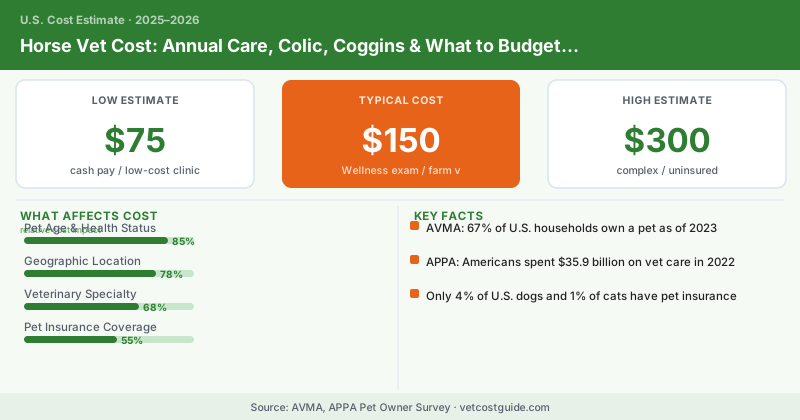
A routine wellness call for a horse runs $150–$350 — before you factor in vaccines, a Coggins test, dental floating, and farrier work. The American Association of Equine Practitioners (AAEP) estimates that responsible horse owners spend at least $2,500–$5,000 per year on preventive veterinary care alone, not counting emergencies. Own a horse long enough and you’ll eventually face a colic call at 2 a.m. that can run from $300 to $10,000+ depending on severity. Eyes open before you buy.
Annual Preventive Care Costs
| Service | Low | Typical | High |
|---|---|---|---|
| Wellness exam / farm visit | $75 | $150 | $300 |
| Core vaccines (EEE/WEE, Tetanus, West Nile, Rabies) | $80 | $150 | $250 |
| Coggins test (EIA) | $25 | $45 | $75 |
| Dental float (power float, sedation included) | $150 | $275 | $450 |
| Fecal egg count + deworming | $30 | $60 | $120 |
| Spring/fall risk vaccines (Strangles, Flu/Rhino, Botulism) | $60 | $120 | $200 |
| Sheath cleaning (male horses) | $40 | $75 | $120 |
| Annual bloodwork (senior horses) | $100 | $200 | $350 |
Emergency and Major Procedure Costs
Colic is the single biggest financial risk horse owners face. The AAEP reports that colic affects about 10% of horses each year, with roughly 1 in 10 colic cases requiring surgery. Costs for surgical colic treatment range from $5,000 to $15,000 at a referral hospital, depending on what’s found inside.
| Procedure | Low | Typical | High |
|---|---|---|---|
| Colic exam + treatment (non-surgical) | $250 | $600 | $1,500 |
| Colic surgery (referral hospital) | $5,000 | $8,500 | $15,000 |
| Lameness exam + nerve blocks | $150 | $400 | $800 |
| Joint injection (one joint) | $200 | $400 | $700 |
| Radiographs (per set) | $100 | $250 | $500 |
| Wound treatment / suturing | $200 | $600 | $2,000 |
| Eye exam (equine ophthalmologist) | $200 | $400 | $750 |
| Endoscopy (scope) | $300 | $600 | $1,000 |
The Coggins Test: Required, Not Optional
Every horse that leaves your property needs a current negative Coggins test — it’s the law in every US state. The test screens for Equine Infectious Anemia (EIA), a reportable disease with no treatment or vaccine. A positive result means mandatory quarantine and often euthanasia.
At $25–$75, a Coggins is one of the cheapest things you’ll pay for all year. Most states require results within the past 12 months; some require 6 months for horses crossing state lines. Budget one per horse per year, minimum. If you show, trail ride, or haul to boarding facilities, keep a copy in your trailer at all times.
Vaccines: Core vs. Risk-Based
The AAEP divides equine vaccines into two tiers. Core vaccines — Eastern/Western Equine Encephalomyelitis, Tetanus, West Nile Virus, and Rabies — are recommended for every horse in the US regardless of use or location. These run $80–$150 per horse per round, typically given once or twice a year depending on exposure.
Risk-based vaccines — Influenza, Rhinopneumonitis (EHV), Strangles, Botulism, Rotavirus — depend on your horse’s activity level, region, and contact with other horses. Show horses or horses in active training facilities typically need the full panel. Budget an extra $60–$200 per year for risk-based vaccines on active horses.
Horses need dental exams and “floating” (filing sharp points off molars) every 12–18 months. Without it, uneven wear causes hooks and waves that make chewing painful and can lead to weight loss and colic. A power float under light sedation runs $150–$450. Skip two or three years, and you may be looking at extractions at $200–$600 per tooth.
Farrier vs. Vet Costs: Know the Difference
Hooves aren’t strictly a veterinary expense, but hoof problems blur the line fast. Routine farrier work — a trim every 6–8 weeks, or shoes every 4–6 weeks — runs $35–$80 for a trim and $100–$250 for a shod set. When lameness develops, though, the vet and farrier often work together, adding $200–$800 in diagnostics and corrective shoeing on top of regular farrier bills.
The combined annual cost for a single horse — vet, farrier, feed, and basic care — typically runs $5,000–$12,000. In high-cost states like California, Florida, and New York, $15,000 isn’t unusual. Budget before you board.
Equine Insurance: Is It Worth It?
Major medical and surgical equine insurance typically costs 2.5–4% of the horse’s insured value per year. On a $10,000 horse, that’s $250–$400 annually for coverage that reimburses most of a colic surgery. Mortality-only policies are cheaper — around 1.5–2% of value — but cover death, not medical bills.
For horses valued under $3,000, self-insuring (setting aside $200–$400/year in a dedicated vet fund) is often the math-correct choice. For competition horses, breeding stock, or horses with a documented history of health issues, insurance pays for itself the first time something serious happens.
What First-Time Horse Owners Underestimate
The farm call fee. Most equine vets charge a travel fee of $35–$100 per visit before touching your horse. That base fee applies to every call — a 15-minute vaccine appointment costs the same travel fee as a 3-hour colic treatment. Grouping procedures into one annual visit and scheduling with barn neighbors to split the farm call fee saves real money over the course of a year.
Frequently Asked Questions
A routine wellness call for a horse typically costs $150–$350 for the veterinary exam alone. Once you add vaccines, a Coggins test, and dental floating, annual preventive care usually totals $2,500–$5,000 per year for responsible horse owners.
Most equine insurance policies cover colic surgery, but typically require you to pay out-of-pocket first and then submit for reimbursement, usually covering 80–90% of costs after your deductible. Emergency colic surgery can exceed $10,000, so verify your policy limits and deductibles before an emergency occurs.
A Coggins test is a blood test that screens for equine infectious anemia and is required by most states for interstate horse travel or boarding. The test itself costs $50–$150, and most horses need one annually or every few years depending on your state and facility requirements.