Cats have a reputation for being low-maintenance pets. And honestly? For the first few years of a healthy indoor cat’s life, that reputation isn’t entirely wrong. But “low-maintenance” doesn’t mean free — and the cats that skip routine care early tend to accumulate expensive problems later.
Here’s what annual vet care actually costs for a cat, based on real numbers.
The Baseline: $500–$1,500/Year for a Healthy Cat
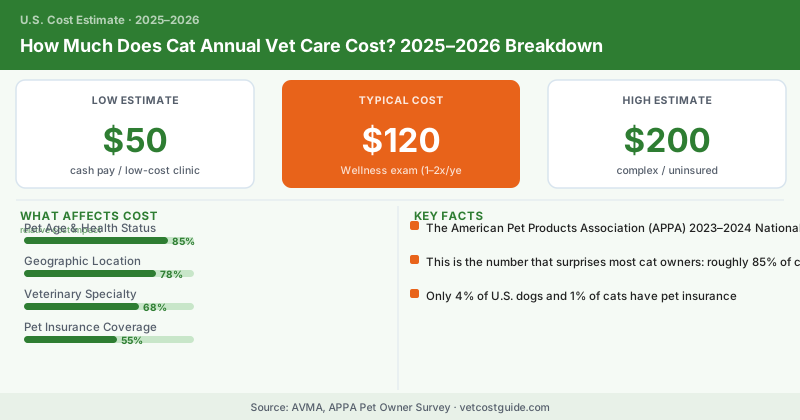
The American Pet Products Association (APPA) 2023–2024 National Pet Owners Survey found that cat owners spent an average of $902/year on veterinary care — a figure that includes both routine visits and illness/injury care. For a healthy cat with no major problems, routine costs typically run $500–$900/year. Add any illness or dental work and you’re looking at $1,000–$2,500+.
| Annual Expense | Low | Typical | High |
|---|---|---|---|
| Wellness exam (1–2x/year) | $50 | $120 | $200 |
| Core vaccinations | $75 | $150 | $250 |
| Rabies vaccine (every 1–3 yrs) | $25 | $50 | $75 |
| Flea/tick prevention | $80 | $150 | $250 |
| Heartworm prevention (if recommended) | $30 | $60 | $100 |
| Dental cleaning (not every year) | $0 | $300 | $700 |
| Bloodwork (annual recommended 7+) | $0 | $150 | $300 |
| Unexpected illness/injury buffer | $0 | $300 | $2,000+ |
Core Vaccines and Wellness Exams
Every cat needs an annual wellness exam. Even if your cat stays indoors and seems perfectly healthy, that exam catches early dental disease, weight changes, heart murmurs, kidney function decline, and other issues that are far cheaper to treat early than late.
Core vaccines for cats include:
- FVRCP (feline viral rhinotracheitis, calicivirus, panleukopenia): Given as a kitten series, then every 1–3 years in adults
- Rabies: Required by law in most states; frequency depends on vaccine type (1-year vs. 3-year)
Non-core vaccines like FeLV (feline leukemia virus) are recommended for cats with outdoor access or multi-cat household exposure.
Vaccination costs vary by clinic and region:
- Full kitten series (3 visits): $200–$450 total
- Adult annual boosters: $100–$250 depending on which vaccines are due
Flea, Tick, and Parasite Prevention
Indoor cats have lower parasite risk, but zero risk doesn’t exist — fleas hitchhike on humans and other pets, and indoor cats can still be exposed. Monthly prevention costs $7–$20/month depending on the product. Oral or topical options include Revolution, Bravecto, and Frontline.
Skipping prevention and treating an established flea infestation costs $200–$500+ for the cat plus household treatment. Prevention is almost always cheaper.
The Dental Problem Cat Owners Underestimate
This is the number that surprises most cat owners: roughly 85% of cats over age 4 have some degree of dental disease, according to research cited by the AVMA. That’s not a small at-risk subset — that’s almost every adult cat.
Dental cleanings for cats require general anesthesia (cats won’t sit still for a dental procedure). A routine cleaning runs $300–$600. If extractions are needed — and they frequently are — add $50–$150 per tooth. A cat with significant dental disease might need $500–$1,200+ in dental work in a single visit.
The good news: regular dental cleanings every 1–3 years slow disease progression. Waiting until a cat’s mouth is painful and infected means more extractions and higher cost. Budget at least $300–$500 every other year for dental care starting at age 3–4.
Bad breath in cats isn’t just unpleasant — it’s usually a sign of active dental disease. Other signs: dropping food, eating on one side, pawing at the mouth, drooling, or decreased appetite. Don’t wait for the annual exam if you’re seeing these signs. Dental pain in cats is real and often untreated because cats hide discomfort so effectively.
Senior Cats: When Costs Climb
Cats age 7 and older are considered “senior” by most veterinary standards. At this point:
- Twice-yearly wellness exams are often recommended (vs. once annually)
- Annual bloodwork to monitor kidney function, thyroid levels, and liver enzymes becomes standard: $150–$300/year
- Hyperthyroidism develops in roughly 10% of cats over age 10 — treatment with methimazole medication runs $50–$150/month
- Kidney disease is the leading cause of death in older cats; early detection via bloodwork allows management that extends life significantly
- Dental disease is nearly universal and often requires intervention
Budget $1,000–$2,500+/year for a senior cat receiving appropriate routine care.
Total Annual Cost by Life Stage
| Life Stage | Age Range | Typical Annual Vet Cost |
|---|---|---|
| Kitten first year | 0–1 yr | $600–$1,200 (higher due to vaccines + spay/neuter) |
| Young adult | 1–6 yrs | $400–$900 (routine care only) |
| Middle-aged | 7–10 yrs | $700–$1,500 (add senior bloodwork) |
| Senior | 11+ yrs | $1,000–$2,500+ (multiple conditions common) |
Indoor vs. Outdoor Cats
Indoor-only cats generally have lower vet costs because they avoid trauma, infectious disease exposure, and the parasites that come with outdoor life. But they’re not zero-cost. Weight management (obesity is prevalent in indoor cats), dental disease, and stress-related urinary issues are common indoor cat problems.
Outdoor or indoor/outdoor cats face additional risks:
- Upper respiratory infections from cat-to-cat contact: $150–$400 per episode
- Bite wound abscesses from fights: $200–$600 per incident
- Trauma from cars or predators: $500–$5,000+
- FeLV/FIV exposure if unvaccinated
The cost difference between indoor and outdoor cat care over a lifetime can be thousands of dollars.
“My cat never goes to the vet and is totally fine” is survivorship bias. Cats are masters at hiding illness — pain, nausea, and discomfort are often invisible until a condition is quite advanced. By the time an owner notices a cat is unwell, the problem has usually been developing for weeks or months. Annual exams catch what you can’t see.
FAQ
How often does a healthy cat need to see the vet? Once a year for cats under 7. Twice a year for cats 7 and older, or sooner if any health concerns arise. Don’t skip these visits — early detection consistently reduces lifetime veterinary costs.
What’s the most expensive routine cat care cost? Dental cleanings under anesthesia, typically $300–$700 every 1–3 years starting around age 3–4. It’s the cost most cat owners aren’t budgeting for until they get the bill.
Does indoor vs. outdoor status affect cat insurance premiums? Yes — some insurers charge higher premiums or add exclusions for outdoor cats because of higher injury and infectious disease risk. Declare your cat’s lifestyle accurately when applying.
Frequently Asked Questions
A routine annual wellness exam for a cat typically costs $100–$300, depending on your location and veterinary clinic. This baseline visit usually includes a physical exam, weight check, and basic health assessment, though additional diagnostics like blood work or urinalysis are billed separately.
Most standard pet insurance plans do not cover routine preventive care like annual exams, vaccines, or dental cleanings—these are typically considered maintenance rather than illness treatment. However, some insurers offer optional wellness or preventive care add-ons (usually $10–$30/month extra) that reimburse 70–90% of these routine costs after you meet a deductible.
Veterinarians recommend professional dental cleanings every 1–3 years for most adult cats, though indoor cats with good oral hygiene may need them less frequently. A professional cat dental cleaning typically costs $200–$600 and includes anesthesia, scaling, polishing, and any necessary extractions, which add $50–$100+ per tooth.