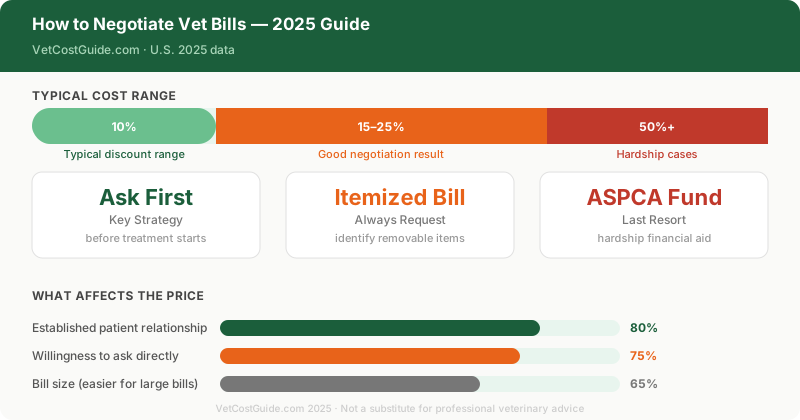
Twenty-five to thirty percent. That’s the proportion of clients who receive some form of discount or payment flexibility when they ask an independent veterinary practice directly and respectfully, according to surveys of practice owners. It’s not a huge number — but it’s not nothing either, especially if you never thought asking was even an option. Vet bills aren’t carved in stone. They’re itemized estimates assembled from a service menu that has real flexibility built in, particularly at independently owned practices that aren’t bound by corporate pricing policies. The question isn’t whether negotiation is possible. It’s whether you know what to say and when to say it.
- Asking for an itemized estimate before authorizing any treatment is the single most effective way to reduce a bill—it removes services you may not need.
- Long-standing clients who ask for flexibility directly and politely receive a discount 20–30% of the time at independent practices.
- Generic medications can replace brand-name prescription drugs at 30–60% lower cost—but you must ask specifically, as vets rarely offer this proactively.
- Payment plans are available at roughly 30% of practices and almost universally through CareCredit or Scratchpay financing—always ask before assuming the full bill is due on discharge.
What’s Actually Negotiable
| Negotiation Tactic | Success Rate | Typical Savings | Best Timing |
|---|---|---|---|
| Ask for itemized estimate | Very high | 10–25% (remove unwanted items) | Before treatment authorization |
| Long-standing client discount request | 25–30% | 10–20% off total | After visit, before payment |
| Generic medication substitution | High (with Rx) | 30–60% per medication | When prescription is written |
| Payment plan request | ~30% of practices | Full amount spread over time | Before payment is due |
| Phase treatment over multiple visits | Moderate | Varies (avoids one large bill) | During treatment planning |
| Cash/check discount | 20–30% of practices | 3–8% off total | At payment |
| Bundled service discount (wellness) | Moderate | 5–15% on multi-service days | At scheduling |
| Emergency fee waiver (established client) | 15–20% | $50–$150 off emergency surcharge | After service, before payment |
Five Scripts Worth Memorizing
Script 1: The Itemized Estimate
Before you authorize anything, say: “Can you walk me through each line item on this estimate? I’d like to understand what each service is for before I approve it.”
This is the highest-leverage move on the list — and it works because it forces a service-by-service conversation. In most practices, wellness panels, optional diagnostics, and prophylactic add-ons are bundled into estimates as defaults. Once you’re looking at line items, you can make real decisions about what’s essential right now versus what can be deferred. Common items that experienced pet owners routinely decline or delay: pre-anesthetic bloodwork on young, healthy animals (sometimes optional for low-risk procedures), take-home medications available cheaper at a human pharmacy, and same-day recheck appointments that can easily be rescheduled.
Script 2: The Long-Relationship Ask
After service, before payment: “I’ve been bringing [pet’s name] here for [X] years and I genuinely appreciate the care. This month has been financially rough — is there any flexibility on today’s total?”
Don’t say “can I get a discount” — that framing sounds transactional. This version anchors on the relationship, is honest about circumstances, and isn’t pushy. It gives the practice a graceful way to say yes. One important caveat: this only works at independently owned clinics. Corporate chains like Banfield, VCA, and BluePearl have centrally managed pricing that front-desk staff have no authority to override. Don’t waste goodwill there.
Script 3: The Generic Medication Switch
When your vet writes a prescription: “Is there a generic version available? I’d like to fill it at a human pharmacy if that’s possible.”
Many veterinary medications — particularly antibiotics, anti-inflammatories, and thyroid drugs — have generic equivalents available at Costco, Walmart, or online pharmacies at dramatically lower cost than in-clinic dispensing. Amoxicillin, metronidazole, prednisone, and methimazole (used for feline hyperthyroidism) are all good examples. Your vet can write a pharmacy-fillable prescription. There’s sometimes a $5–$15 script fee, but the drug cost savings routinely run $50–$200 more than that.
Script 4: The Payment Arrangement
Before you’re handed the invoice: “The total is more than I can manage today. Do you offer a payment plan, or are you set up with CareCredit or ScratchPay?”
Never assume the answer is no. Around 30% of independent practices will set up informal payment arrangements for established clients. CareCredit and ScratchPay are veterinary financing tools accepted at thousands of practices — CareCredit’s promotional periods start at 6 months, and ScratchPay offers instant soft-check approval. If you’re anticipating a large bill, apply for either before your appointment so you’re not making that decision in a stressful moment.
Script 5: The Phased Treatment Plan
During the treatment discussion: “Which of these items is most urgent medically, and which could we realistically schedule for a follow-up once I’m in a better financial position?”
A lot of treatment estimates bundle genuinely necessary items with strongly recommended but non-urgent ones. A vet who recommends dental cleaning, a bloodwork panel, and a skin allergy workup in one visit may be completely fine staging them over 6–8 weeks. The key is asking directly which items are urgent — most vets will be candid.
- Negotiating after the procedure is complete rather than before—your leverage drops significantly once treatment is done.
- Asking for a discount at a corporate chain clinic (Banfield, VCA, BluePearl)—pricing at these practices is managed centrally and front-desk staff have no authority to discount.
- Using confrontational language (“this is outrageous,” “you’re overcharging me”)—veterinary staff respond to respect, not pressure.
- Not asking about generic medications because it feels awkward—this single question can save $50–$200 on a prescription.
Setting Yourself Up Before You Go
The best negotiating position is built before you walk in the door, not in the exam room.
Call for a realistic cost range before your appointment. Ask: “I’m coming in for [specific reason] — can you give me a typical range so I can plan?” Most clinics give honest estimates over the phone without committing to a number.
If you think the visit might be expensive, apply for CareCredit before you go. Approval takes five minutes online. Having that card in your wallet changes the dynamic — you’re not asking for help, you’re offering to pay immediately via financing.
Think about your leverage honestly. Multi-pet household? Long-standing client? Do you refer friends to the practice? These are relationship factors that make a practice more willing to work with you. Knowing them before you ask is useful.
If multiple services are needed, ask about multi-service bundling at the scheduling call. Many practices discount the second and third service on a combination visit — it’s not always advertised.
FAQ
Is it rude to negotiate a vet bill? No. Vets are running businesses, and respectful financial conversations are part of that. The key is tone — you’re asking, not demanding, and you’re acknowledging the quality of care you received. Most vets have this conversation regularly and don’t find it uncomfortable.
Will my vet treat my pet differently if I push back on pricing? Any reputable practice won’t. Care quality shouldn’t vary based on whether a client asked about costs. If you ever felt that it did, that’s worth noting — and worth finding a different clinic.
Can getting a second opinion help me negotiate? Absolutely. For any treatment plan over $500, a second opinion is medically appropriate — not just financially strategic. Some pet owners use a second opinion to establish whether a quoted treatment plan is on the higher end, then bring that information back to their regular vet. That’s a legitimate approach.
What if I genuinely can’t pay the bill at all? Be direct and honest with the practice — this conversation is far better than disappearing. Clinics deal with financial hardship regularly and many have access to charity care funds, payment deferral options, and connections to programs like RedRover Relief. Walking out without addressing it creates collection issues for everyone.
Frequently Asked Questions
Studies show that 25-30% of pet owners receive some form of discount or payment flexibility when they ask their veterinary practice directly and respectfully. Discounts typically range from 10-20% off the original bill, though some practices may offer more depending on the service and your situation.
Pet insurance reimburses based on the actual invoice amount charged by your vet, so negotiating a lower bill typically results in a lower reimbursement as well. Most policies cover 70-90% of eligible expenses after your deductible, but pre-existing conditions and routine preventive care are commonly excluded.
Request an itemized estimate in writing before any procedure so you can review each service and identify areas to negotiate, such as premium medications or optional diagnostics. Call during business hours to speak with the practice manager or owner directly, as they have more authority to approve discounts than front-desk staff.