According to AVMA data, one in three pets requires emergency veterinary treatment every year. That statistic sounds abstract—until you’re the one sitting in an emergency clinic at 2 a.m. with a dog that ate something it shouldn’t have, facing a $4,200 foreign body removal. Whether pet insurance is “worth it” comes down to a blunt question: can you absorb that number without debt, and without hesitating about treatment?
For some owners, the answer is yes. For most, it’s not—and that’s where the math gets interesting.
- A single emergency surgery—like a swallowed foreign object or CCL tear—can cost $3,000–$7,000 and wipe out years of self-funded savings overnight.
- Over 5 years, a healthy dog in a low-risk breed costs roughly $4,200–$6,000 in premiums with a comprehensive plan—often more than actual claims paid.
- Insurance wins decisively if your pet has one major accident or illness; self-funding wins if your pet stays mostly healthy.
- Enrolling before age 3 locks in lower rates and avoids pre-existing condition exclusions on developing health issues.
Running the 5-Year Numbers
Here’s the scenario most people don’t think through: they imagine either a healthy pet who never needs anything, or a catastrophically sick pet who needs everything. Reality is messier. We modeled two dogs and one cat across five years to show where the numbers actually land.
Insurance pricing based on 2025 national averages: $250 annual deductible, 80% reimbursement, $10,000 annual limit plan. The Labrador was enrolled at age 2; the French Bulldog at age 1.
| Scenario | 5-Yr Premiums | Expected Claims Paid | Net Cost (Insurance) | Self-Pay Risk |
|---|---|---|---|---|
| Lab, no major illness | $5,400 | $1,800 | $3,600 out-of-pocket | $3,200 avg vet bills |
| Lab, one CCL surgery | $5,400 | $4,800 | $600 out-of-pocket | $6,200 total bills |
| French Bulldog (no surgery) | $7,800 | $2,400 | $5,400 out-of-pocket | $4,100 avg vet bills |
| French Bulldog (BOAS surgery) | $7,800 | $6,200 | $1,600 out-of-pocket | $9,500 total bills |
| Mixed breed cat, healthy | $2,900 | $900 | $2,000 out-of-pocket | $1,800 avg vet bills |
| Mixed breed cat, cancer dx | $2,900 | $7,200 | -$4,300 (net gain) | $14,000+ treatment costs |
The table tells a clear story. Healthy, low-risk pets in low-cost locations? Self-funding often comes out ahead over five years. It’s not close. But the moment a serious diagnosis lands—a cancer finding in the cat, a BOAS surgery for the Bulldog, a ligament tear in the Lab—insurance doesn’t just break even. It wins decisively.
How the Reimbursement Model Works
Pet insurance in the US is reimbursement-based, which catches first-time buyers off guard. You pay the vet bill in full, then file a claim. The insurer processes it, applies your deductible, and sends you a check for your reimbursement percentage of the eligible costs.
Most comprehensive plans cover accidents and illnesses: cancer, orthopedic conditions, hereditary diseases, emergency care, and specialist referrals. Wellness add-ons can cover vaccines, annual exams, and flea prevention—though these add-ons rarely pay for themselves unless your pet’s routine care costs are unusually high.
Three variables drive your financial outcome more than anything else: your deductible structure (annual vs. per-incident), your reimbursement percentage (70%, 80%, or 90%), and your annual limit. Choosing a $500 deductible instead of $100 cuts your premium 25–35% while still protecting you from the expensive stuff. That trade-off usually makes sense unless you expect multiple small claims per year.
What Determines Whether It Pencils Out
Breed matters enormously. French Bulldogs face near-certain respiratory surgery costs. German Shepherds have elevated rates of degenerative myelopathy and orthopedic issues. Golden Retrievers develop cancer at roughly 60% lifetime rates. For these breeds, insurance isn’t a gamble—it’s a near-certainty of use. Mixed breeds and most cats sit in a much lower-risk category.
Your financial cushion. If you genuinely have $10,000–$15,000 in accessible savings set aside for pet emergencies, self-funding is mathematically defensible. But that’s a separate account you’re keeping liquid and not touching—not just a general savings balance you’d have to raid. If an unexpected $4,000 bill would require credit card debt or force difficult decisions about your pet’s care, insurance pays for itself in peace of mind alone.
Enrollment age. The math changes significantly with age. An insurer like Embrace might price a healthy 1-year-old dog at $45–$55/month; the same dog at age 7 could run $90–$130/month for worse coverage, with more pre-existing exclusions. Get in early.
Geographic location. Veterinary costs in New York City and San Francisco run 30–50% higher than national averages. Higher local vet costs mean you hit breakeven faster—which makes insurance more valuable in expensive markets.
- Waiting until your pet is sick to enroll. Any condition your vet has documented before your policy start date becomes a permanent pre-existing exclusion. Once your dog’s ACL starts showing wear on radiographs, that $4,500 surgery is yours to pay.
- Choosing the cheapest plan without checking the fine print. Some budget plans cap payouts per condition (e.g., $1,500 lifetime for orthopedic issues) or exclude hereditary conditions entirely. Read what’s actually covered, not just the monthly price.
- Ignoring the annual limit. A $5,000 annual limit sounds like a lot until your dog needs a $7,000 TPLO surgery plus post-op rehab. Choose a plan with at least a $10,000 annual limit, or opt for unlimited coverage if your breed is high-risk.
When Insurance Wins vs. When Self-Funding Does
Pet insurance is worth it if: you own a breed with documented expensive health issues, you couldn’t comfortably absorb a $5,000–$10,000 emergency bill without stress or debt, your pet is under 3 years old (maximizing pre-existing condition protections), or you simply want the psychological freedom to say “yes” to recommended treatment without financial hesitation.
Self-funding makes more sense if: you have significant liquid savings, your pet is a healthy mixed breed with low actuarial risk, you’re disciplined enough to maintain a dedicated pet emergency fund of $8,000 or more, or your pet is already over 7–8 years old with several documented health conditions that would be excluded anyway.
The providers we most frequently recommend for value: Embrace for customizable deductibles and the diminishing deductible rewards structure, Trupanion for its zero-copay option and direct vet payment, and Lemonade for fast digital claims and competitive cat pricing.
How to Get Started
- Get quotes now, not when your pet is sick. Use comparison tools to pull quotes from Embrace, Trupanion, Lemonade, ASPCA, and Spot simultaneously.
- Choose your deductible strategically. If budget is tight, go with a higher annual deductible ($500) to keep premiums affordable while protecting against catastrophic costs.
- Read the exclusions list. Ask specifically about hereditary conditions, bilateral conditions, and any breed-specific exclusions before committing.
- Set a calendar reminder for renewal. Premiums increase at renewal; compare competing quotes every 2 years to ensure you’re still getting fair value.
- Document your pet’s health history. Some insurers request exam records at enrollment; having a clean bill of health on file makes the claims process smoother.
Frequently Asked Questions
Is pet insurance worth it for a healthy dog? If your dog stays healthy for 5 years, you’ll likely pay more in premiums than you recover in claims. But “likely healthy” is unknowable in advance—one ACL tear, swallowed object, or cancer diagnosis changes the equation entirely. For most owners, the financial protection is worth the cost of premiums.
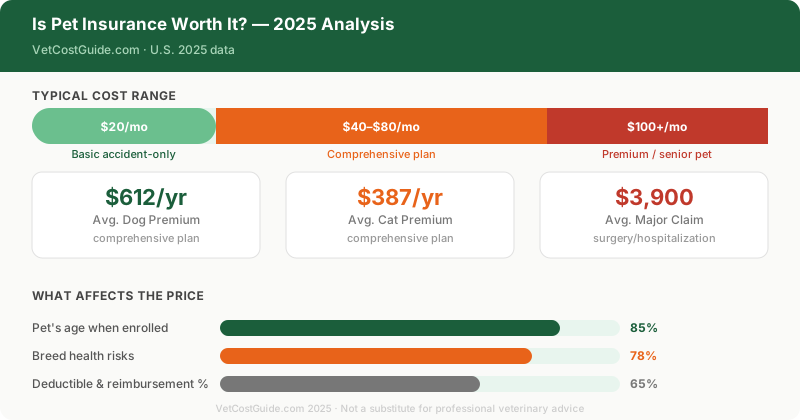
What’s the average monthly cost of pet insurance in 2025? For dogs, expect $35–$75/month for a mid-tier accident and illness plan. Cats run significantly cheaper at $15–$35/month. Premiums vary widely by breed, age, location, and coverage level.
Can I get pet insurance after my pet is diagnosed with something? Yes, you can still enroll—but the diagnosed condition and anything related to it will be excluded from coverage as a pre-existing condition. Insurance enrolled after a diagnosis still covers future unrelated illnesses and accidents.
Which pet insurance company pays claims fastest? Lemonade and Embrace both claim average reimbursement times of 2–5 business days for straightforward claims. Trupanion offers direct vet payment (no upfront cost) at participating clinics, which sidesteps the reimbursement wait entirely.
Frequently Asked Questions
Emergency foreign body removal surgery typically costs between $3,500 and $5,000, depending on the object size, location, and your geographic region. The article's $4,200 example falls in the middle of this range and often includes the surgical procedure, anesthesia, imaging (X-rays or ultrasound), and 1–2 nights of hospitalization.
Most pet insurance plans cover 70–90% of eligible emergency costs after you meet your annual deductible (usually $250–$1,000) and pay any copay. However, pre-existing conditions, breed-specific issues, and certain procedures are commonly excluded, so actual out-of-pocket costs vary significantly by plan and your pet's history.
Pet insurance does not cover emergencies that occur before your policy's effective date—typically 14 days after enrollment. If your pet needs surgery today, insurance cannot help; you must pay out-of-pocket, which is why the article examines whether self-insurance (saving money monthly) or traditional insurance makes financial sense over 5 years.