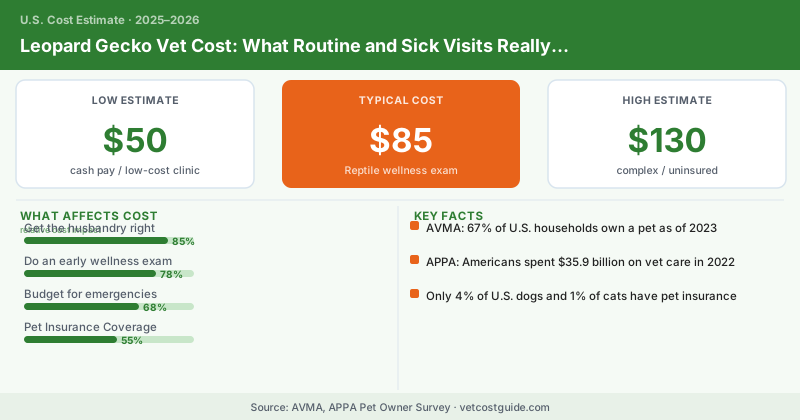
“It’s just a little lizard, how expensive can it be?” That’s the question almost every new leopard gecko owner asks, and the honest answer is: more than you’d think. A basic exam runs $50 to $130, and common health problems push the bill to $150 to $700.
Leopard geckos are hardy and beginner-friendly, which is part of why reptiles keep climbing in popularity, U.S. ownership data from groups like the APPA shows millions of households now keep reptiles. But “hardy” doesn’t mean “free of vet bills.” When a gecko gets sick, the specialist scarcity hits your wallet hard.
What You’ll Pay for Routine Care
Leopard geckos don’t need vaccines, so there’s no annual shot schedule like a dog. But a wellness check, especially a fecal test for parasites, is worth doing, and a first-year exam helps confirm your husbandry is on track.
| Item | Low | High | Typical |
|---|---|---|---|
| Reptile wellness exam | $50 | $130 | $85 |
| Fecal parasite test | $25 | $70 | $45 |
| Bloodwork (if needed) | $80 | $200 | $130 |
| X-ray (1 view) | $100 | $300 | $180 |
| Sick visit (minor) | $100 | $300 | $180 |
| Hospitalization (per day) | $60 | $250 | $130 |
Routine visits are the cheap part. The real costs show up when something goes wrong, and with leopard geckos, the usual suspects are predictable.
The Three Most Common Problems
Metabolic bone disease (MBD) tops the list. It comes from a lack of calcium and UVB/vitamin D3, and it weakens the bones. Treatment, calcium therapy, diet correction, sometimes supportive care, often runs $150 to $500.
Impaction from swallowing loose substrate causes a gut blockage and can cost $150 to $700, more if surgery is needed.
Tail or skin issues, including dropped tails and retained shed around the toes, are usually cheaper to treat but still mean a $100 to $250 visit.
- Leopard gecko exam: $50–$130; common illness treatment: $150–$700.
- No vaccines needed, but fecal/parasite checks are worthwhile.
- MBD and impaction are the two costliest common problems, both preventable.
- Find a reptile-experienced vet before you have an emergency.
Why Even Small Reptiles Cost More to Treat
A leopard gecko weighs under 100 grams, and treating something that small safely takes a vet with reptile training. The Association of Reptilian and Amphibian Veterinarians (ARAV) represents a limited pool of qualified practitioners, so in many areas you may have to drive an hour or more to find one. Fewer providers, higher prices, that’s the exotic-pet reality.
Don’t wait until your gecko is thin, lethargic, and refusing food to find a vet. By then, conditions like MBD are often advanced and far more expensive to treat. Locate a reptile vet while your gecko is healthy.
How to Keep Costs Down
- Get the husbandry right. Proper calcium dusting, a UVB source, correct temperatures, and a non-loose substrate prevent the two priciest problems (MBD and impaction) outright.
- Do an early wellness exam. A $85 check that confirms good husbandry can save you a $500 illness later.
- Budget for emergencies. Exotic pet insurance exists even for reptiles, and CareCredit can cover surprise bills.
For the wider reptile picture, see our reptile vet care cost and bearded dragon vet cost guides, and compare against a standard average vet visit cost.
The Bottom Line
A leopard gecko is cheap to own and surprisingly affordable to keep healthy, if your husbandry is dialed in. Routine exams run $50 to $130, but the common illnesses can hit $150 to $700, and most of them trace back to setup mistakes. Spend your money on good lighting, calcium, and the right substrate, and you’ll spend far less at the vet.
Frequently Asked Questions
A basic leopard gecko exam typically costs $50 to $130 depending on your location and the veterinarian's experience with exotic pets. If diagnostic tests like X-rays or blood work are needed, you can expect to pay an additional $100 to $300 on top of the exam fee.
Most standard pet insurance plans do not cover reptiles, including leopard geckos, as they typically only insure cats and dogs. You would need a specialized exotic pet insurance policy, which is rare and often comes with high out-of-pocket costs and significant exclusions for pre-existing conditions.
Healthy adult leopard geckos should have a wellness exam at least once yearly, which costs $50 to $130 per visit. New geckos and those over 10 years old should be seen twice yearly to catch age-related or early-stage health issues before they become expensive problems.