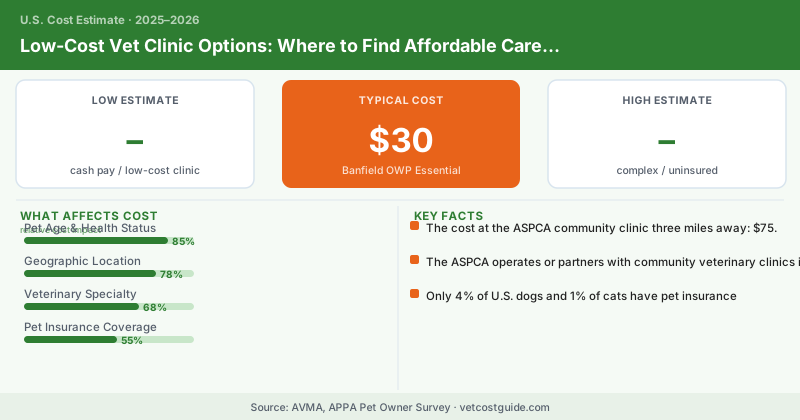
Sarah, 34, needed her dog Mango vaccinated and checked for a skin issue. The estimate from her regular vet: $280. The cost at the ASPCA community clinic three miles away: $75. Same care, same vaccines, fraction of the price — she just didn’t know the option existed.
Most pet owners don’t know where to look. Here’s the full map of low-cost veterinary care options available across the US.
1. ASPCA and Humane Society Clinics
The ASPCA operates or partners with community veterinary clinics in major US cities that offer income-based or simply lower-cost services. Many services are priced at 40–60% below private practice rates.
Services typically available:
- Wellness exams: $30–$60 (vs. $60–$120 at a private clinic)
- Core vaccinations: $15–$35 per vaccine
- Spay/neuter: $50–$200 (vs. $250–$600 at private clinics)
- Microchipping: $15–$25
- Flea/tick prevention
To find ASPCA clinic resources near you: visit aspca.org and search the “pet care resources” database, or call your local ASPCA branch.
Humane societies operate similarly. Many local humane societies have public vet clinics or partner with mobile vaccination units that visit parks and community centers on regular schedules. Call your local humane society directly — their websites often don’t advertise all the services they provide.
2. Veterinary School Teaching Hospitals
This is the option most people don’t think of — and it’s often the best one for complex or expensive care.
Veterinary school teaching hospitals offer the same procedures as private specialists, performed by supervised final-year students or residents under the direct oversight of board-certified faculty veterinarians. The level of care is rigorous. What changes is the pace — appointments take longer because teaching is happening — and the price.
Typical savings at a veterinary school clinic:
- Routine exams: 40–60% less
- Dental cleanings: 40–70% less
- Complex surgeries: 30–60% less (costs still reflect equipment and materials, but labor is not billable at specialist rates)
- Specialist consultations (oncology, neurology, cardiology): 25–50% less
Major veterinary schools with public teaching hospitals include Cornell (Ithaca, NY), UC Davis (Davis, CA), Colorado State (Fort Collins, CO), Purdue (West Lafayette, IN), University of Florida (Gainesville, FL), Texas A&M (College Station, TX), Ohio State (Columbus, OH), and University of Minnesota (St. Paul, MN), among others. Most accept referred cases and walk-ins for primary care. Call ahead — some require a referral for specialist services.
3. Banfield Pet Hospital Wellness Plans
Banfield Pet Hospital operates inside PetSmart locations across the US and offers Optimum Wellness Plans — prepaid monthly membership plans rather than per-visit billing.
Plans start around $25–$55/month depending on your pet’s life stage. What’s typically included:
- Unlimited wellness exams (no per-exam charge)
- Core vaccinations
- Heartworm test
- Fecal exam
- One dental cleaning per year (in higher-tier plans)
- 10–25% discounts on most other services
This model works well if you use it consistently. It’s not cheap — over 12 months you’re paying $300–$660 — but for a pet who needs regular exams and vaccinations, the per-service cost often works out lower than fee-for-service at a private clinic. The dental cleaning benefit alone can represent $200–$400 in value.
| Plan Tier | Monthly Cost | Annual Cost | Key Benefits Included |
|---|---|---|---|
| Banfield OWP Essential (puppy/kitten) | $30–$45 | $360–$540 | Exams + vaccines + deworming |
| Banfield OWP Active (adult dog) | $35–$50 | $420–$600 | Exams + vaccines + HW test |
| Banfield OWP Special Care (senior) | $45–$60 | $540–$720 | Exams + vaccines + dental cleaning |
| Mobile clinic (various) | $25–$75 total visit | N/A | Vaccines + basic services |
4. Low-Cost Vaccination Clinics
Pet vaccination clinics operate at pet supply stores (Petco, PetSmart), feed stores, and pop-up community events. These are run by licensed veterinarians or technicians under veterinary supervision and offer core vaccines at significantly reduced prices.
Typical vaccination clinic prices:
- Rabies: $15–$25
- DHPP (distemper combo for dogs): $15–$25
- FVRCP (cat distemper combo): $15–$20
- Bordetella (kennel cough): $15–$25
- Lepto: $15–$25
A dog that needs multiple vaccines at a private clinic ($150–$250 for the appointment plus vaccines) might cost $50–$80 at a vaccination clinic.
The limitation: these clinics typically don’t perform wellness exams, diagnose illness, or prescribe medications. They’re for vaccines only. If your pet needs a physical exam, don’t rely on a vaccination clinic as a substitute.
5. Mobile Veterinary Clinics
Mobile vet clinics — vans or trailers equipped with basic veterinary equipment — travel to neighborhoods, shelters, and community events to provide low-cost services. They’re particularly common in underserved areas.
Services vary by provider, but often include:
- Wellness exams
- Vaccinations
- Microchipping
- Basic diagnostics
- Flea/tick prevention
Search “[your city] mobile vet clinic” or contact your local animal control department for information on what mobile services operate in your area.
6. Free and Income-Qualified Programs
For owners with documented financial hardship, some programs offer genuinely free or heavily subsidized care:
Free Vet Care Programs:
- Many shelters offer free or discounted care for recently adopted pets during a post-adoption window (typically 30 days)
- Some nonprofit clinics provide services based on sliding-scale income verification
- RedRover Relief (redrover.org) offers emergency assistance grants
- Brown Dog Foundation (browndogfoundation.org) helps with serious illness costs
- The Pet Fund (thepetfund.com) assists with non-basic care
Avoid any provider that offers dramatically below-market prices without a clear explanation of why — a subsidized nonprofit, a vet school, a high-volume vaccination clinic. Extremely cheap care sometimes comes with corners cut on sterile technique, equipment quality, or diagnostic rigor. The goal is affordable AND good, not just cheap.
Comparing Your Options
| Option | Best For | Typical Savings vs. Private |
|---|---|---|
| ASPCA/humane society clinic | Routine care + spay/neuter | 40–60% |
| Veterinary school hospital | Complex cases + specialist care | 30–60% |
| Banfield Wellness Plan | Frequent users (preventive focus) | 20–40% on covered services |
| Vaccination clinic | Vaccines only | 50–70% on vaccines alone |
| Mobile clinic | Convenience + basic care | 30–50% |
| Income-qualified nonprofits | Financial hardship | 50–100% (sliding scale) |
FAQ
Is care at a veterinary school actually safe? Yes. Faculty veterinarians supervise every procedure. In many cases, the diagnostic rigor is higher than at a private clinic because students are taught to be thorough. The tradeoff is appointment length — plan for 2–3x longer than a typical private clinic visit.
Do low-cost clinics accept pet insurance? Most do, since pet insurance is reimbursement-based (you pay and get reimbursed). The lower the bill, the lower your reimbursement, but you still benefit from reduced out-of-pocket cost.
How do I find a low-cost vet near me? Start with aspca.org’s resource finder, your local humane society, and a search for “[your state] veterinary college.” The AAVMC (American Association of Veterinary Medical Colleges) lists all accredited veterinary schools at aavmc.org.
Frequently Asked Questions
At ASPCA and humane society clinics, a basic exam with vaccines typically costs $50–$150, compared to $200–$350 at traditional veterinary practices. For example, Sarah's dog received a full exam and vaccines at an ASPCA clinic for $75 versus $280 at her regular vet, saving 73%.
Most pet insurance plans cover visits to licensed veterinarians at any clinic, including ASPCA and humane society locations, though you should verify your policy first. However, low-cost clinics typically operate on a sliding-fee or flat-fee model, so you may pay out-of-pocket upfront ($50–$200) rather than using insurance, which often works in your favor given the already-reduced prices.
Low-cost clinics often have 1–3 week wait times during peak seasons, compared to same-day or next-day availability at many traditional practices. Veterinary school clinics may offer same-week appointments but typically require longer appointment blocks (2–3 hours) since students perform procedures under supervision.