What started as a marketing trend in the late 1980s — “teacup pigs,” “micro pigs,” “nano pigs” — has left tens of thousands of American families with a 50-to-150-pound animal they didn’t expect, and vet bills they didn’t plan for. Mini pigs, properly known as potbellied pigs, are intelligent, social, and surprisingly expensive to maintain medically.
The American Mini Pig Association estimates that the U.S. potbellied pig rescue population has grown substantially over the past decade, with the most common reasons for surrender being unexpected adult size and unaddressed behavioral problems — most of which stem from not being spayed or neutered.
Here’s exactly what pig vet care costs and why a few of those line items aren’t optional.
| Service | Low | Typical | High |
|---|---|---|---|
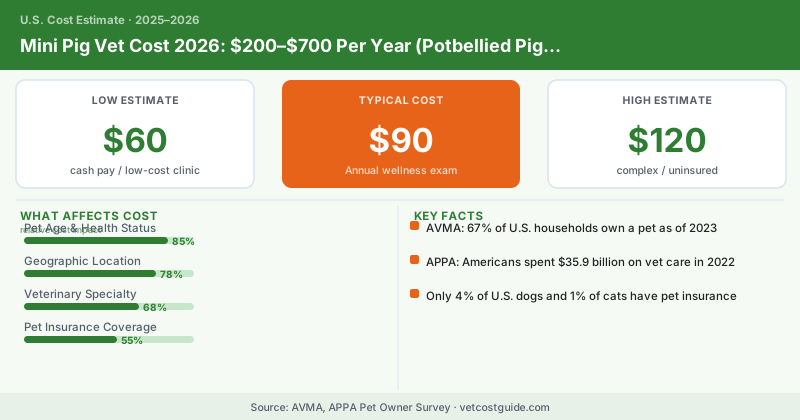
| Annual wellness exam | $60 | $90 | $120 |
| Erysipelas vaccine | $20 | $30 | $50 |
| Leptospirosis vaccine | $20 | $30 | $50 |
| Hoof trim (per session) | $30 | $60 | $100 |
| Dental float | $150 | $250 | $400 |
| Spay (female) | $300 | $500 | $700 |
| Neuter (male) | $150 | $275 | $400 |
| Blood panel | $80 | $150 | $250 |
| Emergency visit | $100 | $300 | $600 |
Why Spay and Neuter Aren’t Optional
This is the single most important section of this guide. Intact mini pigs — both males and females — develop serious behavioral and health problems that neutering or spaying prevents.
Intact males (boars): Testosterone-driven aggression typically begins around 2–3 months of age and intensifies as they mature. Boars charge, bite, and can injure adults and children. They also develop a strong musk odor and obsessive rooting behavior. Neuter at 8–12 weeks dramatically reduces these behaviors before they become entrenched. Neuter cost: $150–$400 depending on age and your vet’s fees.
Intact females (gilts/sows): Females cycle every 21 days. Unspayed females often become aggressive, anxious, and difficult to handle during estrus. More critically, intact females have a significantly elevated risk of uterine tumors and ovarian cysts — conditions that require much more expensive emergency surgery to address. A 2021 review in the Journal of Swine Health and Production noted uterine disease as one of the most commonly documented conditions in adult intact potbellied pig sows presented to veterinary practices. Spay cost: $300–$700.
If you’re buying a mini pig from a breeder, insist it’s already altered — or have it done within the first 3 months.
Annual Wellness Care
Mini pigs should see a vet annually. The exam checks weight (obesity is the #1 health issue in pet pigs), body condition score, skin and hoof condition, dental wear, and cardiovascular and respiratory health.
Annual vaccination is essential. Two core vaccines every pig needs:
Erysipelas vaccine. Erysipelothrix rhusiopathiae causes diamond skin disease in pigs — a potentially fatal bacterial infection with characteristic raised diamond-shaped skin lesions, fever, and septicemia. It’s also zoonotic, meaning humans can contract it. Initial series: two doses 3–4 weeks apart; annual booster thereafter. Cost: $20–$50 per dose.
Leptospirosis vaccine. Leptospira bacteria can cause reproductive failure, kidney disease, and liver disease in pigs. Also zoonotic. Annual vaccination recommended. Cost: $20–$50 per dose.
- Annual wellness exam: $60–$120
- Erysipelas vaccine: $20–$50
- Leptospirosis vaccine: $20–$50
- Hoof trim (1–2 times/year): $60–$200
- Dental float (every 1–2 years): $150–$400
- Emergency fund: $400–$800
- Total annual budget (spayed/neutered healthy adult): $300–$700
Hoof Trimming
Pigs’ hooves grow continuously. In the wild, natural terrain wears them down; in domestic settings, they overgrow and cause painful gait abnormalities. Most pet pigs need hoof trims every 6–12 months.
Some compliant pigs tolerate trims while awake with a trained handler. Others require mild sedation, which raises the cost. Cost: $30–$60 for an awake trim, $150–$350 if sedation is needed.
Overgrown hooves untreated lead to arthritis and chronic lameness — significantly more expensive to manage than preventive trims.
Dental Care
Mini pigs have continuously erupting teeth. Tusks in males and females grow throughout life and need trimming. Boars develop prominent upper and lower tusks that can injure other animals and people; these need trimming every 1–3 years under sedation ($100–$250 per trim).
Dental floats (filing sharp edges on molar teeth) may be needed every 1–2 years for pigs with uneven wear. Cost: $150–$400 under sedation.
Common Health Conditions and Costs
Obesity and arthritis. Obesity is endemic in pet pigs — owners dramatically overfeed, often because pigs are relentless food-beggars. Obese pigs develop arthritis, cardiovascular disease, and difficulty walking. Treatment: dietary management (free, but requires discipline), anti-inflammatories ($30–$80/month), joint supplements ($20–$60/month).
Respiratory disease (pneumonia). Pigs are susceptible to Mycoplasma hyopneumoniae and Actinobacillus pleuropneumoniae. Symptoms: coughing, labored breathing, fever. Diagnosis and treatment: $150–$400 for a typical respiratory case.
Skin conditions. Dry, flaky skin is common in indoor pigs not exposed to sunlight (which stimulates natural oils). Serious skin conditions include sarcoptic mange (mites) — highly itchy, causes hair loss and self-trauma. Treatment: ivermectin injection, $30–$80. Sunscreen is recommended for light-skinned pigs spending time outdoors — yes, pigs can sunburn.
Constipation and GI issues. Pigs fed inadequate fiber are prone to constipation. Serious cases may require veterinary intervention: enemas or medical management ($80–$200).
| Condition | Diagnostic Cost | Treatment Cost | Notes |
|---|---|---|---|
| Obesity/arthritis | $80–$150 | $50–$200/yr | Diet change is primary treatment |
| Pneumonia | $100–$250 | $100–$300 | Antibiotics + supportive care |
| Sarcoptic mange | $60–$120 | $30–$80 | Ivermectin effective |
| Uterine disease (intact female) | $150–$300 | $500–$1,500 | Spay prevents this entirely |
| Intestinal obstruction | $200–$400 | $800–$3,000 | Requires surgery |
| Tusk overgrowth (male) | $50–$100 | $100–$250 | Under sedation every 1–3 yrs |
| Dental malocclusion | $100–$200 | $150–$400 | Dental float under sedation |
Finding a Vet Who Treats Mini Pigs
Mini pigs are classified as swine, not companion animals or exotics, in most veterinary licensing frameworks. Many small animal practices won’t see them; many large animal practices only see production swine. You need a vet in the middle — someone with swine experience who also treats pets, not livestock herds.
The American Mini Pig Association (AMPA) maintains a vet directory at americanminipigassociation.com. When calling potential vets, ask specifically: “Have you treated potbellied or mini pigs, not production swine?” The drugs, dosing, and approach differ between production agriculture swine care and pet pig care.
Never use pour-on flea/tick products designed for dogs or cats on mini pigs. Permethrin products are toxic to pigs. Always confirm any topical or medication with a swine-experienced vet before use.
The Lifetime Cost Reality
Mini pigs live 12–20 years with good care. Budget $300–$700 per year in routine care after the first-year spay/neuter and initial vaccine series. Over a 15-year life, that’s $4,500–$10,500 in baseline vet costs — before any illness or emergency. They’re not a cheap pet. They’re a livestock-adjacent commitment that requires a specific kind of veterinary relationship and an owner willing to manage a highly intelligent, emotionally complex animal for two decades.
Get them altered. Vaccinate annually. Trim the hooves. The rest is manageable.
Frequently Asked Questions
A routine wellness exam for a mini pig at a swine-experienced vet runs $60–$120. Annual care including exam, vaccines, and hoof trim typically costs $200–$400 for a healthy pig. Spay surgery is $300–$700 and neuter is $150–$400 — both are one-time costs but essential for long-term health and behavior.
Yes. Two core vaccines for pet pigs are erysipelas (caused by Erysipelothrix rhusiopathiae, which is also zoonotic and can infect humans) and leptospirosis. Most vets recommend starting the series at 8–10 weeks with a booster at 12 weeks, then annual boosters. Some vets also recommend Mycoplasma hyopneumoniae (pneumonia) vaccination depending on local disease prevalence. Vaccine costs: $20–$50 per vaccine per visit.
Mini pigs are classified as swine, not exotics — but most small animal vets don't see them. Look for a vet with large animal, farm animal, or exotic experience who specifically lists pigs. The American Mini Pig Association (AMPA) maintains a vet directory at americanminipigassociation.com. Call ahead and confirm they have experience with potbellied pigs specifically, as their care differs from production swine.