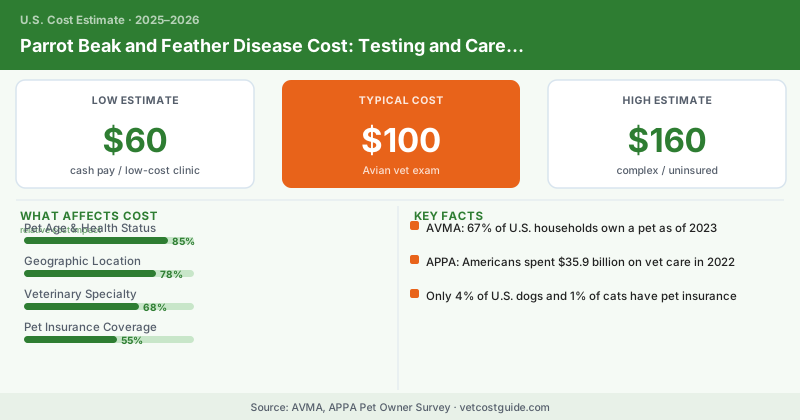
There’s no cure for psittacine beak and feather disease, and that one fact shapes every dollar you’ll spend on it. Diagnosis runs $100 to $350, but the real cost of PBFD is the ongoing supportive care for a bird that may live months to years with the virus.
PBFD is a contagious viral disease that attacks a parrot’s feathers, beak, and immune system. You’ll often spot it first as abnormal feather loss or growth, feathers that come in deformed, clubbed, or never replace after molting, sometimes alongside a glossy or overgrown beak.
What Diagnosis Costs
Because the symptoms overlap with feather plucking, malnutrition, and other diseases, you can’t diagnose PBFD by looking. It takes a specific PCR blood or feather test, and usually an avian-vet exam alongside it.
| Item | Low | High | Typical |
|---|---|---|---|
| Avian vet exam | $60 | $160 | $100 |
| PBFD PCR test | $50 | $150 | $90 |
| Bloodwork (CBC + chem) | $90 | $220 | $150 |
| Follow-up retest | $50 | $150 | $90 |
| Supportive care visit | $80 | $250 | $150 |
| Secondary infection treatment | $100 | $500 | $250 |
Getting a confirmed diagnosis usually totals $150 to $350. After that, the spending shifts to managing the disease, treating the secondary infections that hit because the bird’s immune system is compromised.
Why There’s No Cheap Fix
This is the part owners struggle with most. PBFD has no antiviral cure. Treatment is entirely supportive: keeping the bird comfortable, optimizing nutrition, and aggressively treating the bacterial and fungal infections that take advantage of a weakened immune system. Some birds, especially adults, live a long time with good care. Many young birds, sadly, do not survive the acute form.
The expertise itself is part of the expense. Avian medicine is a small specialty, the AVMA’s data on companion-exotic practice shows it’s a niche slice of the profession, so the avian-certified vets who handle PBFD well are concentrated in larger cities and charge accordingly.
- PBFD diagnosis (exam + PCR test) typically costs $150–$350.
- There’s no cure, costs come from lifelong supportive care.
- The virus is highly contagious to other parrots, isolate immediately.
- Confirmed cases need infection monitoring for life.
The Contagion Factor
PBFD spreads easily through feather dust, droppings, and direct contact, and the virus is tough to kill in the environment. If you have more than one bird, a positive test means immediate isolation and likely testing the rest of your flock. That multiplies the diagnostic cost fast in a multi-bird home.
Never introduce a new parrot to your flock without a PBFD test first. A single infected bird can spread the virus to every parrot you own, and the disease can be fatal. Quarantine and test before any contact.
Managing the Long-Term Cost
- Test before you buy. A $90 pre-purchase PCR test is the cheapest insurance against bringing PBFD into your home.
- Optimize nutrition and environment. A well-fed, low-stress bird fights secondary infections better, meaning fewer treatment visits.
- Budget for the chronic phase. Exotic pet insurance may help with ongoing care if enrolled before diagnosis, and CareCredit covers larger bills.
For routine avian costs, see our bird vet care cost and exotic bird parrot surgery cost guides, and check free vet care programs if cost is a barrier.
The Bottom Line
PBFD is one of those diagnoses where the test is the small expense and the management is the big one. Plan on $150 to $350 to confirm it, then ongoing costs for supportive care and treating secondary infections over the bird’s life. The single best money-saver is prevention: test every new bird before it ever touches your existing flock.
Frequently Asked Questions
PBFD testing typically costs $100 to $350 depending on your veterinarian and the type of test used (blood work, feather analysis, or DNA testing). Many avian veterinary clinics charge on the higher end of this range, especially if multiple diagnostic methods are needed to confirm the diagnosis.
Most pet insurance policies exclude pre-existing conditions and viral diseases like PBFD, meaning you'll typically pay 100% of diagnostic and care costs out-of-pocket. Some policies may cover emergency or supportive care visits, but you should verify coverage details with your insurer before diagnosis, as coverage is limited and highly plan-dependent.
After diagnosis, expect ongoing veterinary visits every 3 to 6 months at $100 to $300 per visit, plus supportive care like specialized nutrition, supplements, and possible antiviral medications that can add $50 to $200 monthly. Since PBFD has no cure, these costs continue for the bird's lifetime, which can range from months to several years, making total care expenses substantial over time.