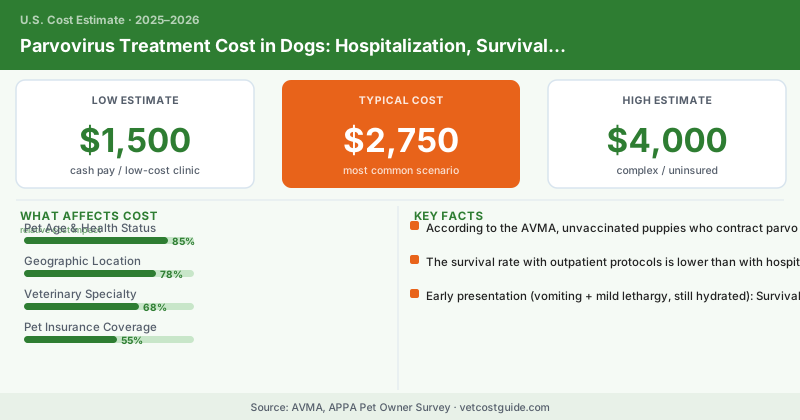
Canine parvovirus is one of the most contagious and lethal viral diseases in dogs. According to the AVMA, unvaccinated puppies who contract parvo and receive no treatment have a mortality rate approaching 91%. With aggressive hospitalization begun early, survival rates exceed 80%. That gap — between 9% survival and 80% survival — is the cost of treatment.
It’s also why the decision to pursue hospitalization is never just financial. It’s the difference between life and death in most cases.
Parvo destroys two things simultaneously: the cells lining the intestinal tract (causing severe hemorrhagic diarrhea and vomiting) and the bone marrow cells that produce white blood cells (leaving the immune system severely compromised). There’s no antiviral drug that kills parvovirus. Treatment is entirely supportive — keeping the dog alive and hydrated long enough for its immune system to mount a response.
- Parvo diagnosis (ELISA antigen test): $50–$120
- Hospitalization, full course (3–7 days): $1,500–$4,000
- Daily ICU cost breakdown: $300–$700/day
- Outpatient protocol (with capable home care): $300–$800 total
- CPMA monoclonal antibody (Elanco): $500–$1,000+ per dose
- Prevention via DA2PP vaccine series: $20–$50 per dose
What Parvo Does to a Puppy’s Body
Understanding the biology helps explain why treatment is so expensive. Parvovirus targets rapidly dividing cells — the cells that line the small intestine and the progenitor cells in bone marrow. Within 3–4 days of infection, a puppy can go from normal to severely ill.
The intestinal damage causes the gut lining to essentially fall apart. This produces the hallmark signs: profuse bloody diarrhea, persistent vomiting, and the complete inability to absorb nutrients or fluids. The dog is losing fluid faster than it can be replaced orally. The immune suppression from bone marrow damage means bacteria from the gut can cross into the bloodstream — bacterial sepsis is a major cause of death in parvo cases.
That’s why IV fluids, antibiotics, anti-nausea medications, and nutritional support all have to run simultaneously. Each piece is keeping a different part of the body from failing.
Hospitalization Cost Breakdown
| Treatment Component | Daily Cost | Notes |
|---|---|---|
| IV fluid therapy | $80–$150/day | The cornerstone of parvo treatment; continuous rate infusion |
| Anti-nausea medications (maropitant + ondansetron) | $30–$70/day | Essential; without them the dog can't hold down anything |
| Antibiotics (ampicillin + fluoroquinolone) | $40–$100/day | Secondary infection prevention; broad-spectrum coverage |
| Pain management | $20–$50/day | Intestinal cramping is severe |
| Nutritional support (feeding tube or TPN) | $50–$150/day | If anorexic beyond 48–72 hours |
| Monitoring and nursing care | $100–$200/day | Vital signs every 4–6 hours; frequent reassessment |
| Parvo diagnosis (ELISA test) | $50–$120 | One-time; same-day result |
| Total (3-day hospital stay) | $1,500–$2,500 | Mild-moderate cases |
| Total (7-day hospital stay) | $3,000–$4,000 | Severe cases |
Outpatient Protocol: The $300–$800 Option
For owners who genuinely cannot afford hospitalization, some veterinarians offer an outpatient parvo protocol. This involves:
- Subcutaneous fluids administered at home by the owner (taught during the vet visit)
- Oral or injectable anti-nausea medications (ondansetron, maropitant)
- Oral antibiotics
- Daily recheck exams to assess hydration, temperature, and condition
Total cost: $300–$800, depending on how many recheck visits are needed and what medications are prescribed.
The survival rate with outpatient protocols is lower than with hospitalization — though some studies show it can approach 75–80% in mild-to-moderate cases when owners are diligent. The key phrase is “when owners are diligent.” Outpatient parvo care requires checking on the puppy every few hours, administering subcutaneous fluids correctly, monitoring for signs of deterioration (profound weakness, collapse, temperature below 99°F or above 104°F), and returning to the vet immediately if the puppy’s condition worsens.
If that level of commitment isn’t realistic given your work schedule or family situation, hospitalization is the safer choice — even if it means payment plans or care credit.
The CPMA Monoclonal Antibody: A Newer Option
Elanco’s CPMA (canine parvovirus monoclonal antibody) was conditionally approved by the FDA in 2023. It’s a targeted antibody that neutralizes circulating parvovirus particles — reducing the viral load and potentially shortening the duration of illness and hospitalization.
Cost: $500–$1,000+ per dose. It’s not cheap, and it’s not a replacement for supportive care. But in early-stage parvo with adequate IV fluid and anti-nausea support, it may shorten the hospital stay by 1–2 days — which can offset part of the cost.
Not every clinic stocks CPMA yet. Ask your vet whether it’s available and whether your puppy’s presentation makes it a candidate.
Survival Rates by Severity
Parvo progresses through recognizable severity stages. The earlier treatment begins, the better the outcome.
- Early presentation (vomiting + mild lethargy, still hydrated): Survival with treatment >85%
- Moderate (hemorrhagic diarrhea, dehydration, fever): Survival with hospitalization 75–85%
- Severe (profound weakness, hypothermia, sepsis): Survival drops to 50–70% even with aggressive treatment
- No treatment: Mortality approaching 91% per AVMA data
Time matters enormously. A puppy showing early parvo signs that’s hospitalized within 12–24 hours has dramatically better odds than one who isn’t brought in until day 3.
The Vaccination Math
The DA2PP puppy series, per the AAHA 2022 Canine Vaccination Guidelines, is given at 8, 12, and 16 weeks — three doses at roughly $20–$50 each. That’s $60–$150 in total for the series that provides parvo protection.
Compare that to $1,500–$4,000 for hospitalization. Or the mortality rate if you can’t afford either.
The vaccine works. It’s not 100% — occasionally vaccinated dogs contract a mild case, especially if the series wasn’t completed properly or if the maternal antibody interference window was missed. But the AAHA guidelines emphasize that completing the full puppy series on schedule is the single most important thing you can do for a puppy’s health in the first year of life.
Shelter Puppies and Parvo Risk
Shelters with high intake rates are inherently higher-risk environments for parvo transmission. The virus is extraordinarily stable in the environment — it can survive on surfaces for months, resist most common disinfectants (bleach at 1:30 dilution is the standard), and remain infectious in soil for up to a year.
Many shelters follow fast-track vaccination protocols, vaccinating puppies on intake — but a puppy adopted from a shelter should still complete the full vaccine series with your vet, since the timing and number of previous doses may not be verifiable.
Decontaminating Your Home After Parvo
If your dog survived parvo, the environment needs thorough decontamination before bringing in any new puppy or unvaccinated dog.
Dilute bleach (1 part bleach to 30 parts water) is the only common household disinfectant proven effective against parvovirus. Apply to hard surfaces and let sit for 10 minutes before rinsing. Fabric, carpet, and soil are much harder to decontaminate — assume the yard is contaminated for 6–12 months.
Decontamination supplies: $30–$100 depending on the size of your home and yard. Worth doing thoroughly — the virus’s environmental persistence is why parvo outbreaks can recur in neighborhoods even years after an initial case.
Don’t bring an unvaccinated puppy home to an environment where a parvo-positive dog has been — even after decontamination efforts. The virus can persist in soil outdoors for up to a year. Any new puppy coming into a home with a parvo history should be fully vaccinated (all three puppy doses completed) before any outdoor access in that yard. This is not overly cautious — it’s the realistic timeline for environmental viral persistence.
Frequently Asked Questions
It's possible, but the odds are terrible. The AVMA estimates that unvaccinated puppies without treatment have a mortality rate approaching 91%. With aggressive hospitalization, survival rates exceed 80%. The virus doesn't respond to any medication — treatment is entirely supportive, keeping the dog alive long enough for its immune system to fight off the infection. That supportive care (IV fluids, anti-nausea drugs, nutritional support, antibiotics to prevent secondary bacterial infections) is very hard to replicate at home. If you cannot afford hospitalization, ask your vet about an outpatient protocol and discuss honestly whether you can provide the required home care intensity.
Most parvo hospitalizations last 3–7 days. Dogs typically need to be stable for 24 hours — eating voluntarily, keeping fluids down, temperature normal — before discharge. Severely affected puppies may need 7–10 days. Daily costs run $300–$700/day depending on the facility and the intensity of care required. Some hospitals offer tiered pricing — ask whether there's a 'parvo protocol' rate that bundles standard treatments.
The DA2PP vaccine (which includes parvovirus protection) costs $20–$50 per dose and is given as a series of three doses in puppyhood, then every 1–3 years in adults. It's highly effective — the AAHA 2022 vaccination guidelines classify it as core, meaning every dog should receive it regardless of lifestyle. Vaccinated dogs can occasionally still contract parvo (typically a milder course), but the vast majority of fatal parvo cases occur in unvaccinated or incompletely vaccinated animals. The math: three puppy vaccines at $50 each = $150 in prevention vs. $1,500–$4,000 in treatment costs.