That flat, sweet face is the whole reason people fall for Persians. It’s also the reason they end up at the vet more than almost any other breed. Those squished muzzles and giant round eyes aren’t just a look — they’re a built-in set of health problems you’ll be paying for over the next 12 to 16 years.
Persians remain one of the most popular pedigreed cats in America, ranking near the top of the Cat Fanciers’ Association registrations year after year. They’re gorgeous, calm, and lap-loving. But “brachycephalic” — the technical word for that pushed-in face — comes with a price tag most new owners never see coming.
The breed-specific stuff you’re actually paying for
Persians carry a heavy genetic load. Polycystic kidney disease (PKD) is the big one. For decades, studies estimated roughly a third of Persians worldwide carried the gene before responsible breeders started screening. Then there’s the eye tearing, the breathing trouble, and dental crowding from that short jaw.
Here’s what the common conditions cost in U.S. clinics:
| Condition | Low | High | Typical |
|---|---|---|---|
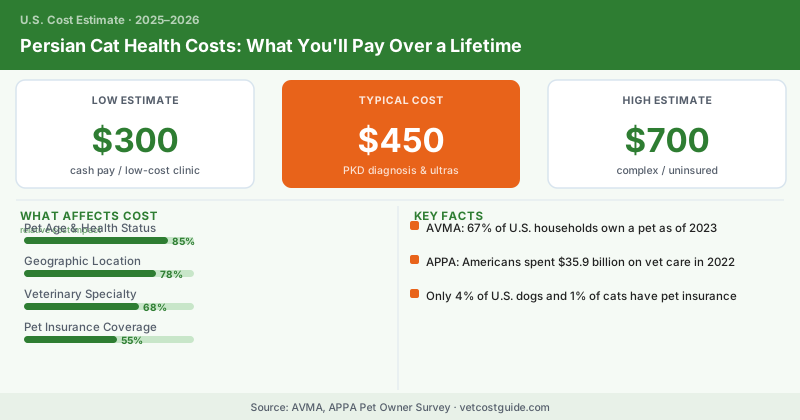
| PKD diagnosis & ultrasound | $300 | $700 | $450 |
| Lifetime kidney disease management | $2000 | $8000 | $4500 |
| Brachycephalic airway surgery | $1500 | $4000 | $2500 |
| Chronic eye tearing/entropion repair | $800 | $2500 | $1500 |
| Dental disease treatment | $400 | $1200 | $700 |
| Routine annual care (x14 yrs) | $3500 | $7000 | $5000 |
That kidney number is the scary one. PKD slowly destroys the kidneys, and once it progresses you’re into the same territory covered in our guide to cat kidney disease treatment cost — which can mean fluids, prescription diets, and monitoring for years.
Why the face costs money
That short nose means narrowed nostrils and a longer soft palate. Some Persians breathe fine; others snore, snort, and struggle in heat or stress. Severe cases need surgery to open the airway. And those big eyes? They don’t drain tears properly, so you’ll be wiping faces daily and treating recurring eye infections. Entropion — eyelids rolling inward — sometimes needs surgical correction.
The dental crowding is sneakier. A short jaw packs teeth in tight, food traps everywhere, and gum disease sets in early. Budget for cat teeth cleaning cost more often than you would for a regular domestic shorthair — many Persians need a cleaning every year instead of every two or three.
- Lifetime vet costs for a Persian commonly land between $8,000 and $15,000.
- PKD and kidney disease are the single biggest financial risk — genetic testing before you buy is worth it.
- The flat face drives breathing, eye, and dental costs that “normal” cats never face.
- Insure early, before any pre-existing condition appears.
Smart money moves before you commit
Buy from a breeder who DNA-tests for PKD and shows you the results. A negative test on both parents dramatically cuts your odds of the worst-case kidney scenario. It costs the breeder almost nothing and saves you thousands.
Get insurance the week you bring the kitten home. Persians are exactly the breed insurers love to flag for pre-existing conditions, so coverage only helps if you start before symptoms show. If you’re weighing it, read is pet insurance worth it and check current pet insurance cost per month — Persians sit on the higher end because of their risk profile.
Never buy a Persian from a breeder who can’t produce PKD genetic test results for both parents. Kitten mills churn out flat-faced cats with the worst version of every breed problem, and you’ll inherit the bills.
The yearly reality
Even a healthy Persian needs more grooming-adjacent vet care than most cats — face cleaning, eye checks, and dental attention. A baseline average vet visit cost of $50–$250 adds up across two or three visits a year. Add it to the overall annual cost of owning a cat and Persians routinely run 30–50% higher than a mixed-breed shorthair.
How the costs spread across a lifetime
The bills don’t arrive evenly. Year one is front-loaded with kitten essentials — vaccines, spay or neuter, microchip, and the first signs of any tear-staining or breathing trouble. The middle years (3 to 9) tend to be quieter: an annual exam, a dental cleaning, and routine face care. Then the senior chapter hits, and that’s where Persians get expensive. PKD often becomes symptomatic in the back half of life, dental disease worsens, and eye problems flare. Roughly half of a Persian’s lifetime vet spend lands in those final five or six years, so the worst time to be uninsured or unfunded is exactly when most owners have stopped thinking about it.
One more thing owners underestimate: the daily upkeep. Even a perfectly healthy Persian needs face wiping, eye cleaning, and matting checks that occasionally turn into vet visits for skin or eye infections. None of it is dramatic, but it’s a steady drip of small bills that a domestic shorthair never generates.
They’re worth it to the people who love them. Just go in with your eyes open and a funded emergency plan — whether that’s insurance, a savings buffer, or a CareCredit for vet bills account ready for the day the kidneys or the airway force your hand.
Frequently Asked Questions
Eye treatments for Persians typically range from $300–$1,500 depending on the condition. Common issues like corneal ulcers or entropion surgery can cost $800–$1,200, while ongoing medication for chronic dry eye averages $20–$40 monthly.
Most pet insurance plans cover breed-specific conditions like polycystic kidney disease and eye problems, but many exclude pre-existing conditions and charge higher premiums for Persians due to their health risks. Typical out-of-pocket costs after insurance are 10–30% of the total bill, with deductibles ranging from $250–$1,000 per claim.
Vets recommend screening Persian cats by age 10 months with ultrasound, which costs $300–$500 per scan. Annual or semi-annual follow-up ultrasounds are advised for early detection and typically cost $250–$400 each, potentially saving thousands in emergency kidney disease treatment later.