What does a randomized controlled trial look like for a dog with a bad back? Researchers at a veterinary teaching hospital enrolled dogs with thoracolumbar intervertebral disc disease, assigned them to acupuncture versus conventional treatment, and measured outcomes. The acupuncture group showed statistically significant improvement in pain scores and neurological function. That study — published in a peer-reviewed veterinary journal — is why more traditional vets are adding acupuncture referrals to their toolkit.
The evidence isn’t uniform across every condition. But for specific problems — especially spinal pain and arthritis — it’s solid enough that the AVMA now supports access to veterinary acupuncture as part of its guidelines on complementary and alternative veterinary medicine.
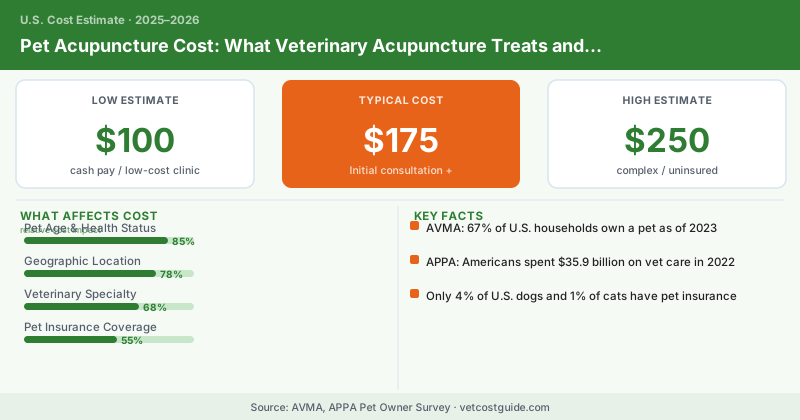
- Initial consultation: $100–$250. Per session: $65–$200. A standard 6-session course: $500–$1,500.
- Strongest evidence for: osteoarthritis, IVDD, nerve recovery, cancer pain management.
- Only licensed veterinarians can legally perform acupuncture on animals in the US — state law governs this.
- Two main approaches: TCVM (Traditional Chinese Veterinary Medicine) and evidence-based dry needling — different philosophies, similar needles.
- Most pet insurance excludes acupuncture unless you have a complementary care rider.
Who Can Legally Perform Veterinary Acupuncture?
This matters more than most owners realize. In the United States, veterinary acupuncture is considered the practice of veterinary medicine. Only licensed veterinarians can legally perform it — not human acupuncturists, not veterinary technicians working independently, not practitioners with only a Traditional Chinese Medicine certificate.
Practitioners certified through the International Veterinary Acupuncture Society (IVAS), the Chi Institute of Traditional Chinese Veterinary Medicine, or the American Academy of Veterinary Acupuncture (AAVA) are licensed veterinarians who completed additional post-graduate training specifically in animal acupuncture. These credentials matter. When you see “certified veterinary acupuncturist,” the “veterinarian” part is not optional.
State laws vary on specific scope-of-practice details, but the core rule — that a licensed vet must be performing the needling — is consistent across the US.
What Veterinary Acupuncture Treats
The AVMA’s official guidelines on complementary and alternative veterinary medicine acknowledge that acupuncture has demonstrated evidence of efficacy for certain conditions. The strongest evidence base includes:
Osteoarthritis and joint pain. Multiple peer-reviewed studies and systematic reviews support acupuncture for reducing pain and improving mobility in dogs and cats with arthritis. For older animals who can’t tolerate NSAIDs long-term due to kidney or liver concerns, acupuncture offers a non-drug pain management option that doesn’t carry those risks.
Intervertebral disc disease (IVDD). This is where some of the most compelling veterinary acupuncture research has been published. Dogs with thoracolumbar IVDD — particularly those recovering from disc herniation — have shown improved neurological recovery rates in multiple studies comparing acupuncture to conventional treatment alone.
Nerve damage and paresis. Dogs and cats with degenerative myelopathy, FCE (fibrocartilaginous embolism), or post-surgical nerve recovery are commonly referred for acupuncture as part of a rehabilitation plan.
Cancer pain management. For animals undergoing cancer treatment or in palliative care, acupuncture provides pain relief without adding more drugs to an already complex medication schedule. It also helps with chemotherapy-related nausea.
Post-surgical recovery. Many veterinary rehabilitation specialists incorporate acupuncture into post-op protocols alongside physical therapy.
Cost Breakdown
| Service | Low | Average | High |
|---|---|---|---|
| Initial consultation + first treatment | $100 | $175 | $250 |
| Per-session follow-up | $65 | $120 | $200 |
| Initial treatment series (6 sessions) | $390 | $720 | $1,200 |
| Maintenance session (monthly) | $65 | $120 | $200 |
| Annual maintenance (monthly sessions) | $780 | $1,440 | $2,400 |
| Annual maintenance (quarterly sessions) | $260 | $480 | $800 |
Prices vary significantly by location. Specialty and university veterinary hospitals in major metro areas charge the upper end. Integrative vets in suburban practices often fall in the middle range. The initial consultation is typically higher because it includes a full intake, review of records, and a comprehensive physical exam focused on Traditional Chinese Veterinary Medicine (TCVM) patterns or Western neurological assessment.
TCVM vs. Evidence-Based Dry Needling: What’s the Difference?
There are two philosophies you’ll encounter, and practitioners sometimes mix elements of both.
Traditional Chinese Veterinary Medicine (TCVM) uses classical meridian theory — needles placed at specific points to influence the flow of “Qi” through the body. Practitioners trained at the Chi Institute use this framework. TCVM also incorporates herbal medicine, food therapy, and Tui-na (massage). The theoretical model is different from Western physiology, which makes some conventional vets skeptical — even when the clinical outcomes look similar.
Evidence-based dry needling uses modern neurophysiology to explain acupuncture effects: needles stimulate local nerve endings, trigger endorphin release, modulate the autonomic nervous system, and reduce central sensitization (the “wind-up” phenomenon in chronic pain). This framework doesn’t require accepting classical meridian theory and is increasingly the approach used by veterinary rehabilitation specialists.
In practice, many certified veterinary acupuncturists integrate both. The practical difference for you as an owner is mostly philosophical — and the needle placement in many cases overlaps significantly regardless of theoretical framework.
How It Compares to Other Rehabilitation Options
Veterinary acupuncture doesn’t exist in isolation. Most practitioners offering it also offer or refer to:
| Therapy | Per Session Cost | Best For |
|---|---|---|
| Veterinary acupuncture | $65–$200 | Pain, nerve recovery, nausea |
| Laser therapy (Class IV) | $45–$100 | Superficial pain, wound healing |
| Underwater treadmill (hydrotherapy) | $50–$100 | Mobility, post-surgery |
| Physical therapy/rehab | $75–$150 | Strength, coordination, recovery |
Acupuncture and laser therapy are often used together — same visit, layered treatments. For IVDD recovery or arthritis management, combining acupuncture with hydrotherapy tends to produce better results than either alone. That combination pushes per-visit costs to $100–$250 for a combined session but may mean fewer total sessions needed.
Acupuncture is not a replacement for emergency treatment. If your dog shows sudden hind-limb paralysis from acute disc herniation, that’s a surgical emergency — not an acupuncture appointment. Acupuncture has a role in IVDD recovery, but decompressive surgery is the first intervention for Grade 4–5 neurological deficits. Delaying surgery waiting for acupuncture to work is the most common mistake in IVDD management.
Finding a Certified Practitioner
Three organizations certify veterinary acupuncturists in the US:
- IVAS (International Veterinary Acupuncture Society): ivas.org — searchable directory of certified members
- Chi Institute: chi.edu — maintains a referral database of Chi-trained veterinarians
- AAVA (American Academy of Veterinary Acupuncture): aava.org — evidence-based focus, member directory
University veterinary teaching hospitals (Cornell, Colorado State, UC Davis, Tufts, etc.) often have integrative medicine departments staffed by board-certified specialists. These are excellent options if you want the highest credential level and don’t mind potentially longer wait times for appointments.
Ask specifically: “Are you a licensed veterinarian with post-graduate acupuncture certification?” The answer should be yes to both parts.
Pet Insurance and Acupuncture
Standard accident-and-illness policies from most major insurers don’t cover acupuncture unless you’ve added a complementary/alternative care rider. Nationwide’s Major Medical and Whole Pet plans are notable exceptions — they specifically include acupuncture coverage. Embrace and Trupanion have policy options that cover it in some states.
If acupuncture is part of your pet’s treatment plan, call your insurer before the first session and ask specifically whether it’s covered under your current plan. Get the answer in writing (or documented in your claims notes). Don’t assume the general “treatment for covered conditions” language extends to acupuncture without confirmation.
For more on what insurance actually covers in integrative and specialty care, see our guide on pet insurance.
Frequently Asked Questions
How much does veterinary acupuncture cost? An initial consultation with a certified veterinary acupuncturist runs $100–$250. Subsequent sessions are $65–$200 each. Most conditions require an initial treatment series of 4–8 sessions over 4–8 weeks, putting first-course total costs at $500–$1,500. Maintenance sessions after that are typically monthly or quarterly at $65–$200 each.
Does pet insurance cover acupuncture? Some do, most don’t. A growing number of comprehensive wellness or alternative therapy riders cover acupuncture — Nationwide’s Major Medical plan and some Embrace and Trupanion policies include it. Standard accident-and-illness policies without a complementary care rider usually exclude it. Check your policy’s list of covered therapies before assuming acupuncture is included.
What conditions does pet acupuncture treat? The strongest evidence supports veterinary acupuncture for osteoarthritis pain, intervertebral disc disease (IVDD), nerve damage and weakness, post-surgical recovery, and cancer-related pain management. It’s also used for nausea associated with chemotherapy, chronic kidney disease management, and anxiety in some animals. It’s most effective as part of a multimodal treatment plan alongside conventional medicine.
Frequently Asked Questions
An initial consultation with a certified veterinary acupuncturist runs $100–$250. Subsequent sessions are $65–$200 each. Most conditions require an initial treatment series of 4–8 sessions over 4–8 weeks, putting first-course total costs at $500–$1,500. Maintenance sessions after that are typically monthly or quarterly at $65–$200 each.
Some do, most don't. A growing number of comprehensive wellness or alternative therapy riders cover acupuncture — Nationwide's Major Medical plan and some Embrace and Trupanion policies include it. Standard accident-and-illness policies without a complementary care rider usually exclude it. Check your policy's list of covered therapies before assuming acupuncture is included.
The strongest evidence supports veterinary acupuncture for osteoarthritis pain, intervertebral disc disease (IVDD), nerve damage and weakness, post-surgical recovery, and cancer-related pain management. It's also used for nausea associated with chemotherapy, chronic kidney disease management, and anxiety in some animals. It's most effective as part of a multimodal treatment plan alongside conventional medicine.