In 2019, the American College of Veterinary Internal Medicine (ACVIM) issued landmark consensus guidelines for managing hypertension in cats and dogs — the first time the veterinary profession had formal agreed-upon protocols for this condition. Before those guidelines, blood pressure monitoring was inconsistent across practices.
The upshot: hypertension is now recognized as a significant cause of organ damage in pets, particularly in cats with kidney disease and hyperthyroidism. Monitoring blood pressure isn’t optional for these animals — it’s standard of care.
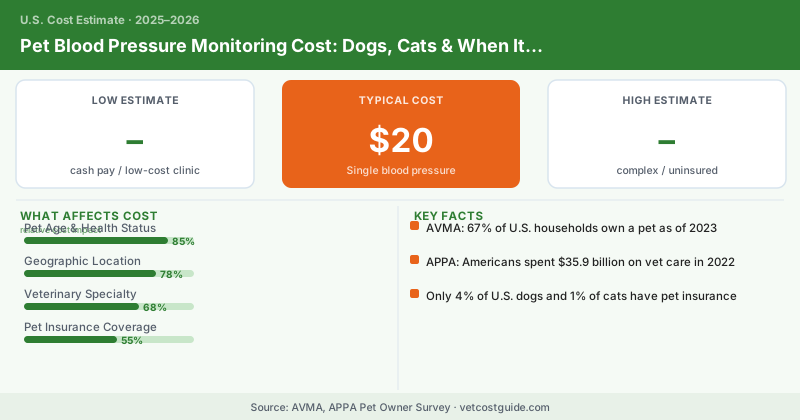
- Blood pressure reading at vet visit: $20–$60 per measurement
- Oscillometric home monitor for pets: $100–$300 one-time
- Amlodipine (the main cat hypertension drug): $20–$40/month
- Monitoring visit every 3–6 months: $50–$120
- Annual hypertension management cost: $300–$700
Blood Pressure Monitoring and Treatment Costs
| Service | Cost | Notes |
|---|---|---|
| Single blood pressure measurement at clinic | $20–$60 | Usually bundled with exam |
| Series of 5–7 readings (ACVIM protocol) | $30–$80 | Multiple readings reduce white-coat effect |
| Amlodipine besylate (cat hypertension) | $20–$40/month | First-line drug for cats |
| Benazepril or enalapril (ACE inhibitor) | $20–$50/month | Often used with CKD |
| Telmisartan (Semintra brand, cats) | $50–$90/month | Newer; used for CKD-related proteinuria |
| Atenolol (dogs, some cats) | $15–$35/month | Beta-blocker; adjunct therapy |
| Home oscillometric monitor (Petmap, HDO) | $200–$400 | For ongoing home monitoring |
| Monitoring recheck visit (3–6 months) | $50–$120 | Blood pressure + physical exam |
Why Blood Pressure Monitoring Matters in Pets
Blood pressure isn’t routinely checked at every annual exam the way it is in human medicine — there’s no standard cuff check at dog wellness visits. This means hypertension often goes undetected until organ damage has occurred.
Cats are especially vulnerable. Hypertension in cats causes:
- Retinal detachment — acute onset blindness, often the first sign owners notice
- Chronic kidney disease progression — hypertension worsens CKD, and CKD worsens hypertension
- Cardiac hypertrophy — thickened left ventricular wall
- Neurological signs — seizures, head tilt, behavioral changes
The ACVIM 2019 guidelines classify hypertension risk tiers. Cats with blood pressure consistently above 160 mmHg systolic are at moderate risk for target organ damage; above 180 mmHg, the risk is high. The guidelines recommend treating cats at or above 160 mmHg with target-organ risk factors.
A 2022 study published in the Journal of Veterinary Internal Medicine found that 19–65% of cats with chronic kidney disease have concurrent hypertension — the wide range reflects different measurement methods and populations. The takeaway: any cat with CKD or hyperthyroidism should have blood pressure checked at every recheck visit.
How Veterinary Blood Pressure is Measured
Vets use Doppler or oscillometric methods — there are no cuffs placed on pet arms because pets lack accessible upper arm anatomy. Cuffs are placed on the forelimb (above the carpus), hindlimb, or tail.
Doppler method: A crystal probe detects blood flow over the vessel. More accurate for cats, requires more skill. The gold standard for small animals.
Oscillometric method: An automated cuff detects pressure oscillations — the Petmap Grand and Cardell are common clinic machines. Faster, less skill-dependent, but can be less accurate in small cats or anxious animals.
The ACVIM protocol recommends taking 5–7 readings after a 5-minute quiet rest period and discarding the highest and lowest before averaging. This reduces “white coat hypertension” — the elevation caused by clinic anxiety. A single number from a stressed cat in a clinic isn’t meaningful.
Home monitoring is increasingly recommended for cats already diagnosed with hypertension. A dedicated veterinary oscillometric cuff (Petmap, HDO-09) costs $200–$400 and allows owners to monitor at home, email results to the vet, and adjust medication without frequent clinic visits. This can meaningfully reduce ongoing monitoring costs.
Treatment: Amlodipine Is the Cornerstone
Amlodipine besylate is the first-line antihypertensive for cats. It’s a calcium channel blocker that causes vasodilation and effectively lowers blood pressure in most hypertensive cats. Generic amlodipine costs $20–$40/month — often purchased at human pharmacies using a veterinary prescription. This is one of the most cost-effective medications in feline medicine.
For cats with concurrent CKD, ACE inhibitors (benazepril, enalapril) or ARBs (telmisartan — brand name Semintra) may be used alongside amlodipine. Semintra is the only FDA-approved veterinary ARB for cats and costs $50–$90/month but has demonstrated benefits for reducing proteinuria in CKD beyond blood pressure control alone.
Dogs with hypertension more commonly receive ACE inhibitors as primary therapy. The underlying cause (Cushing’s disease, chronic kidney disease, pheochromocytoma) drives treatment as much as blood pressure control itself.
Never give your pet human blood pressure medications without veterinary guidance. Dosing is not proportional to body weight in the same way. Many human antihypertensives are dangerous in cats — particularly drugs metabolized differently in felines (cats lack certain hepatic glucuronidation pathways, making them susceptible to toxicity from drugs that are safe in humans at equivalent doses). Amlodipine is safe and effective in cats at appropriate veterinary doses; other drugs may not be.
When to Ask About Blood Pressure Monitoring
If your pet has any of these conditions, blood pressure monitoring should be part of every recheck visit:
- Cats: Chronic kidney disease, hyperthyroidism, diabetes, any sudden-onset blindness
- Dogs: Chronic kidney disease, Cushing’s disease (hyperadrenocorticism), pheochromocytoma, protein-losing nephropathy
- Any senior pet with unexplained neurological signs, sudden vision changes, or unexplained cardiac changes on auscultation
For healthy adult cats over age 9, ACVIM recommends annual blood pressure screening — not every vet does this proactively. If yours doesn’t, ask for it at the annual exam. The $30–$60 cost is straightforward preventive spending.
Frequently Asked Questions
A single blood pressure reading typically costs $20–$60 per visit, depending on your veterinary clinic and location. If your pet requires ongoing monitoring (common for cats with hypertension), you may need readings every 2–4 weeks, which adds up to $240–$1,440 annually for monitoring alone.
Most pet insurance plans cover blood pressure monitoring and hypertension medications once a condition is diagnosed, but pre-existing hypertension is typically excluded. You can expect to pay the full cost out-of-pocket ($20–$60 per reading) upfront and then submit for reimbursement, usually recovering 70–90% of eligible expenses after your deductible.
Pets with newly diagnosed hypertension usually need readings every 2–4 weeks initially to adjust medication, then every 3–6 months once stable. The frequency depends on your pet's age, breed, and underlying conditions—older cats and those with kidney disease typically require more frequent monitoring per ACVIM guidelines.