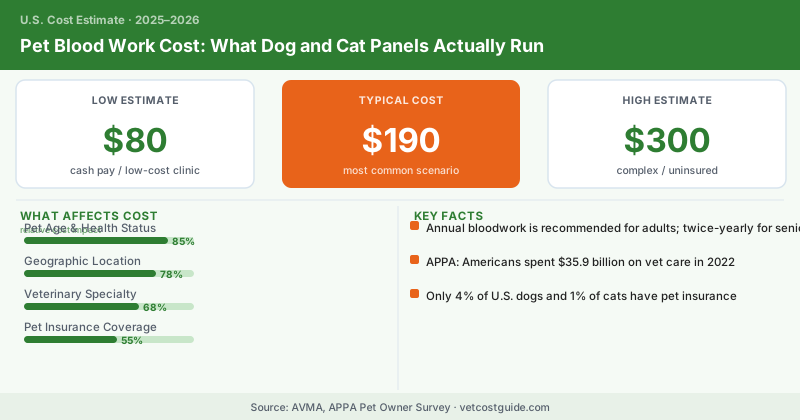
What’s actually in that “blood panel” your vet keeps recommending, and why does it cost $150 when you’re not even sure your pet is sick? Pet blood work typically runs $80–$300 for a standard wellness panel, with specialized tests for specific organs or conditions costing more on top.
Routine bloodwork is one of the most valuable, and most commonly skipped, parts of preventive pet care. The American Animal Hospital Association’s wellness guidelines specifically recommend annual panels for adult pets and twice-yearly for seniors, precisely because blood values shift well before most pets show any visible symptoms of organ decline.
What’s in a standard panel
| Panel Component | What It Checks | Typical Standalone Cost |
|---|---|---|
| CBC (Complete Blood Count) | Red/white blood cells, infection, anemia | $40–$70 |
| Chemistry panel | Liver, kidney, blood sugar, proteins | $70–$150 |
| Thyroid panel (T4) | Thyroid function, common in senior cats | $40–$80 |
| Urinalysis | Kidney function, infection, crystals | $30–$70 |
| Full wellness panel (bundled) | CBC + chemistry + urinalysis | $150–$300 |
Most vets bundle the CBC, chemistry panel, and urinalysis into a single “wellness panel” price, which is cheaper than ordering each test separately. A senior wellness panel usually adds a thyroid check, since hyperthyroidism and hypothyroidism are common age-related conditions that bloodwork catches early.
Why your vet keeps ordering it
Bloodwork is the single best window into organ function that doesn’t require imaging or invasive procedures. A cat’s kidney values can shift meaningfully before any visible symptom of chronic kidney disease appears, and catching that shift early means switching to a renal diet sooner — which can meaningfully slow disease progression compared to catching it after symptoms are already obvious.
Pre-anesthetic bloodwork, run before any procedure requiring sedation, checks that your pet’s liver and kidneys can safely process and clear anesthesia drugs. This is standard practice even for young, healthy pets getting spayed or neutered, and it typically costs $80–$150.
- Standard wellness panels run $80–$300, bundling CBC, chemistry, and urinalysis.
- Annual bloodwork is recommended for adults; twice-yearly for seniors, per AAHA guidelines.
- Pre-anesthetic panels ($80–$150) are standard safety practice before any sedation.
- Bloodwork often catches organ changes before symptoms are visible, making early intervention possible.
When results come back abnormal
An abnormal result doesn’t automatically mean expensive treatment — often it means a recheck in a few weeks to confirm the trend, or a simple diet or medication adjustment. Significant abnormalities may prompt additional diagnostics like an ultrasound or X-ray to get a clearer picture of what’s driving the numbers. Your vet should walk you through exactly what each abnormal value means and what the recommended next step costs before you commit to anything further.
- Skipping annual bloodwork because your pet “seems fine.” Kidney disease, thyroid disease, and diabetes are all frequently silent in early stages — bloodwork is often the only way to catch them early.
- Not fasting your pet when instructed. Some panels require 8–12 hours of fasting for accurate blood sugar and lipid readings; eating beforehand can skew results and require a repeat test.
- Assuming in-house results are less accurate than a lab. Most in-house analyzers are highly accurate for routine screening; outside labs are typically used for more specialized or comprehensive panels, not because in-house results are unreliable.
Is annual bloodwork worth the cost?
For a healthy young adult pet, some owners question whether yearly bloodwork is necessary. The counterargument is straightforward: establishing a baseline while your pet is healthy makes it dramatically easier to spot a meaningful change later, since you’re comparing against your own pet’s normal rather than a generic reference range. For senior pets, it’s less of a question and more of a standard — twice-yearly panels are how vets catch kidney disease, diabetes, and thyroid problems early enough to manage cost-effectively.
Frequently Asked Questions
The American Animal Hospital Association recommends annual wellness bloodwork for adult pets and twice-yearly panels for senior pets (generally age 7+ for dogs, 10+ for cats), since it establishes a baseline and catches early changes in organ function before symptoms appear. Puppies and kittens often get a single wellness panel during their first-year vaccine series.
Pre-anesthetic bloodwork checks liver and kidney function, red and white blood cell counts, and clotting ability to confirm your pet can safely process anesthesia drugs. This typically costs $80–$150 and is a standard safety step before any procedure requiring sedation, even for young, seemingly healthy pets.
Standard accident-and-illness pet insurance plans typically don't cover routine wellness bloodwork since it's preventive rather than diagnostic for an existing problem, though many insurers offer an optional wellness rider that covers annual panels for an additional $150–$300 per year. Blood work ordered to diagnose a specific illness or symptom is usually covered under the base policy.