Marcus was quoted $95 a night to board his Labrador at a “luxury” pet hotel in Denver. He nearly booked it — then found a licensed in-home sitter on Rover for $45. Same result: his dog got fed, walked, and wasn’t sleeping in a kennel run. The price difference over a 10-day vacation? $500.
Pet boarding costs vary enormously. Where you live, what type of facility you choose, and how many “extras” you agree to at check-in all affect the final bill. Here’s what real pricing looks like.
Cost by Boarding Type
| Boarding Type | Dog (per night) | Cat (per night) |
|---|---|---|
| Traditional kennel/boarding facility | $30–$60 | $20–$40 |
| Luxury/boutique pet hotel | $50–$100+ | $35–$65 |
| In-home pet sitter (overnight stay) | $50–$90 | $30–$60 |
| Drop-in visits (per visit) | $15–$30 | $15–$30 |
| Doggy daycare (daytime only) | $25–$55 | N/A |
| Vet hospital boarding | $35–$65 | $25–$50 |
What Drives the Price Up
The base rate is just the starting point. Most boarding facilities charge extra for:
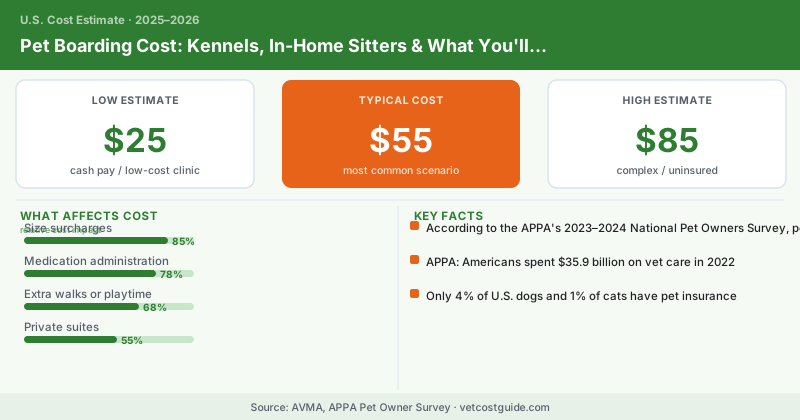
Size surcharges — Dogs over 50 lbs often cost $5–$20 more per night. Some luxury hotels charge by the pound.
Medication administration — If your pet takes pills or needs injections, expect $5–$15 per day added to the bill. At a vet hospital with trained staff, this may be included.
Extra walks or playtime — Standard boarding usually includes 2–3 bathroom breaks. Additional 30-minute play sessions run $8–$20 each.
Private suites — Upgrading from a standard kennel run to a private suite or “cabin” adds $15–$40 per night.
Feeding special food — If you bring your own raw diet or prescription food requiring prep, some facilities charge a handling fee of $3–$10 per day.
Holiday surcharges — Thanksgiving week, Christmas, and summer holiday weekends add $10–$30 per night at most facilities. Book early; top places fill up 4–6 weeks out.
Boarding at a veterinary clinic costs 20–40% more than a standard kennel, but it’s worth considering if your pet has health issues, takes regular medications, or needs monitoring. Staff are trained to recognize signs of distress or illness, and a vet is on-site. For healthy pets, a good non-medical boarding facility works fine.
In-Home Pet Sitters vs. Kennels
According to the APPA’s 2023–2024 National Pet Owners Survey, pet services spending — including boarding, grooming, and training — exceeded $9.5 billion annually. In-home pet sitting has grown significantly as an alternative to kennels, and for good reason.
In-home sitters (using platforms like Rover, Wag, or local referrals) come to your home or take your pet into their home. Your dog keeps his routine, sleeps in a familiar environment, and gets individual attention. Costs typically run $40–$90 per night for dogs, $25–$55 for cats.
Traditional kennels are more structured. Your dog is in a run or suite, gets scheduled feeding and exercise times, and interacts with other dogs in group play (if offered). Costs run $30–$60 per night for most dogs.
For anxious dogs or pets with separation anxiety, in-home care is almost always less stressful. For social, adaptable dogs who like other dogs, a good daycare-style boarding facility works well.
Multi-Pet Discounts
Most kennels and sitters offer a discount for multiple pets from the same household — typically 10–30% off the second (and subsequent) pets. Always ask before booking.
Two dogs at a standard kennel ($45/night each) with a 25% second-dog discount: $45 + $33.75 = $78.75/night instead of $90.
Over two weeks, that’s a savings of $157. Ask every time.
What to Look for Before You Book
Don’t just book the cheapest option. A bad boarding experience can leave your pet traumatized — or worse. The AVMA recommends verifying that any boarding facility:
- Requires current vaccinations (rabies, DHPP for dogs; FVRCP for cats; Bordetella for dogs in social settings)
- Separates dogs and cats, and separates dogs by size during group play
- Has staff present 24 hours or clearly communicates overnight check protocols
- Can be toured before your pet’s first stay
Reviews matter too. Look for patterns — not just the rating.
Always confirm your boarding facility’s vaccination requirements before your stay. Most reputable kennels require proof of Bordetella (kennel cough) vaccine given at least 48–72 hours before arrival. If your dog isn’t current, you’ll either be turned away or pay for the vaccine on the spot (typically $25–$45). Check 2–3 weeks before your trip.
Long-Term Boarding Costs
Planning an extended trip? Some facilities offer weekly or monthly rates. A 30-day boarding stay that would run $1,350 at $45/night might come down to $1,100–$1,200 with a monthly discount of 15–20%.
For truly extended stays (3+ months), in-home care with a trusted sitter is usually more affordable and far better for your pet’s wellbeing.
Ways to Cut Boarding Costs
Book early — Last-minute holiday bookings cost more and your first-choice places may be full.
Use a pet-sitting swap — Some pet owner communities organize informal sitting swaps where owners watch each other’s pets, eliminating the cost entirely.
Evaluate daycare vs. boarding — If you work from home and just need care during a day trip, daycare ($25–$55) is far cheaper than overnight boarding.
Ask about loyalty discounts — Regular clients often get 10–15% off at independent kennels. Chain facilities like PetSmart PetsHotel have rewards programs too.
Check local shelters — Some humane societies and shelters offer low-cost boarding as a fundraiser, with rates 20–40% below market.
Frequently Asked Questions
Standard kennel boarding ranges from $25 to $85 per night for dogs and $15 to $45 for cats, depending on facility type and location. Luxury pet hotels in major cities can exceed $95 per night, while in-home sitters through services like Rover typically charge $30 to $60 per visit, often providing a more affordable alternative.
Most standard pet health insurance policies do not cover routine boarding expenses, as they are considered preventive care rather than medical treatment. You'll pay boarding costs entirely out-of-pocket, though some pet insurance plans may cover boarding fees if your pet requires medical boarding due to illness or injury during travel.
You should book pet boarding 2 to 4 weeks ahead during peak travel seasons (holidays, summer vacation) to secure your preferred dates and facility, though many kennels accept last-minute bookings with a surcharge. Most boarding facilities require proof of current vaccinations and an initial meet-and-greet appointment 1 to 2 weeks before your pet's stay to ensure proper acclimation.