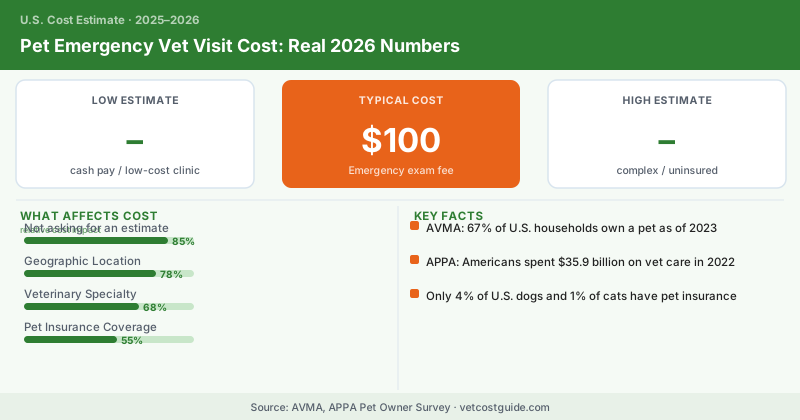
You think the ER bill will be a few hundred bucks for a scare that turns out to be nothing. Sometimes that’s true. Sometimes it’s $4,000 for a night of IV fluids and monitoring. Pet emergency vet visit costs range from $150 for a basic exam and minor treatment to $5,000+ for major trauma, surgery, or intensive care, and the wide range is exactly why an emergency fund matters more than a guess.
The American Veterinary Medical Association has flagged the rising cost of emergency and specialty veterinary care as a growing concern for pet owners nationwide, driven by more advanced diagnostics, specialist availability, and the sheer overhead of running a 24-hour facility. Understanding the fee structure ahead of time takes some of the shock out of an already stressful night.
The baseline fees before treatment even starts
| Fee | Typical Cost | Notes |
|---|---|---|
| Emergency exam fee | $100–$250 | Charged just to be seen, separate from treatment |
| After-hours/overnight surcharge | $50–$150 | On top of exam fee at many clinics |
| Basic bloodwork/diagnostics | $150–$400 | Often required before treatment begins |
| X-rays | $150–$400 | Per body region |
| Hospitalization (per night) | $600–$1,700 | IV fluids, monitoring, medication included |
Before your pet has even been treated, you can be looking at $250–$650 just in exam and initial diagnostic fees. That’s the baseline for a minor issue — a swallowed sock that turns out fine, a limp that’s just a sprain.
What pushes costs into the thousands
Surgery is the biggest single driver. A foreign body removal (the classic “dog ate something he shouldn’t have”) runs $1,500–$5,000 depending on complexity and location in the digestive tract. GDV — bloat — in large dogs is a true life-or-death emergency requiring immediate surgery, and total cost including hospitalization often lands between $3,000 and $7,500. Severe trauma from a car accident or dog fight, requiring wound repair, imaging, and multi-day hospitalization, frequently exceeds $3,000–$6,000.
- Just walking in the door for an ER exam costs $100–$250 before any treatment.
- Overnight hospitalization runs $600–$1,700 per night for fluids and monitoring alone.
- Surgical emergencies (foreign body, bloat, trauma) typically run $1,500–$7,500+.
- A dedicated $1,000–$3,000 emergency fund covers the majority of urgent, non-surgical visits.
Why the same problem costs different amounts at different clinics
A 24-hour dedicated emergency and specialty hospital typically charges more than an urgent-care-style walk-in clinic or your regular vet’s after-hours line, because the dedicated ER has board-certified specialists, CT/MRI access, and blood bank capability on-site around the clock. For genuinely life-threatening situations, that infrastructure is worth the premium. For a moderate issue that can wait a few hours, calling your regular vet’s emergency line or an urgent-care pet clinic can save 30–50%.
- Not asking for an estimate before treatment starts. Reputable ER clinics will provide a written estimate range before proceeding with anything beyond the initial exam — always ask, and ask what happens if complications push costs higher.
- Skipping the “is this really an emergency” call. Many emergency hospitals and pet insurance apps offer a free triage phone line — a quick call can save you an unnecessary $250 exam fee for something that can wait until morning.
- Paying interest on financing you don’t understand. CareCredit and similar plans often carry deferred interest that applies retroactively to the full balance if not paid off in the promotional window — read the terms carefully before signing.
Building a realistic emergency fund
Most emergency vet visits that don’t require major surgery land in the $300–$1,200 range. A dedicated emergency fund of $1,000–$3,000, kept separate from your regular budget, covers the majority of situations without forcing a financing decision under stress. If you’d rather spread the risk, pet insurance with an accident-and-illness plan reimburses 70–90% of emergency costs after your deductible, though you’ll still need to pay the clinic upfront in most cases.
When to actually go
Trust your gut, but here’s the shorthand: difficulty breathing, unproductive vomiting attempts with a distended abdomen (possible bloat), uncontrolled bleeding, suspected poisoning, seizures, or any trauma from a fall or car accident all warrant an immediate emergency visit — no waiting until morning. For everything else, a same-day or next-day appointment with your regular vet is often just as safe and considerably cheaper.
Frequently Asked Questions
Emergency and specialty veterinary hospitals operate 24/7 with on-call specialists, advanced imaging, and surgical suites ready at any hour, which means significantly higher overhead than a daytime general practice. You're also typically paying urgent-care pricing for the same convenience factor that makes human ER visits cost more than a scheduled doctor's appointment.
Most pet insurance companies require you to pay the emergency clinic directly at time of service, then submit a claim for reimbursement afterward, which typically takes 5–14 business days to process. A small number of insurers now offer direct-pay partnerships with certain emergency hospital chains, letting you skip the upfront full payment.
CareCredit and similar veterinary financing options can help you cover an emergency bill immediately with 0% interest if paid in full within a promotional period, often 6–24 months, but interest rates jump sharply and retroactively to 25%+ APR if you don't pay off the full balance in time, so only use it if you're confident you can pay it off within the window.