Nobody searches this topic without a reason. If you’re here, you’re probably facing the reality that your pet is seriously ill, aging rapidly, or in pain — and you’re trying to figure out what caring well for them in their final weeks or months actually costs. That’s a hard place to be, and this guide is going to be direct and practical about the numbers.
End-of-life pet care has evolved significantly. Veterinary palliative care — focused on quality of life rather than cure — is now offered by specialty practices and mobile vets across the country. In-home euthanasia has become widely available. And most pet owners navigating this stage have more options than they realize.
What End-of-Life Care Involves
“End-of-life care” isn’t a single service — it’s a combination of ongoing management that might span days to months. The components:
- Pain management: Medications to keep your pet comfortable as disease progresses
- Quality-of-life monitoring: Regular check-ins with your vet to assess your pet’s experience
- Symptom management: Nausea control, appetite support, mobility assistance, wound care
- In-home veterinary visits: For pets too ill to travel comfortably to a clinic
- Final decision support: Guidance on timing of euthanasia
- Euthanasia service itself: In-clinic or at home
- After-care services: Cremation, burial, memorial options
Monthly Ongoing Care Costs
| Service or Medication | Monthly Cost | Notes |
|---|---|---|
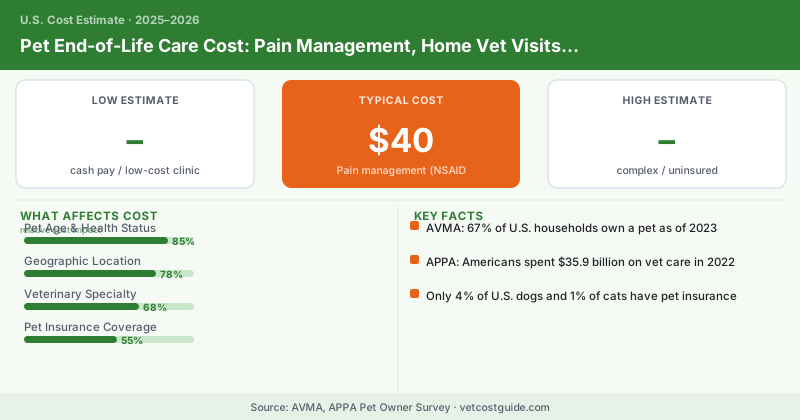
| Pain management (NSAIDs or opioids) | $40–$150/month | Gabapentin, meloxicam, buprenorphine, tramadol |
| Anti-nausea medications | $30–$80/month | Maropitant (Cerenia); especially for kidney/liver disease |
| Appetite stimulants | $20–$60/month | Mirtazapine for cats; capromorelin (Entyce) for dogs |
| Subcutaneous fluid therapy (taught at home) | $50–$150/month for supplies | Common in kidney disease; owner-administered |
| In-home vet visit (quality-of-life check) | $100–$250/visit | Mobile vet practices; 2–4 weeks between visits |
| Prescription diet (kidney/liver/cancer) | $60–$150/month | Hill's k/d, Royal Canin Renal, etc. |
| Bedding, mobility aids (slings, ramps) | $50–$200 one-time | Orthopedic beds, ramps to reduce joint stress |
A realistic monthly budget for active end-of-life management: $200–$600/month for a pet with significant illness. Many families find it’s less than they expected.
Quality-of-Life Assessment: When Is the Time?
This is the hardest question — and veterinary medicine has developed frameworks to help answer it more objectively. The HHHHHMM Scale, developed by Dr. Alice Villalobos and widely adopted in palliative care, scores seven quality-of-life indicators: Hurt, Hunger, Hydration, Hygiene, Happiness, Mobility, and More good days than bad.
Most palliative care vets also use the PAWPRINT or similar assessment tools. The AVMA’s resources on animal euthanasia guidelines note that assessing quality of life is a combination of clinical judgment and owner observation — the owner spends 24 hours with the pet, while the vet sees snapshots.
Good days: Engages with family, seeks affection, eats with interest, positions themselves comfortably, responds to name, has moments of playfulness or joy.
Concerning signs: Hiding, not eating or drinking for more than 24 hours, labored breathing, inability to rest comfortably, crying or vocalizing in pain, loss of bladder/bowel control with distress, no longer engaging with family or surroundings.
The honest benchmark most palliative vets use: when bad days outnumber good days, quality of life has likely declined to the point where euthanasia is a compassionate choice. Keeping a simple daily log (“was today a good day or a bad day”) makes this assessment more objective over time.
In-Home Euthanasia: Costs and What to Expect
In-home euthanasia has become widely available in most metro areas. The service allows your pet to be in their familiar environment, without the stress of a car ride and clinic when they’re most vulnerable. For many families, it’s a meaningful difference in how the final moments feel.
Typical in-home euthanasia costs:
- Mobile vet house call fee: $100–$250
- Euthanasia service itself: $100–$200
- Total in-home: $200–$450
Compare to in-clinic euthanasia: $75–$200 for the procedure, often in a dedicated comfort room.
Services like Lap of Love and Compassion4Paws operate networks of in-home palliative and euthanasia vets nationwide — their fee structures are transparent online and run $200–$400 all-in for most areas. Your regular vet may also offer home visits if you ask.
After-Care Costs
| After-Care Option | Typical Cost | Notes |
|---|---|---|
| Private cremation (ashes returned) | $150–$400 | Ashes returned in urn; small dogs less expensive |
| Communal cremation (no ashes returned) | $50–$150 | Lower cost; appropriate for some families |
| Burial in pet cemetery | $400–$2,000+ | Includes plot, burial, sometimes marker |
| Home burial | $0–$100 | Legal in many states on your property; verify local rules |
| Memorial paw print (clay or ink) | $25–$75 | Often offered at time of euthanasia or by cremation service |
| Memorial urn (simple) | $30–$100 | Basic to premium options |
| Custom memorial items | $50–$500+ | Portraits, jewelry with ashes, custom markers |
Most families choose private cremation at $150–$350 for small-to-medium pets. Large dogs (over 80 lbs) can run $300–$500 for private cremation. These prices vary significantly by region.
Before choosing an after-care service, ask specifically: “Is this private cremation — meaning my pet is cremated alone and I receive only their ashes — or communal?” Some providers use terms loosely. If receiving your specific pet’s ashes back matters to you, confirm in writing that it’s private cremation and ask about their tracking process.
Financial Support Resources
End-of-life care costs arrive when families are already emotionally exhausted. Some resources help:
The Pet Fund: Provides financial assistance for non-basic, non-emergency veterinary care including palliative treatment.
RedRover Relief: Offers grants for urgent veterinary care; some end-of-life situations qualify.
Local humane societies: Some run low-income euthanasia assistance programs for owners who cannot afford standard costs.
Veterinary school teaching hospitals: Some offer reduced-cost palliative and euthanasia services.
Many practices also extend payment flexibility at end of life — particularly for long-standing clients. Ask your vet directly; the conversation is worth having.
Frequently Asked Questions
Is it wrong to choose euthanasia for financial reasons? No. This is a genuine ethical question many pet owners face, and veterinary professional organizations including the AVMA explicitly acknowledge that financial limitations are a real factor in end-of-life decisions. Choosing euthanasia before prolonged suffering — even partly for financial reasons — is a decision made out of care, not neglect.
How do I find an in-home euthanasia vet in my area? Search “Lap of Love” or “Home to Heaven” for national networks. Your regular vet may also offer this service or know who in your area does. Most practices have this information even if they don’t provide it themselves.
What happens if my pet passes at home naturally? Contact a veterinarian within 24 hours. In most states, a vet must confirm death and can help with after-care arrangements. Many mobile vets offer after-death pickup and cremation coordination. Don’t feel you need to make immediate decisions in the middle of the night — wrap your pet, keep them in a cool location, and make calls in the morning.
Frequently Asked Questions
In-home euthanasia typically costs $200–$500, depending on your location, pet size, and veterinarian. This price usually includes the euthanasia procedure itself, but cremation services are billed separately and run an additional $150–$400.
Most pet insurance plans do not cover euthanasia or palliative care, as these are considered elective or end-of-life services rather than emergency treatment. You should expect to pay out-of-pocket for pain management medications ($100–$500/month) and final expenses, though some insurers may cover diagnostic tests leading up to end-of-life decisions.
Palliative care—including pain medications, supplements, and comfort measures—can extend a pet's comfortable lifespan by weeks to several months, depending on the underlying condition and your pet's response to treatment. Most owners pursue palliative care for 1–3 months while monitoring their pet's quality of life and comfort level.