The email says “claim denied” and your stomach drops—you just paid $3,000 and now the insurer’s bailing. Take a breath. A denial isn’t the final word. A meaningful share of denied pet insurance claims get overturned on appeal, and the process is more straightforward than you’d expect. You just have to know the steps.
Most denials come down to a handful of fixable reasons: a paperwork gap, a pre-existing flag, a waiting-period overlap, or an exclusion you didn’t realize applied. Some are genuinely correct. Many are not. Here’s how to tell the difference and fight the ones worth fighting.
- The most common denial reasons are pre-existing conditions, waiting-period overlap, missing records, and policy exclusions.
- Every insurer has a formal appeal process—use it; appeals overturn a real percentage of denials.
- Your vet is your best ally: a letter clarifying the timeline or diagnosis often reverses a denial.
- Read the denial reason carefully before reacting—half the time it’s a documentation issue, not a coverage one.
Why Claims Get Denied
Denials almost always trace to one of these:
| Denial Reason | How Common | Fixable? | Your Move |
|---|---|---|---|
| Pre-existing condition | Very common | Sometimes | Prove onset date with records |
| Waiting period overlap | Common | Rarely | Confirm exact diagnosis date |
| Missing/incomplete records | Common | Usually | Send full itemized history |
| Policy exclusion | Common | Rarely | Re-read policy then appeal |
| Filed past deadline | Occasional | Rarely | Request exception in writing |
The two with the best appeal odds are pre-existing flags and missing records, because both often come down to when a condition truly started—and that’s something your vet can document. Understanding how pre-existing conditions work helps you frame the argument.
Step 1: Read the Actual Denial Reason
Don’t fire off an angry email yet. The denial letter states a specific reason, and your entire response strategy depends on it. A “pre-existing” denial needs medical-history evidence. A “missing records” denial just needs you to send the records. A flat exclusion (like a cosmetic procedure) usually isn’t worth appealing at all. Match your effort to the reason.
Step 2: Get Your Vet Involved
This is the single most powerful move. Your veterinarian can write a letter clarifying when symptoms first appeared, confirming a diagnosis date, or explaining that a condition isn’t related to a prior issue the insurer assumed it was. Insurers take a treating vet’s documented timeline seriously.
NAPHIA’s 2024 data shows insurers paid out billions in claims across North America, and the vast majority of clean, well-documented claims are approved. Many denials hinge on a single ambiguous date in the records—exactly what a vet letter can resolve.
Step 3: File the Formal Appeal
Appeals have deadlines—often 30 to 90 days from the denial. Miss the window and your right to appeal usually closes. The moment you decide to fight a denial, note the deadline and submit before it. Don’t let a winnable case die on a calendar technicality.
Submit the appeal in writing through the insurer’s official channel. Include: the original itemized invoice, your pet’s full medical history, the vet’s clarifying letter, and a clear, calm explanation of why the denial is wrong. Reference the specific policy language if you can. Keep copies of everything.
Step 4: Escalate If Needed
If the first appeal fails and you still believe you’re right, you have more options:
- Request a second-level review or supervisor escalation.
- File a complaint with your state’s Department of Insurance—pet insurance is regulated at the state level, and a regulatory complaint often gets a stalled claim moving.
- Consult the policy’s dispute-resolution clause; some include arbitration.
When the Denial Is Actually Correct
Sometimes it just is. If the condition was genuinely pre-existing, or it’s a clearly excluded item, no appeal will change that—and the time you’d spend fighting is better spent planning. In that case, the bill is real and you need a way to pay it.
A vet payment plan or a CareCredit card can break a denied $3,000 charge into manageable monthly pieces. And going forward, knowing exactly what your policy excludes—and whether it’s actually worth it for your pet—prevents the next surprise.
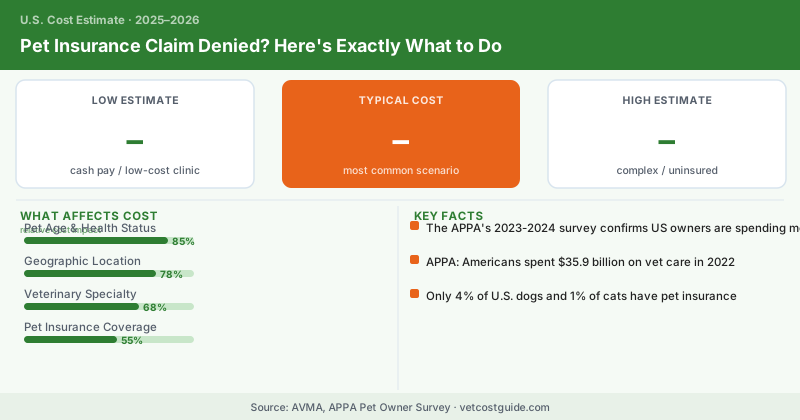
The APPA’s 2023-2024 survey confirms US owners are spending more on vet care every year, which means claim values are climbing too. A $3,000 denial is absolutely worth a few hours of paperwork to contest. Read the reason, get your vet on record, file inside the deadline, and escalate if you’re in the right. Plenty of “denied” claims turn into “approved” with nothing more than the correct documentation.
Frequently Asked Questions
Most pet insurers do not charge a fee to file an appeal, making the process cost-free for policyholders. Your only investment is the time spent gathering documentation and submitting your appeal materials, which typically takes 1–2 hours. Since the average successful appeal involves claims worth $2,000–$5,000, appealing is financially worthwhile even if it takes a few hours of your effort.
Most pet insurance policies exclude pre-existing conditions entirely, meaning any illness or injury your pet had before your policy started will not be covered. However, some insurers offer coverage for curable pre-existing conditions after a symptom-free period (typically 12–24 months), so it's worth reviewing your specific policy terms. Common exclusions also include hereditary conditions, breed-specific issues, and wellness care, which are separate from pre-existing condition clauses.
Most insurers respond to appeals within 10–30 days, though some may take up to 60 days depending on the complexity and documentation required. To speed up the process, submit all medical records, vet invoices, and a detailed written explanation within 30 days of your initial denial—the deadline for appeals. Having everything organized and submitted promptly increases both your approval odds and the speed of resolution.