Three pets, three separate policies, three monthly charges—that’s the reality most multi-pet households wake up to. The good news? You don’t pay three times the headache, and a multi-pet discount can shave real money off the total. The math just isn’t what you’d guess.
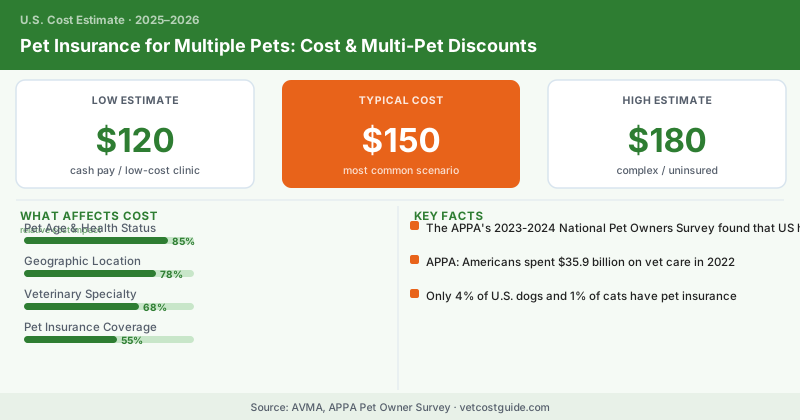
If you’ve got two dogs and a cat, you’re looking at roughly $120 to $180 a month combined for solid accident-and-illness coverage. Each animal gets its own policy with its own deductible and limit. The discount stacks on top. Let’s break down what a houseful actually costs.
- Each pet needs its own policy—there’s no single “family plan” that bundles them under one deductible.
- Most insurers offer a multi-pet discount of 5% to 10% off each additional pet’s premium.
- Three pets typically run $120-$180/month total for mid-tier coverage.
- The discount saves $100-$250 a year, but the bigger savings come from insuring each pet young.
How Multi-Pet Pricing Works
There’s a common misconception that you buy one policy covering all your animals. You don’t. Every pet gets a separate contract priced on its own species, breed, age, and location. A 2-year-old cat and an 8-year-old Bulldog will have wildly different premiums even under the same roof.
What you do get is a discount. When you add a second, third, or fourth pet to the same account, most US providers knock 5% to 10% off each one. It’s applied per pet, so it grows as your menagerie does. Before you bundle, it helps to understand how pet insurance works for a single animal first.
Real Multi-Pet Cost Examples
| Household | Pets | Before Discount | After 10% Off | Monthly Savings |
|---|---|---|---|---|
| 2 cats | DSH age 2 + age 4 | $48 | $43 | $5 |
| 1 dog + 1 cat | Lab age 3 + cat age 2 | $78 | $70 | $8 |
| 2 dogs | Lab + Beagle age 4 | $96 | $86 | $10 |
| 2 dogs + 1 cat | Lab + Beagle + DSH | $120 | $108 | $12 |
| 3 dogs | Mixed medium age 3-6 | $165 | $148 | $17 |
A 10% discount on a $165 monthly total is about $200 a year back in your pocket. Not life-changing, but real—and it costs nothing to ask for. The bigger lever is age: each pet you enroll while it’s young locks in a lower lifetime baseline. See the full monthly cost breakdown for how age drives premiums.
Is the Discount Worth Switching Providers?
Don’t chase a multi-pet discount across companies blindly. A provider with a 10% discount but worse coverage or a stingier annual limit can cost you far more on a single claim than the discount ever saves. The discount is a tiebreaker, not the headline.
NAPHIA’s 2024 data shows over 6.25 million pets were insured across North America, and multi-pet households make up a growing slice of new policies. Insurers want your whole household—which is exactly why the discount exists. Use it, but pick the plan on coverage quality first. Our guides to the best dog insurance and best cat insurance compare what actually matters.
The Hidden Multi-Pet Trap
A shared online account is not shared coverage. If one pet hits its annual limit, that does nothing for the others—each policy is independent. And if you cancel one pet’s policy, double-check the discount still applies to the rest; some insurers drop the multi-pet rate when you fall back to a single animal.
Should You Insure All of Them?
Here’s the honest answer: maybe not. A young, healthy indoor cat files claims rarely, and self-insuring it with a savings buffer can pencil out. A large-breed dog with orthopedic and cancer risk is a much stronger case for coverage.
The APPA’s 2023-2024 National Pet Owners Survey found that US households now spend record amounts on veterinary care, and multi-pet homes feel that squeeze hardest—one bad year with two animals can mean two emergencies. A single emergency vet visit for one dog can run $1,500 to $6,000, and the odds of some pet in a three-animal home needing serious care go up with each one you add.
A reasonable middle path: insure your highest-risk pets (large dogs, older animals, accident-prone breeds) and self-insure the low-risk ones with a dedicated savings account. That blends the discount on the policies you keep with the flexibility of cash for the rest. Run the numbers per pet—not per household—and you’ll usually find the right mix.
Frequently Asked Questions
Insuring three pets typically costs $120 to $180 per month combined for accident-and-illness coverage, with each pet having its own separate policy. Multi-pet discounts of 5-10% can reduce your annual costs by $150 or more, bringing your effective savings to roughly $12-$15 per pet monthly.
Most multi-pet policies cover accidents, illnesses, and sometimes wellness visits, but each pet maintains its own deductible (typically $250-$1,000 per animal per year) and you pay out-of-pocket before insurance kicks in. Reimbursement rates usually range from 70-90% of covered veterinary bills after your deductible is met.
Enroll pets while they are young and healthy—premiums lock in based on age and health status, so waiting increases your monthly costs significantly. Most insurers allow you to enroll multiple pets in the same household and apply for multi-pet discounts during the enrollment process or within the first policy month.