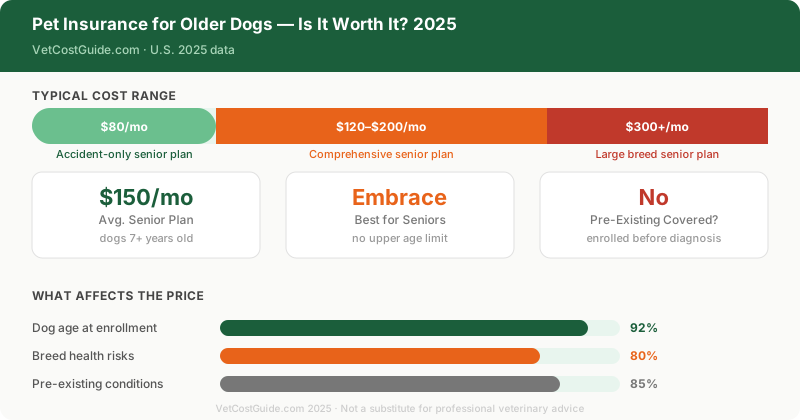
“The premiums are too high” is the default reason people skip insurance for older dogs. It’s not wrong—a 9-year-old Labrador can run $150/month, which is $1,800 a year. But here’s the number worth holding next to that: a single cancer diagnosis in a senior dog generates $5,000–$20,000 in treatment costs within weeks of diagnosis. That’s not a hypothetical—cancer affects approximately one in three dogs over age 10.
The question isn’t whether the premium is high. It is. The question is whether the catastrophic coverage value exceeds what you’d pay in premiums, given your specific dog’s health status and breed risk profile. For a healthy senior with no prior diagnoses, the answer is often yes. For a dog already managing three chronic conditions, it’s usually no.
- Dogs aged 7–9 typically cost $80–$150/month to insure; dogs aged 10+ cost $120–$250/month depending on breed and location.
- Only Embrace, Nationwide, and Hartville have no upper age limit for new enrollments—other major carriers cap new enrollment at 14 years.
- Cancer affects approximately 1 in 3 dogs over age 10, with treatment costs averaging $5,000–$20,000—making this the primary financial risk to insure against.
- Pre-existing conditions already diagnosed will not be covered regardless of when you enroll, so the value calculation must focus on future, undiagnosed conditions.
What Senior Dog Coverage Actually Costs (2025)
Estimates based on a medium-size dog (30–50 lbs) in the Columbus, Ohio market. $250 annual deductible, 80% reimbursement, $10,000 annual limit. Large or high-risk breeds (Great Dane, Bulldog, Rottweiler) will be priced higher.
| Age | Monthly Premium (Est.) | Annual Cost | Carriers That Accept New Enrollments |
|---|---|---|---|
| 7 years | $80–$115 | $960–$1,380 | All major carriers |
| 8 years | $95–$135 | $1,140–$1,620 | All major carriers |
| 9 years | $110–$155 | $1,320–$1,860 | Most major carriers |
| 10 years | $120–$175 | $1,440–$2,100 | Embrace, Nationwide, Hartville, ASPCA |
| 11 years | $135–$200 | $1,620–$2,400 | Embrace, Nationwide, Hartville |
| 12 years | $155–$240 | $1,860–$2,880 | Embrace, Nationwide, Hartville |
| 13–14 years | $175–$275 | $2,100–$3,300 | Embrace, Nationwide (select plans) |
Plan Types That Actually Make Sense for Senior Dogs
Comprehensive accident and illness coverage is the only plan type worth considering for a senior dog. This covers cancer, organ disease, neurological conditions, emergency surgery, and specialist care—the exact conditions that spike in older animals. At 80% reimbursement, a $12,000 hospitalization and chemotherapy course is reduced to roughly $2,650 out-of-pocket after a $250 deductible. That’s the math that makes senior dog insurance defensible.
Accident-only plans are not recommended, full stop. The primary health risks in older dogs—cancer, heart disease, kidney disease, arthritis, diabetes—are all illness-based. An accident-only plan for a 9-year-old dog provides essentially no coverage for the conditions most likely to generate the bills you’re actually worried about.
Carriers without upper enrollment age limits: Embrace is the top recommendation for senior enrollments, combining flexible pre-existing condition reviews with no age cap on new policies. Nationwide’s Whole Pet plan covers exam fees and alternative therapies and accepts dogs up to 10 years for new enrollment. Hartville is underwritten by Nationwide and offers similar coverage at slightly different price points.
What Changes the Calculation
Breed-specific cancer risk is the most important variable. Certain breeds make senior insurance essentially a certainty:
- Golden Retrievers: ~60% lifetime cancer rate, with most cases in dogs aged 8–12
- Bernese Mountain Dogs: ~50% cancer mortality rate
- Rottweilers: elevated bone cancer (osteosarcoma) risk, with treatment costs of $8,000–$20,000
- Standard Poodles: elevated bloat risk, treatable with $3,000–$7,500 surgery
- Boxers: heart disease and cancer at elevated rates after age 8
A healthy 10-year-old Golden Retriever with clean bloodwork is one of the strongest candidates for senior dog insurance that exists.
Pre-existing conditions already documented will be excluded—full stop. If your 9-year-old has been treated for arthritis, that condition won’t be covered. But a dog that arrives at 9 years old with clean labs and no prior diagnoses can still get meaningful coverage against cancer, kidney disease, or a new orthopedic injury. The insurance value isn’t zero; it’s targeted at the conditions that haven’t appeared yet.
Health status at enrollment drives the value calculation more than age alone. A healthy 9-year-old with clean labs and no prior diagnoses is a stronger insurance candidate than a 7-year-old managing IBD, allergies, and a previous cruciate repair. Age matters less than the remaining list of conditions the insurance could actually cover.
| Scenario | Annual Premium | Risk Being Covered | Expected Value Positive? |
|---|---|---|---|
| Healthy 7-yr Lab (no prior dx) | $1,260 | Cancer, kidney disease, cardiac | Likely yes |
| 7-yr Lab with arthritis + allergies | $1,260 | Future conditions only (not arthritis/allergies) | Borderline |
| Healthy 10-yr Golden Retriever | $1,920 | Cancer (60% lifetime rate), cardiac | Likely yes |
| 10-yr dog with diabetes + CHF | $1,920 | Coverage excludes diabetes/CHF | Likely no |
- Buying accident-only coverage for a senior dog to save on premiums—the conditions most likely to generate large bills are illness-based and won’t be covered.
- Enrolling a senior dog that already has several documented chronic conditions and expecting meaningful coverage—most of the likely future costs will trace back to excluded conditions.
- Not comparing the no-age-limit carriers (Embrace, Nationwide, Hartville) and defaulting to whichever plan appears first in a search.
- Overlooking the fact that premiums for senior dogs often increase annually at renewal—factor escalating costs into a multi-year projection, not just year one.
A Decision Framework
Run through these questions honestly:
Strong case FOR insuring at 7+:
- Dog has no prior diagnoses and clean recent bloodwork
- Breed has elevated cancer, cardiac, or orthopedic risk
- You couldn’t comfortably self-fund a $10,000–$20,000 emergency
- Dog is otherwise healthy, active, and showing no signs of systemic disease
Weak case or AGAINST insuring at 7+:
- Dog already has three or more documented chronic conditions (most likely bills will be excluded)
- Breed has low actuarial risk and dog is in excellent health with strong finances
- Premium would exceed $2,500/year and the budget is genuinely tight
- Dog is already showing signs of terminal illness
The breakeven math works like this: a $1,500/year premium requires one major claim event every two to three years to justify itself financially. AVMA data shows dogs over age 10 average one major illness event every 2.1 years. For a healthy senior, the premium typically justifies itself.
FAQ
Can I still insure my 12-year-old dog? Yes, with Embrace, Nationwide, and Hartville. Premiums will be $175–$300/month, and some riders may not be available. The coverage is meaningful if the dog is otherwise healthy.
Will my senior dog’s premium increase every year? Yes. Most insurers apply age-based premium increases at each annual renewal. Budget for 8–15% annual increases in senior years. Some policies offer premium-lock guarantees if no claims are filed.
Does pet insurance cover end-of-life care? Palliative and hospice care is generally not covered. Euthanasia is excluded from virtually all plans. Some policies cover the diagnostics leading up to a terminal diagnosis but not the terminal care itself.
Is it better to self-insure a senior dog with a dedicated savings account? Self-insurance works if you can set aside $5,000–$10,000 as a dedicated veterinary fund before your dog reaches senior age. The risk is a catastrophic illness in year one before the fund is adequately funded. Insurance eliminates that timing risk.
Frequently Asked Questions
Monthly premiums for dogs age 7 and older typically range from $80–$200, depending on breed, size, and coverage level. For a 9-year-old Labrador, expect closer to $150/month ($1,800 annually), while smaller breeds may fall toward the lower end of that range.
Most pet insurance plans do cover cancer diagnosis and treatment for senior dogs, but you'll typically pay 10–30% out-of-pocket after your deductible (usually $250–$1,000) and reach your annual or lifetime benefit cap. A single cancer diagnosis in a dog over 10 costs $5,000–$20,000 in treatment, so insurance can significantly reduce your personal liability.
Most insurers will cover dogs age 7–14 (some up to 15), but you cannot enroll a dog once they reach the maximum age limit set by your provider, which varies by company. If your dog is already diagnosed with a condition before enrollment, that pre-existing condition is almost always excluded from coverage, so timing matters significantly for older dogs.