Your dog tears her ACL on a Tuesday afternoon. The orthopedic surgeon quotes you $4,500. You hand over your credit card, submit a claim to your insurance provider, and three weeks later a check arrives in the mail. That’s pet insurance in a nutshell — and understanding that reimbursement model upfront saves a lot of frustration down the road.
Here’s the thing most people don’t know going in: pet insurance doesn’t work like human health insurance. No in-network vets. No co-pays at checkout. No direct billing. You pay first. Always. Then you get reimbursed. That distinction matters because you still need to be able to cover that $4,500 upfront while you wait for your check.
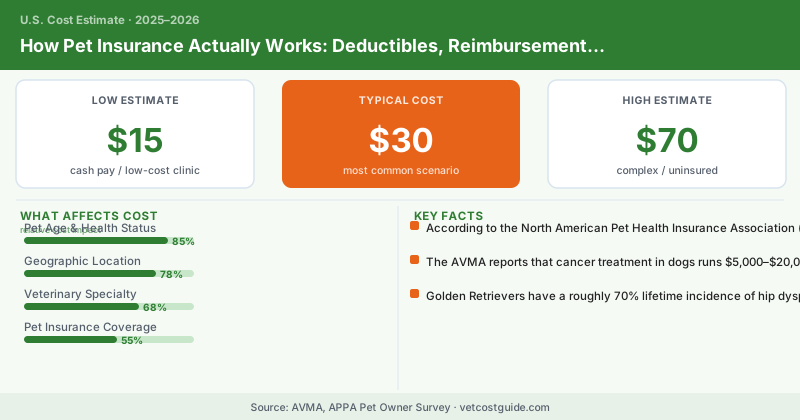
According to the North American Pet Health Insurance Association (NAPHIA), the pet insurance industry grew to over $3.9 billion in 2023 — more than double what it was just five years earlier. Millions of pet owners are figuring this out. The ones who get the most out of it understand exactly how the money flows before they sign up.
The Reimbursement Model: How the Money Actually Flows
Here’s the sequence every pet insurance claim follows:
- Your pet gets care. You pay the full bill at the vet.
- You submit a claim — online, app, or mail — with the itemized invoice and sometimes your pet’s medical records.
- The insurer reviews the claim. Typically 5–15 business days.
- You receive a check or direct deposit for your covered percentage, minus your deductible.
The math on what you get back hinges on three variables: your deductible, your reimbursement percentage, and your annual limit. Get any one of those wrong when you’re shopping, and the policy won’t work the way you expect.
Deductibles: Annual vs. Per-Incident
Most people understand deductibles conceptually — it’s the amount you pay before insurance kicks in. But pet insurance offers two very different structures, and they’re not equivalent.
Annual deductibles ($100–$500 typical): You pay this once per policy year, no matter how many claims you file. If your dog has allergies that drive four vet visits in a year, you pay the deductible once. Every subsequent claim gets reimbursed at your full percentage.
Per-incident deductibles ($100–$500 per condition): You pay a separate deductible for each new condition. A dog with both allergies and a knee injury triggers two deductibles. Some policies even treat a recurring condition as a new incident.
For a young, healthy pet with only occasional issues, per-incident can work fine. For pets with chronic conditions — or any breed prone to recurring problems — annual deductibles almost always cost less over time.
Reimbursement Percentages: 70%, 80%, or 90%
After your deductible is met, the insurer pays a percentage of your covered costs. Most plans offer 70%, 80%, or 90%. Higher percentage means higher premium.
On an $800 vet bill with a $200 annual deductible already satisfied:
- At 70%: you get back $560
- At 80%: you get back $640
- At 90%: you get back $720
For most pet owners, 80% hits the right balance between monthly cost and out-of-pocket exposure. If your breed is prone to expensive conditions — hip dysplasia in German Shepherds, heart disease in Cavaliers, cancer in Golden Retrievers — strongly consider 90%.
Annual Limits: $5,000, $10,000, or Unlimited
Your annual limit is the ceiling on what the insurer pays per policy year. Plans range from $5,000 at the low end to genuinely unlimited at the premium tier.
This matters more than people realize. The AVMA reports that cancer treatment in dogs runs $5,000–$20,000 depending on type and stage. A single emergency surgery can easily hit $5,000–$8,000. Hit your annual limit mid-year and you’re paying 100% out of pocket for the rest of that policy year.
Unlimited plans cost more monthly but eliminate one of the scariest scenarios: maxing out your coverage while your dog is still mid-treatment.
| Coverage Tier | Monthly Premium (Dog) | Monthly Premium (Cat) |
|---|---|---|
| Basic accident-only | $15–$30 | $10–$20 |
| Standard accident + illness ($5K limit) | $30–$55 | $20–$35 |
| Mid-tier ($10K limit, 80% reimb.) | $45–$80 | $30–$50 |
| Premium (unlimited, 90% reimb.) | $70–$150 | $45–$80 |
| Wellness rider (add-on) | $15–$30 | $12–$25 |
Premiums vary significantly by breed, age, location, and deductible. A 2-year-old mixed breed will cost much less than a purebred prone to hereditary conditions.
What Pet Insurance Almost Never Covers
Every policy differs, but there’s a core list of exclusions you’ll find in nearly all of them.
Pre-existing conditions are the biggest one. Any condition your pet was diagnosed with, showed symptoms of, or received treatment for before your policy’s effective date is permanently excluded. This isn’t small print — it’s the central rule of how pet insurance works. A dog diagnosed with epilepsy at age 2 will have epilepsy excluded on any new policy, forever, no matter how many years pass.
Preventive and routine care is excluded from base plans. Annual exams, vaccines, flea/tick prevention, heartworm testing — none of it is covered unless you add a wellness rider, which costs extra and typically reimburses only a fixed annual amount ($200–$400).
Dental disease — not dental accidents like a broken tooth from chewing a rock, but actual periodontal disease — is excluded by most major insurers. Given that 80% of dogs have some degree of dental disease by age 3, that’s a significant gap.
Breeding and pregnancy costs, elective procedures, experimental treatments, and cosmetic procedures are universally excluded.
A diagnosis before your policy’s enrollment date becomes a permanent pre-existing exclusion — forever. Pet insurance is most valuable when purchased during kittenhood or puppyhood, before any health conditions appear on the medical record. Even a single vet visit noting “mild limping” can result in orthopedic conditions being excluded permanently.
Accident-Only vs. Accident + Illness vs. Wellness Riders
Accident-only plans cover injuries from external causes — fractures, lacerations, foreign body ingestion, toxin exposure. No illness coverage at all. They’re cheaper ($15–$30/month for dogs) and make sense only if accident + illness premiums are genuinely unaffordable.
Accident + illness is the standard, and what most pet owners should buy. It covers injuries plus diseases, infections, cancer, hereditary conditions (depending on the policy), and organ disease.
Wellness riders are optional add-ons that reimburse routine care up to an annual cap. Run the math first — if the rider costs $25/month ($300/year) and reimburses $250 in wellness care, you’re paying $50 extra per year for the convenience of routing routine costs through your insurer.
Break-Even Math: Golden Retriever with Hip Dysplasia
Golden Retrievers have a roughly 70% lifetime incidence of hip dysplasia according to the Orthopedic Foundation for Animals. Say you insure a Golden at 8 weeks:
- Monthly premium: $80 (mid-tier, 80% reimbursement, $250 annual deductible, unlimited limit)
- Annual cost: $960
- At age 3 with no major claims: you’ve paid $2,880
Then at age 5, hip dysplasia is diagnosed. Bilateral total hip replacement: $7,000–$10,000. Physical therapy: $2,000. Ongoing medications: $600/year for the rest of the dog’s life.
With insurance: roughly $4,800 in premiums over 5 years. The hip surgery alone reimburses $6,400–$9,400 (after deductible, at 80%). You’re ahead — significantly.
Pet insurance is risk pooling, not a savings account. You might come out “behind” if your pet stays healthy. Most owners who’ve watched their dog through a cancer diagnosis or emergency surgery would say the peace of mind alone was worth the premiums.
Shopping Tips
Compare at least three policies using tools like Pawlicy Advisor or PetInsuranceReview. Run quotes for both a $250 and $500 deductible — the premium difference sometimes isn’t worth it. Read the exclusions list, not just the marketing materials. And if you have a mixed-breed rescue, ask whether they’ll be rated as the most expensive breed in the mix or as a generic mixed breed (it varies by company).
The right policy is the one you can actually afford to keep paying. A lapsed policy does nothing for a pet mid-treatment.
Frequently Asked Questions
Pet insurance premiums generally range from $15 to $50 per month for dogs and $10 to $40 per month for cats, depending on the pet's age, breed, and coverage level you select. Accident-only plans are cheaper at $10–$25/month, while comprehensive accident-and-illness plans cost $30–$50+/month for dogs. Your actual premium will be higher for older pets or breeds predisposed to certain health conditions.
Pet insurance will not cover any pre-existing conditions, which includes injuries or illnesses your pet had before the policy started or during the waiting period (usually 14 days). This is one of the most common exclusions across all major insurers, so it's important to enroll your pet while young and healthy to avoid gaps in coverage.
Most pet insurance companies process claims within 10–30 days of submission, though some faster providers reimburse within 5–10 business days. You'll need to pay your vet upfront out of pocket, then submit your itemized receipt and claim form to receive your reimbursement check or direct deposit based on your policy's deductible and reimbursement percentage.