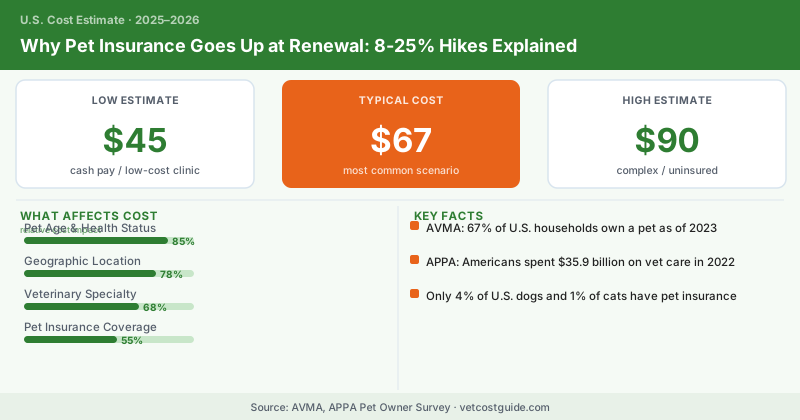
You signed up at $45 a month. Three years later the renewal notice says $68. By year seven it’s pushing $90. You didn’t change anything, your dog didn’t file a single claim—so what gives? Pet insurance premiums climb at renewal almost every year, and the reasons are baked into how the whole product works. Knowing them won’t stop the increases, but it’ll help you avoid an expensive mistake.
Unlike human health insurance, pet insurance has no regulatory cap on renewal increases. Insurers can—and do—raise your rate every year for reasons that have nothing to do with your individual pet. Here’s what’s actually driving the number up.
- Renewal increases of 8-15% a year are common; after age 7 they can reach 15-25%.
- The two biggest drivers are your pet aging and rising veterinary costs across the board.
- Filing claims usually does NOT directly raise your individual premium—it’s age and inflation, not punishment.
- Switching to escape a hike can backfire by turning existing conditions into pre-existing exclusions.
What Drives the Increase
Three forces push your premium up, and only one of them is about your pet specifically.
| Driver | Typical Annual Impact | About Your Pet? | Can You Control It? |
|---|---|---|---|
| Your pet aging | 5-20% | Yes | No |
| Vet cost inflation | 5-12% | No | No |
| Breed/regional claims trends | 2-8% | Partly | No |
| Plan/coverage changes | Varies | No | Yes (adjust plan) |
Age is the big one. As pets get older, they file more and bigger claims—that’s just biology—so insurers raise the rate to match the rising risk. Layered on top is general veterinary inflation: new diagnostics, advanced treatments, and rising clinic costs make every claim more expensive to pay. Our monthly cost guide shows exactly how steeply premiums scale with a pet’s age.
How Aging Compounds Your Premium
This is the part that surprises owners most. A 5% increase doesn’t sound like much—but it compounds. A $45 plan rising 10% a year becomes about $65 in four years and roughly $90 in seven. The percentage looks modest; the cumulative dollar jump does not.
The APPA’s 2023-2024 National Pet Owners Survey confirms US veterinary spending keeps hitting record highs year after year, and insurers price that reality straight into renewals. A dog you insured cheaply as a puppy will cost meaningfully more as a senior—which, ironically, is exactly when you most want the coverage. That’s why enrolling early and budgeting for rising premiums matters.
Does Filing Claims Raise My Rate?
Most reputable US insurers do NOT raise your individual premium because you filed a claim—pet insurance generally isn’t experience-rated the way some other insurance is. So don’t avoid filing a legitimate claim out of fear it’ll spike your rate. The increases come from age brackets and overall claims trends across all similar pets, not from your personal claim history.
This is worth repeating because the fear stops people from using coverage they’re paying for. If your pet needs a $4,000 surgery, file the claim. Skipping it to “protect your rate” usually accomplishes nothing except costing you the reimbursement you already paid premiums to earn.
What You Can Actually Do
You can’t freeze the increase, but you have real levers:
- Raise your deductible. A higher annual deductible drops your premium immediately, with the same underlying coverage—just be ready to pay more out of pocket before reimbursement kicks in.
- Lower your reimbursement rate. Moving from 90% to 80% reimbursement cuts the premium while keeping you covered for major claims.
- Review your annual limit. If you’re carrying an unlimited plan on a low-risk pet, a high-but-finite cap may cost less.
- Stay put if your pet has conditions. Switching to chase a cheaper quote can reset waiting periods and exclude current conditions—often a worse deal than the hike. Read our switching guide before you jump.
When the Hike Means It’s Time to Rethink
There’s a point for some owners—usually with very low-risk pets—where the rising premium starts to outweigh the protection. That’s a legitimate calculation to run each renewal. But for most pets, especially as they age into their higher-risk years, the coverage is doing more work than ever right when the premium peaks.
NAPHIA’s 2024 data shows over 6.25 million insured pets in North America, and the ones who keep coverage through the senior years are precisely the ones who tend to face the biggest bills—a cancer treatment course or an emergency surgery running into five figures. Dropping coverage right before the high-risk window is the most common renewal mistake.
So when that renewal notice arrives, don’t panic-cancel and don’t blindly accept it either. Understand which driver moved your number, adjust your deductible or reimbursement to ease the bite, and keep the coverage in place for the years your pet needs it most. The increase feels personal, but it almost never is—it’s age and inflation doing exactly what they always do. Plan for it, trim the plan where you can, and stay insured through the senior years, because that’s almost always the smarter long-term play.
Frequently Asked Questions
Pet insurance premiums typically increase 8-25% annually at renewal. For example, a plan starting at $45 per month can rise to $68 by year three and reach $90 by year seven, even without any claims filed.
Most pet insurance plans exclude pre-existing conditions, meaning any illness or injury your pet had before the policy starts won't be covered. This is one of the primary reasons to enroll pets while they're young and healthy, before conditions develop.
Enrolling your pet while young is critical since premiums lock in at a lower age rate and then climb at each renewal. Waiting until your pet is older or has developed health issues will result in much higher initial premiums and steeper annual increases over time.