In 2015, a $40-a-month pet insurance premium felt like a lot. Today, that same $40 a month dropped into a savings account would leave you with about $480 a year and zero help the night your dog swallows a sock and needs $4,500 surgery. The “just save it yourself” advice is appealing—but the timing problem is brutal.
The core question is simple: do you pay a predictable monthly premium for the rest of your pet’s life, or do you bank that money and self-insure? The answer depends on three things—your discipline, your timeline, and your tolerance for a worst-case bill landing before you’ve saved enough.
- A self-insurance fund needs roughly $56/month set aside to match the average dog premium—and you need it built up before the emergency.
- Insurance front-loads protection; a savings account back-loads it. The fund is weakest in year one when you have the least saved.
- Self-insuring works best for young, healthy, low-risk pets and disciplined savers.
- Insurance wins decisively when a major claim hits early or the pet develops a chronic condition.
The Numbers Side by Side
NAPHIA reported the average accident-and-illness dog policy ran about $676 a year in 2024—roughly $56 a month. So the apples-to-apples comparison is: put $56/month into a high-yield savings account instead, and see who comes out ahead.
| Timeline | Insurance Paid | Savings Banked | Covered if $5k Bill Hits |
|---|---|---|---|
| Year 1 | $676 | $672 | Insurance: yes / Savings: no |
| Year 3 | $2,028 | $2,016 | Insurance: yes / Savings: partial |
| Year 5 | $3,380 | $3,360 | Insurance: yes / Savings: yes |
| Year 8 | $5,408 | $5,376 | Both / savings now ahead if no claims |
See the pattern? If your pet stays healthy for eight years, the savings account roughly breaks even and you keep the leftover. But if a $5,000 emergency hits in year one, the saver has $672 and the insured owner is reimbursed thousands. That’s the whole bet.
When Savings Wins
Self-insuring is genuinely the smart move for some pets. A young indoor cat with no breed-specific risks files claims rarely, and many such cats cost their owners almost nothing in big vet bills across a lifetime. If you’d actually leave the money untouched and let it compound, you may come out ahead. Our is pet insurance worth it for an indoor cat analysis runs that exact scenario.
The savings route also gives you total flexibility. The money is yours—no deductibles, no annual limits, no claim denials, no pre-existing exclusions. You can spend it on a routine vet visit, grooming, or whatever else comes up.
When Insurance Wins
The fatal flaw in self-insuring is timing. Emergencies don’t wait for your fund to fill up. A puppy that needs $6,000 of surgery in month three has a savings balance of about $170. Insurance pays from day one (after waiting periods); a savings account pays only what you’ve managed to bank so far.
Insurance is the clear winner when:
- Your pet is a large breed with orthopedic or bloat risk.
- The breed is prone to cancer or chronic illness—a cancer treatment course can hit $15,000.
- You don’t trust yourself to leave a savings fund alone.
- A major bill in the first few years would be financially devastating.
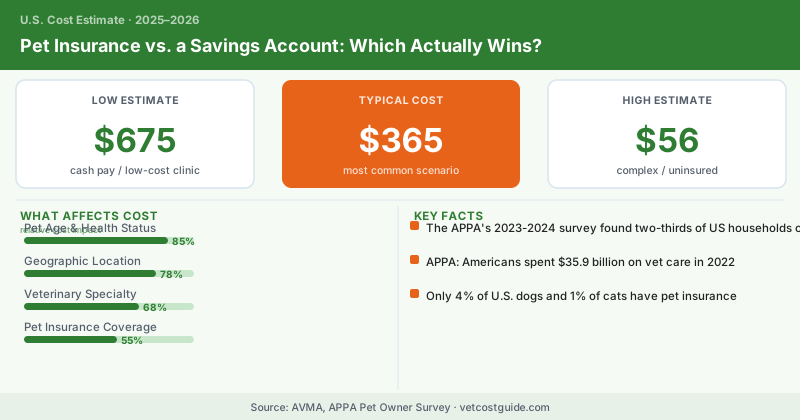
The APPA’s 2023-2024 survey found two-thirds of US households own a pet, yet a Federal Reserve survey has repeatedly shown a large share of Americans couldn’t cover a $400 emergency from savings. If a $400 surprise is hard, a $5,000 one is a crisis—and that’s the gap insurance fills.
The Hybrid Most People Should Use
You don’t have to pick one. The strongest approach for many owners is a modest accident-and-illness policy plus a small emergency fund for the deductible and routine care. The policy handles the catastrophic $10,000 scenarios; the fund covers the $200 to $800 stuff insurance often won’t.
There’s also a behavioral truth worth being honest about. A savings account only works if you actually fund it every month and never raid it for a vacation or a car repair. Insurance forces the discipline by making the payment non-negotiable. If you know yourself well enough to admit the fund would get spent, that’s a quiet but strong argument for a policy—the premium is automatic in a way willpower often isn’t.
If cash flow is the real problem, options like a CareCredit card or a vet payment plan can bridge a gap whether you’re insured or self-insuring. But neither replaces having a plan before the emergency. Decide now—because the savings-versus-insurance debate always gets answered the hard way the night your pet needs you to already have made the choice.
Frequently Asked Questions
Pet insurance for dogs typically costs around $675 per year, or roughly $40-$56 per month depending on your dog's age, breed, and the coverage level you choose. Premium costs vary by provider and increase as your pet ages, with older dogs paying significantly more than puppies or young adults.
Pet insurance generally covers accidents and illnesses like emergency surgeries (such as a $4,500 sock ingestion procedure), but most policies exclude pre-existing conditions, routine preventive care, and hereditary issues unless you purchase additional riders. You'll typically pay a deductible ($250-$500) and coinsurance (10-20%) out of pocket before insurance kicks in.
A savings account approach requires discipline to set aside $56 per month for years before you have enough to cover a major emergency, but pet emergencies can strike immediately when you have little saved. If your dog needs a $4,500 surgery tomorrow and you've only saved $480, you're financially unprepared, whereas an insured pet is protected from day one.