Your cat never goes outside. No cars, no coyotes, no catfights at 2 a.m. So insurance feels like a waste, right?
Not so fast. The conditions that cost cat owners the most money have nothing to do with the great outdoors. They happen on the couch, in the litter box, and on the food dish. Let’s look at whether insuring an indoor cat actually makes financial sense, because the answer surprises a lot of people.
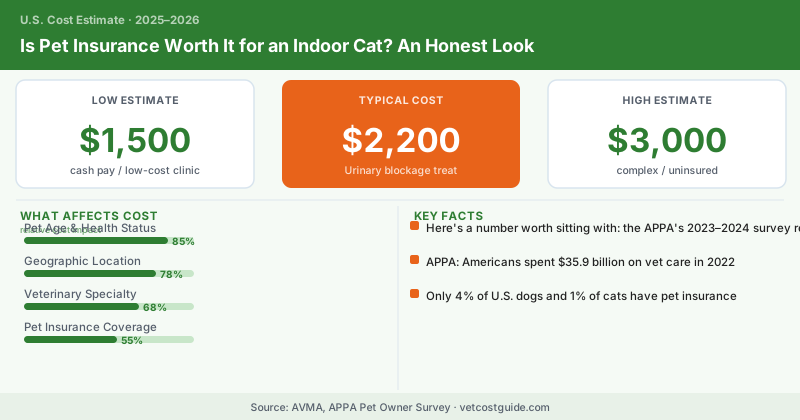
Here’s a number worth sitting with: the APPA’s 2023–2024 survey reported that US households own roughly 74 million cats, and the AVMA notes that cats are chronically underdiagnosed because owners delay vet care over cost. Indoor or not, cats get sick, and the bills are real.
The Illnesses Indoor Living Doesn’t Prevent
Staying inside protects your cat from trauma. It does nothing to stop the diseases that drain bank accounts. Chronic kidney disease shows up in a huge share of senior cats. Hyperthyroidism, diabetes, dental disease, and the dreaded urinary blockage all strike indoor cats just as often as outdoor ones.
A urinary blockage in a male cat is a true emergency, and treating one can run $1,500–$3,000 with hospitalization. That single event can cost more than years of premiums.
| Common Indoor Cat Condition | Low | Typical | High |
|---|---|---|---|
| Urinary blockage treatment | $1,500 | $2,200 | $3,000 |
| Chronic kidney disease (per year) | $1,000 | $1,800 | $3,000 |
| Hyperthyroidism (radioiodine) | $1,000 | $1,500 | $2,000 |
| Diabetes (first year) | $1,000 | $1,500 | $2,500 |
| Dental cleaning + extractions | $400 | $900 | $1,500 |
| Cancer treatment | $2,000 | $5,000 | $10,000 |
Running the Actual Numbers
Cat insurance averages $10–$30 per month. NAPHIA’s 2023 State of the Industry report pegged the average accident-and-illness cat premium near $32/month nationally, and indoor cats often qualify for the lower end.
Say you pay $18/month from kitten age. Over a 15-year life, that’s about $3,240 total. If your cat develops one urinary blockage and later needs kidney disease management, you could easily file $5,000–$8,000 in covered claims. That’s the math working in your favor.
But if your cat sails through life with nothing more than routine checkups, you’ll have paid more in premiums than you got back. That’s the honest tradeoff.
Insurance is most worth it when:
- You enroll while your cat is a young, healthy kitten (lowest rates, no exclusions)
- You couldn’t comfortably absorb a surprise $3,000 vet bill from savings
- Your cat is a breed prone to issues (Persians, Maine Coons, Siamese have known predispositions)
It’s less worth it if you have a robust emergency fund and the discipline to leave it untouched.
Don’t wait until your cat is sick to buy a policy. Every insurer excludes pre-existing conditions. The day a vet writes “possible kidney concern” in your cat’s chart, that door closes for that condition forever. Coverage only protects against what hasn’t happened yet.
Insurance vs. Just Saving
Some owners skip insurance and self-fund instead, putting $20–$40 a month into a dedicated pet account. This works beautifully if your cat stays healthy long enough for the fund to grow. The risk is timing. A blockage at age three doesn’t wait for your savings to catch up.
Plenty of owners split the difference: a basic accident-and-illness policy for catastrophes, plus a small cash cushion for routine care and deductibles. If you want to dig into the full comparison, our breakdown of pet insurance vs. self-pay lays out both columns side by side.
Frequently Asked Questions
Is pet insurance worth it for an indoor-only cat? It can be. Indoor cats avoid accidents but still get kidney disease, hyperthyroidism, diabetes, and urinary blockages. One blockage costs $1,500–$3,000. At $10–$30/month, insurance pays off if your cat develops even one major condition.
How much does pet insurance cost for an indoor cat? Around $10–$30 per month. NAPHIA’s 2023 data put the average cat premium near $32/month, and indoor cats often land lower. Enrolling a kitten locks in the cheapest rates.
What illnesses do indoor cats actually get? Kidney disease, hyperthyroidism, diabetes, urinary blockages, dental disease, and cancer. None require going outside. Indoor living cuts trauma risk, not illness risk.
Will insurance cover my indoor cat’s pre-existing conditions? No. Conditions diagnosed or showing symptoms before your policy starts are excluded. Enroll while your cat is young and healthy.
Is it cheaper to just save money instead of buying insurance? Self-insuring works if you’re disciplined and your cat stays healthy, but a $3,000 emergency can hit before savings are ready. Many owners do both.
When is the best time to insure an indoor cat? As young as possible, ideally a kitten at 8 weeks. Premiums rise with age and pre-existing conditions get locked out the longer you wait.
Does an indoor cat get a discount on insurance? Some insurers do factor in lower accident risk for indoor cats, nudging premiums toward the bottom of the range. It’s worth asking directly when you get quotes, but the discount is usually modest since illness coverage drives most of the cost.
What if my cat is already a senior? You can still insure older cats, though premiums are higher and any existing conditions are excluded. For seniors, weigh the cost against expected vet bills. Our guide to pet insurance for older pets covers the same logic that applies to aging cats.
Frequently Asked Questions
It can be. Indoor cats avoid car accidents and most fight wounds, but they still get expensive illnesses like kidney disease, hyperthyroidism, diabetes, and urinary blockages. A single urinary blockage can cost $1,500–$3,000 to treat. At $10–$30/month for a cat, insurance pays off if your cat develops even one major chronic condition over its life.
Cat insurance averages $10–$30 per month, according to NAPHIA's 2023 industry data, which put the average accident-and-illness cat premium around $32/month nationally. Indoor cats often land at the lower end because some insurers factor in reduced accident risk. Enrolling a kitten locks in the lowest rates and avoids pre-existing condition exclusions.
Plenty. The most common big-ticket conditions are chronic kidney disease (very common in cats over 10), hyperthyroidism, diabetes, urinary blockages (especially in male cats), dental disease, and cancer. None of these are caused by going outside. Indoor living lowers trauma risk, not illness risk, which is exactly what insurance covers best.
No. Every major insurer excludes conditions diagnosed or showing symptoms before your policy's start date and waiting period end. That's why enrolling while your cat is young and healthy matters so much. If your cat already has kidney disease or diabetes, that specific condition won't be covered, though new unrelated issues still can be.
Self-insuring works if you're disciplined and your cat stays healthy. The problem is timing: a $3,000 emergency can hit before your savings account is ready. Insurance trades a predictable monthly cost for protection against an unpredictable big one. Many owners do both: insurance for catastrophes plus a small fund for routine care.
As young as possible, ideally as a kitten. Premiums rise with age and pre-existing conditions get locked out the longer you wait. Most insurers accept kittens at 8 weeks. Insuring a young, healthy indoor cat gives you the lowest premium and the broadest coverage for its whole life.