Your dog gets out. What’s the difference between getting him back in 4 hours — and never?
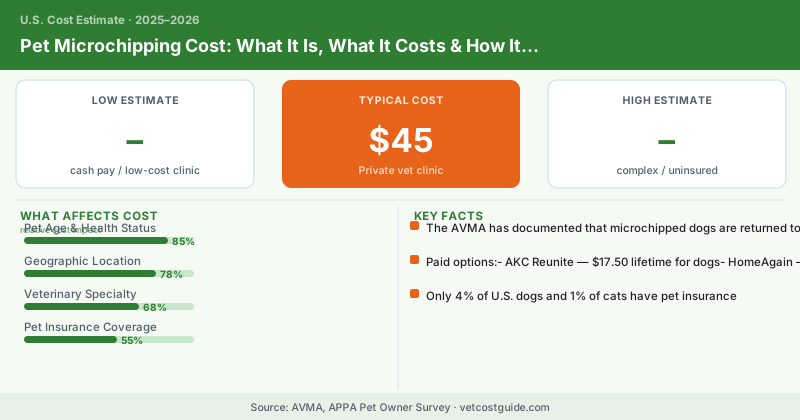
A lot of it comes down to a $45 procedure and whether you spent 2 minutes registering the chip number online.
The AVMA has documented that microchipped dogs are returned to their owners at significantly higher rates than dogs without chips — some studies cite return rates over 50% for microchipped dogs versus under 22% for those without. For cats, the gap is even more dramatic. Those numbers represent the difference between a relieved reunion and a lost animal that never makes it home.
Here’s the full picture of what microchipping costs, what it actually does, and the one step that makes it work.
- Vet clinic microchipping: $45–$75, often bundled with a wellness visit
- Shelter or humane society event: $5–$25
- Low-cost clinic: $15–$35
- Database registration: free (Found Animals, PetLink basic) to $25 one-time fee
- GPS tracker add-on (separate product entirely): $50–$150 upfront + $5–$15/month subscription
Cost by Setting
| Setting | Cost Range | Notes |
|---|---|---|
| Private vet clinic | $45–$75 | Often bundled with exam; most convenient |
| Humane society event | $5–$25 | Lower cost; may have limited appointment times |
| Low-cost clinic or SPCA | $15–$35 | Good option if pet is already vaccinated |
| Animal shelter (at adoption) | $0–$20 | Often included in adoption fee |
| Mobile microchip clinic | $10–$30 | Periodic community events |
The price difference between a shelter event and a private vet clinic doesn’t reflect quality — the same ISO-standard chip goes in regardless of where you get it done. The main advantage of doing it at your regular vet is convenience: it takes 30 seconds during a routine visit.
What a Microchip Actually Is (and Isn’t)
A microchip is a passive RFID transponder about the size of a grain of rice. It has no battery, no GPS, no tracking capability. It doesn’t transmit anything on its own.
When a scanner is passed over it, the chip emits a unique 15-digit ISO number. That number, searched in a registry database, links to your contact information — name, phone number, address. That’s the entire mechanism.
This means a microchip is only as useful as the registration behind it. A chip with no registration, or registration pointing to an old phone number from three addresses ago, won’t get your pet home. This is the most common failure mode.
The Procedure Itself
The chip is injected between the shoulder blades via a sterile needle — larger than a standard injection needle but over in one second. Most pets react less than they do to a vaccine. No anesthesia needed, no sedation, no recovery time. It’s done during a routine exam.
Chip migration — where the chip slowly moves from the original injection site — does occasionally happen, typically to the shoulder area. This is why scanners are passed broadly over the back and sides, not just the neck. A migrated chip still works fine.
The Registration Step — Don’t Skip It
You’ll get a registration card or a chip number printed on paperwork after the procedure. You need to register this number in a searchable database linked to your current contact information. Without this step, the chip number leads nowhere.
Free options:
- Found Animals Microchip Registry (foundanimals.org) — free lifetime registration
- PetLink — free basic registration
Paid options:
- AKC Reunite — $17.50 lifetime for dogs
- HomeAgain — $25/year, includes some lost pet services
- 24PetWatch — $20–$25 one-time registration
The AAHA Universal Pet Microchip Lookup (lookup.aaha.org) searches across most major registries simultaneously — it’s what most shelters and vet clinics use. As long as your chip is registered in any participating registry, you’ll be found in a search.
ISO Standard vs. Older Chips
Current standard chips use ISO 11784/11785 at 134.2kHz — the international standard that all modern universal scanners read. Older chips used a 125kHz frequency that required specific scanners to read. If your pet was chipped before roughly 2007, ask your vet to verify the chip can be read by current universal scanners. Most modern clinics have universal readers that handle both.
Why a Microchip Isn’t a GPS Tracker
Worth stating plainly: a microchip doesn’t tell you where your pet is. It can’t. It’s passive — it only responds when a scanner is held directly against the animal.
If real-time location matters to you, consider a GPS collar tracker like Whistle or Fi. These run $50–$150 upfront plus $5–$15/month for a cellular subscription. They’re different products solving different problems. Microchip for permanent identification; GPS tracker for active location monitoring. Both have value.
Microchip registration details go stale. If you move, change your phone number, or transfer ownership of the pet, update the registry immediately. A chip registered to a former address and disconnected phone number is functionally useless. Set a calendar reminder to verify your contact information annually — it takes 2 minutes.
Bundling and Cost-Saving Options
Most vet clinics will add microchipping to any existing appointment for a flat fee — you’re just paying for the chip and the 30-second procedure. If you’re already coming in for vaccines or a wellness exam, ask to add microchipping. Many clinics include it in puppy/kitten package deals.
Local shelter and humane society events periodically offer microchipping for $10–$20. National events like National Pet ID Week in April often include low-cost microchipping drives. Call your local shelter to ask about upcoming dates.
If you adopted from a shelter, your pet may already be microchipped — check the adoption paperwork. If so, verify the chip number is registered in your name, not the shelter’s.
Frequently Asked Questions
Yes, reliably — as long as you use an ISO-standard chip (15-digit ISO 11784/11785) and keep your registration current. The AAHA Universal Pet Microchip Lookup tool lets any shelter, clinic, or rescue search across most major registries with a single scan. Most shelters scan every stray animal on intake. The chip itself lasts the animal's entire lifetime with no battery or maintenance required.
Yes, and this is the step most owners skip. The chip itself is just a passive RFID transponder with a unique number. Without registering that number in a searchable database linked to your current contact information, the chip is essentially useless. Registration is free on some platforms (Found Animals, PetLink) or $5–$25 as a one-time fee on others. Update it when you move or change phone numbers.
With a handheld RFID scanner passed over the animal's scruff and shoulder blade area. Modern universal scanners read both the older 125kHz chips and current ISO-standard 134.2kHz chips. The scanner displays the chip number, which staff then search in the AAHA Universal Pet Microchip Lookup tool to find owner contact information. The whole process takes under a minute.